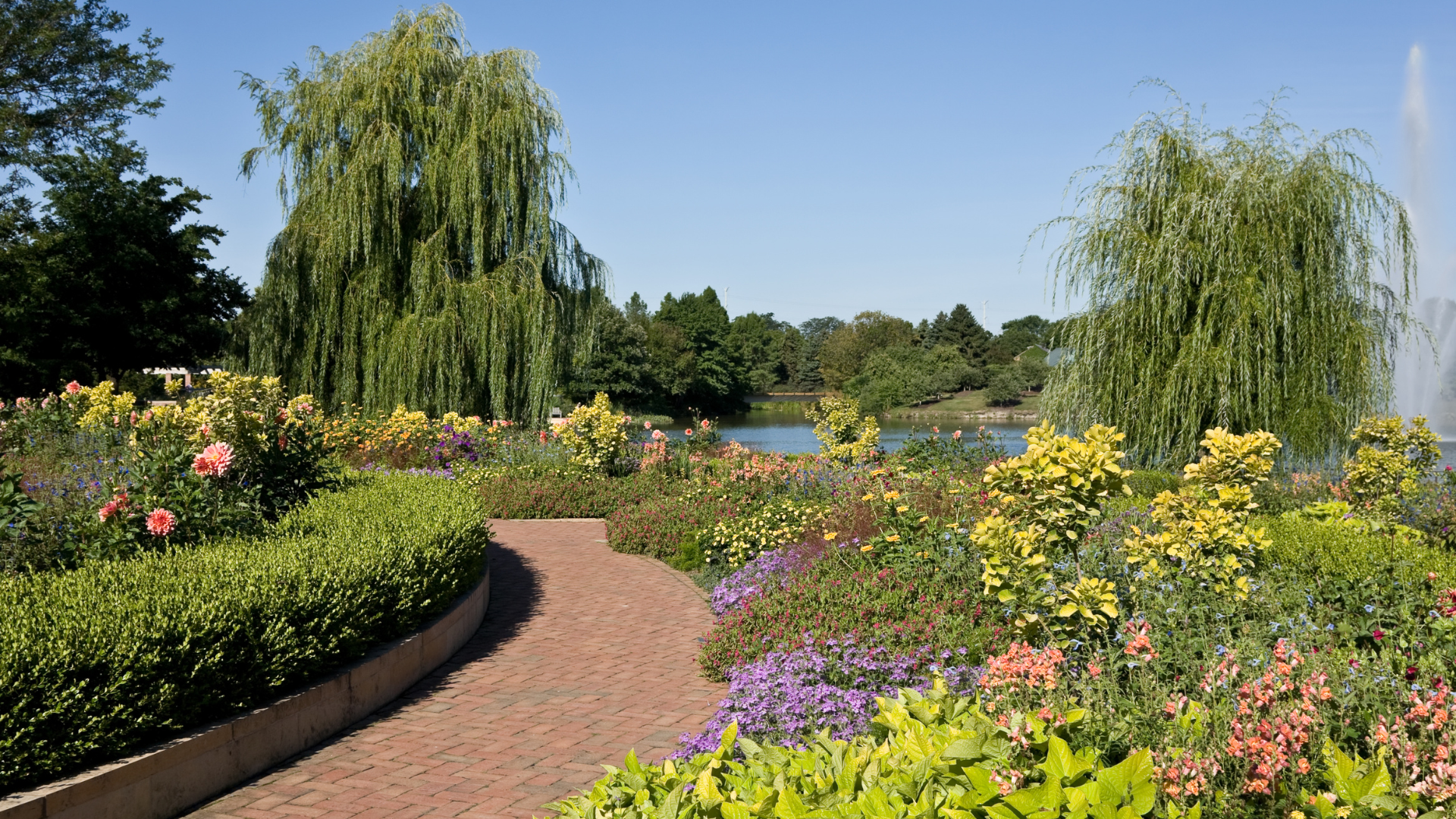
You can drive just twenty miles north of downtown Chicago and end up standing on a series of islands. The Chicago Botanic Garden isn’t just a big park planted on flat ground. It sits on 385 acres spread out across nine separate islands surrounded by water. It’s a heavily engineered landscape that completely changed a swampy river basin into a massive living museum.
Shaping The Land And Water
Before the garden existed, this area was mostly marshland sitting along the Skokie River. The soil was terrible for growing. The water levels fluctuated constantly, flooding nearby roads. So, planners didn’t just lay down grass and plant flowers. They completely re-shaped the earth.
They dug out deep lakes and used over a million cubic yards of mud to build up the nine islands. The water around the islands does an important job. It acts as a natural moat. It keeps pests out of the display gardens without relying on harsh chemicals. Plus, all those deep lakes help control heavy rainwater and prevent the surrounding towns from flooding during bad storms.
Different Environments On Every Island
Breaking the garden up with water lets designers create totally different environments right next to each other. You cross a small bridge and step into the English Walled Garden. It feels exactly like an old British estate with stone walls and overflowing flower beds.
Advertisement
Then you walk across another bridge and enter the Malott Japanese Garden. This island is entirely different. It is quiet and focused on stone, water, and perfectly pruned pine trees. The gardeners actually train the branches to look like they’ve survived decades of harsh mountain wind. The water creates a natural border between these spaces. You don’t just walk down a dirt path from one flower bed to the next. You actually have to cross over the water to enter a new world.
A Testing Ground For The Future
The garden does a lot more than just look nice for visitors. It is an active scientific laboratory. Plant scientists study how climate change directly affects native Midwestern plants. They run a huge seed bank to protect rare species from going completely extinct.
They also test out green roof technology on their main conservation building. They plant different species on the roof to see exactly which ones can handle the brutal Chicago winters and blazing hot summers. So while people are taking photos of the colorful summer roses, researchers are quietly figuring out how to keep these species alive for the next hundred years.
 Read Exclusive Stories
 Bookmark & Save Articles For Later