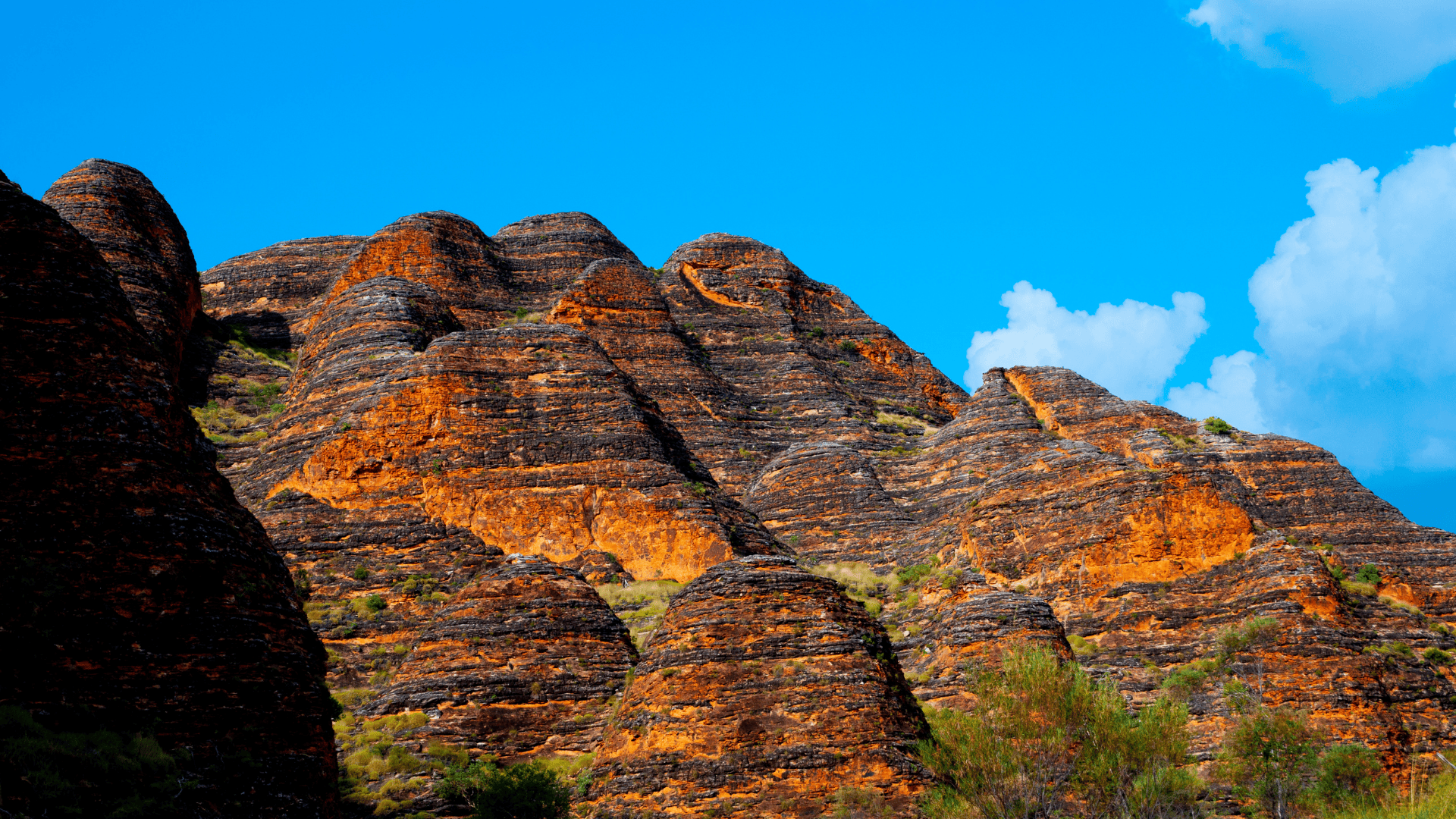
If you travel to the Kimberley region of Western Australia, you will find a landscape that looks completely alien. Spread out across Purnululu National Park are thousands of massive rock domes rising out of the flat desert.
They look exactly like giant, striped beehives. Some of them stand almost 800 feet tall. From the air, the repeating pattern of orange and black stripes stretches out for miles. It is an incredibly strange geological accident caused by ancient rivers and living bacteria.
Stacked From Sand And Gravel
To figure out how these domes got here, you have to look back over 300 million years. Back then, heavy rivers constantly washed across this area. The water dumped thick layers of sand and gravel into a giant basin.
Over time, all that loose dirt compressed and cemented into solid sandstone. Later on, the earth shifted, and tectonic plates pushed that solid sandstone sheet upward. Once the rock was exposed to the open air, the harsh Australian weather took over. Over millions of years, wind and heavy seasonal rain washed away the weak parts of the rock. The water carved deep canyons and wore the remaining stone down into rounded domes.
Painting With Rust And Bacteria
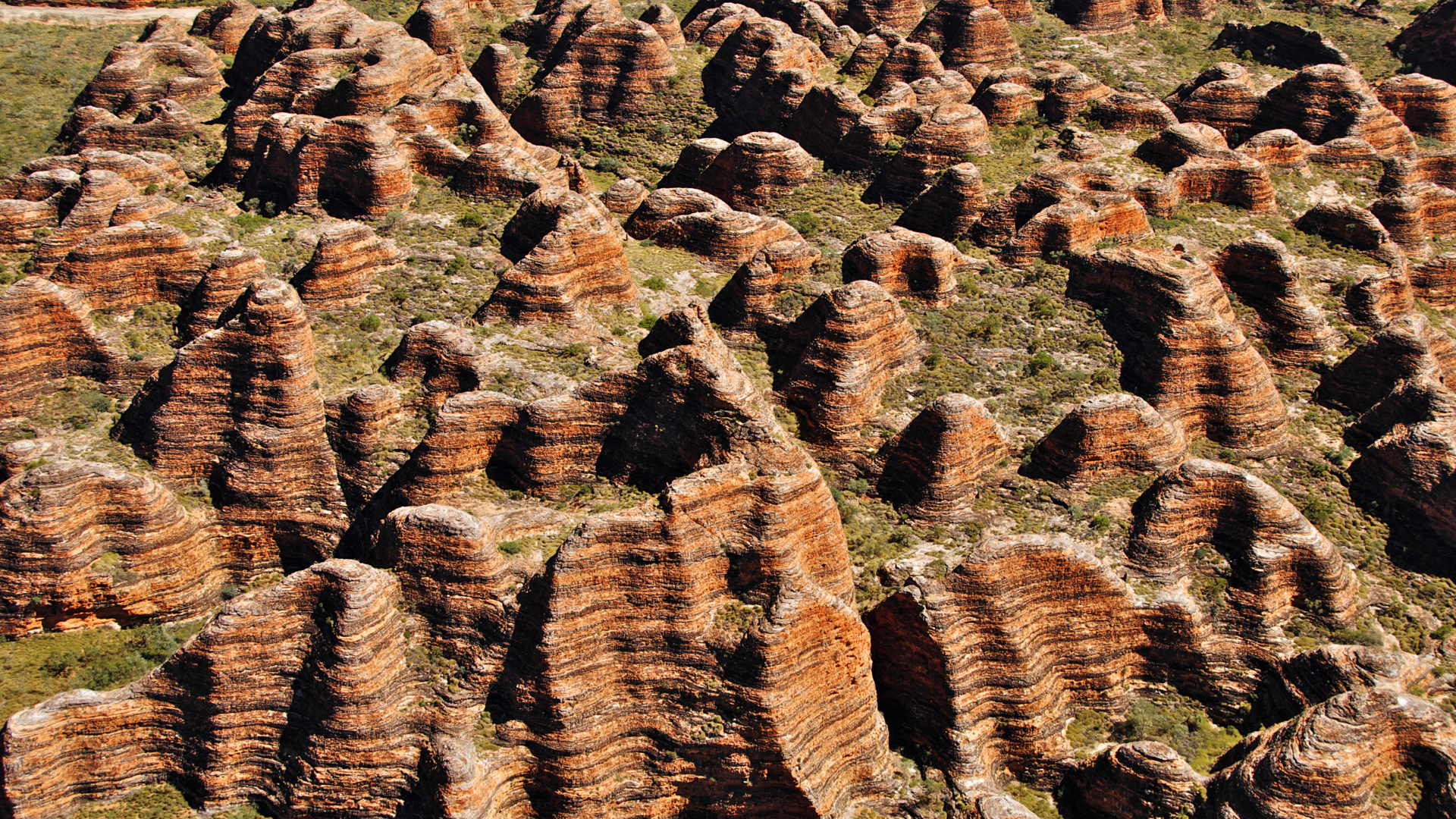
The weirdest part about the Bungle Bungles is the stripes. The domes are perfectly wrapped in horizontal bands of bright orange and dark grey.
Advertisement
This color code tells you exactly what kind of rock is sitting in each layer. The orange stripes happen where the sandstone is very porous. Water easily passes through these layers. But there is a lot of iron trapped inside the rock. When air and water come into contact with iron, it slowly rusts. This leaves a bright orange crust on the outside of the stone.
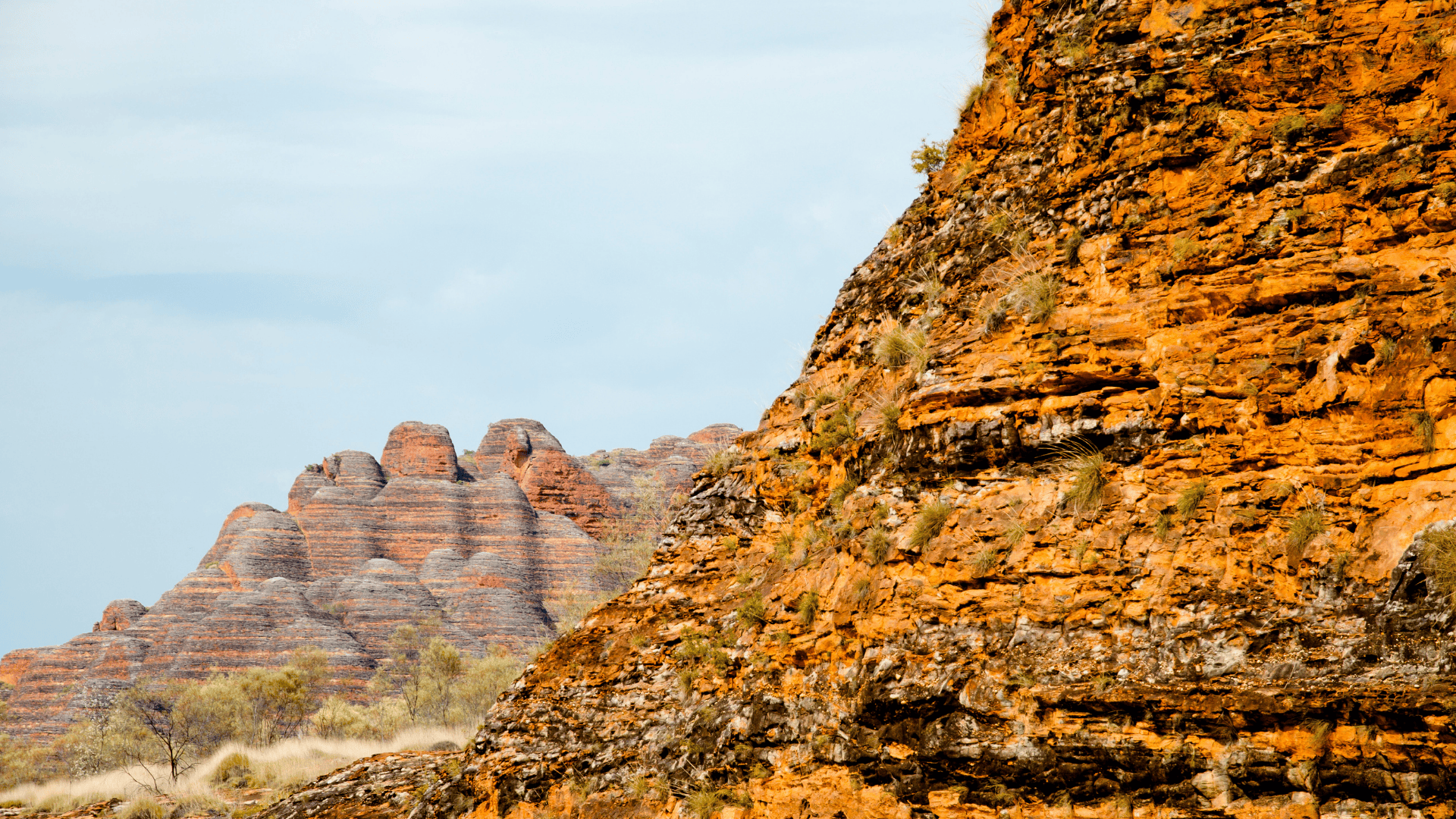
The dark grey or black bands form where the rock contains a high clay content. Clay holds onto water much longer than plain sand. Because that rock stays damp, single-celled organisms called cyanobacteria move in. This bacterium grows in a thick, dark crust across the wet layers. So the black stripes are actually a living shell.
A Hidden Landscape
For a long time, the only people who knew about these massive domes were the local Aboriginal communities. They lived and hunted around the rocks for thousands of years. But because the area is so remote and hard to reach, the rest of the world had no idea the Bungle Bungles even existed.
It was not until a film crew flew over the area in 1983 that the domes became famous. Now, it is one of the most protected natural spots in Australia. The area stands as a perfectly preserved record of ancient rivers and living rock.
 Read Exclusive Stories
 Bookmark & Save Articles For Later