Data centers are a polarizing subject, but nonetheless they are being built across the U.S. to support the growing digital demand. It’s no secret that data centers require immense power. According to researchers, the centers could use up to 9% of all U.S. electricity by 2030. In 2023, it was 4%.
A research team led by Gang Wu at Washington University in St. Louis found a way to hopefully ease the demand. Their work focuses on making better low-temperature fuel cells.
“If a data center is able to supply its electricity itself by using a fuel cell, it would directly convert hydrogen and other fuels into the electricity, reducing the burden on the energy grid,” Wu said.
A Platinum Solution for Fuel Cells
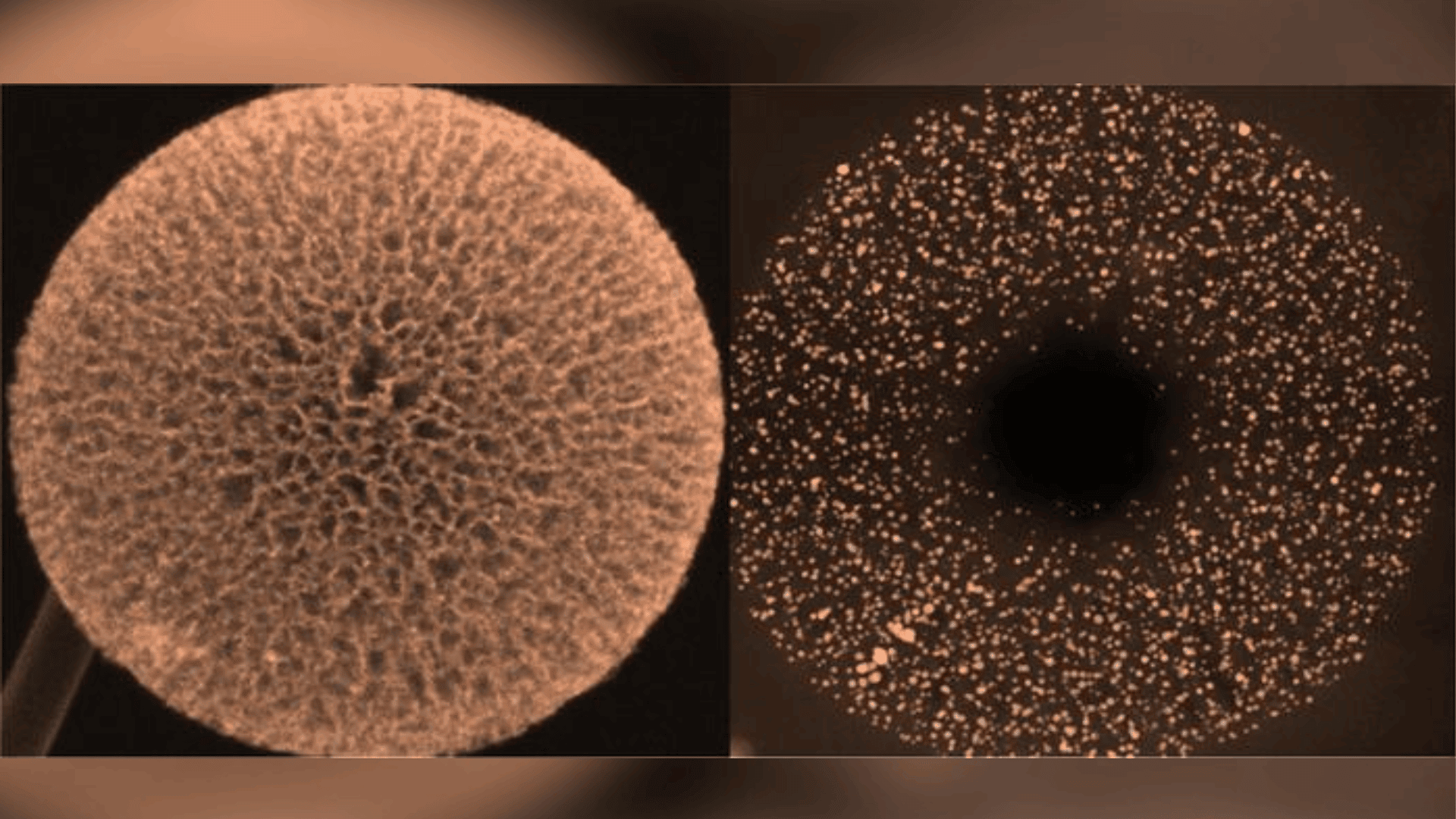
Fuel cells use a catalyst to turn hydrogen and oxygen into electricity, water, and heat. Platinum is the best material for this job, but it is highly expensive. To save money and material, engineers use tiny platinum nanoparticles. The problem, however, is that these particles break down and clump together during use, which reduces their performance.
Wu’s team worked with several national labs and universities to solve this. They created a new hollow carbon structure with tiny channels to hold platinum and cobalt particles securely in place.
Advertisement
“Our strategy is using this new carbon nanostructure to synthesize platinum cobalt intermetallic nanoparticles that can reduce precious metal content and enhance activity and stability,” Wu said. “Traditionally, there would be a tradeoff between size and stability, but with the ordered carbon nanochannel host, platinum cobalt nanoparticles can be confined and remain stable at very small particle size even at high temperatures.”
Beating the Heat
Usually, heating a catalyst helps make it stable, but too much heat ruins the tiny particles. This new carbon base allowed the researchers to safely push past old temperature limits.
“Because of this special carbon nanostructured support, we could heat the platinum-cobalt catalyst to 1000°C, which is high enough to form a very ordered structure while still keeping the nanoparticles smaller than 5 nanometers and well spread out, even with industry-preferred high content of platinum in catalysts,” Wu said.
The new design kept 85% of its performance through harsh testing that mimics 25,000 hours of use.
“The open channel structure also helps the ion-containing material, such as an ionomer, spread evenly and makes it easier for protons, oxygen and water to move through the electrode,” Wu continued. “As a result, the platinum cobalt nanoparticles built into this support showed best-in-class performance and long-lasting durability. Eventually, through further development and collaboration with industry partners, we’ll be able to solve the remaining catalyst problems and significantly advance fuel cell technologies for powering our future more efficiently and sustainably.”
 Read Exclusive Stories
 Bookmark & Save Articles For Later