UNC-Chapel Hill has just joined with NC State University and MIT in a massive new initiative in which the National Science Foundation will fund the construction of a nationwide network of “self-driving” laboratories.
Here is a quick look at what this initiative will mean for the future of scientific discovery.
The SPEED Lab Initiative
The National Science Foundation has recently committed $380 million into the effort to create what are termed “Programmable Cloud Laboratories” across the country. NC State University has been awarded a four-year grant valued at $20 million to develop the SPEED Lab: Self-Driving Platforms for Experimental Co-Design in Chemistry and Materials Science.
Among the universities that will be a major partner with the SPEED Lab is UNC-Chapel Hill. The Carolina-based SPEED Lab will be led by professors Alex Miller, Jillian Dempsey, Erik Alexanian, and Ron Alterovitz.
Advertisement
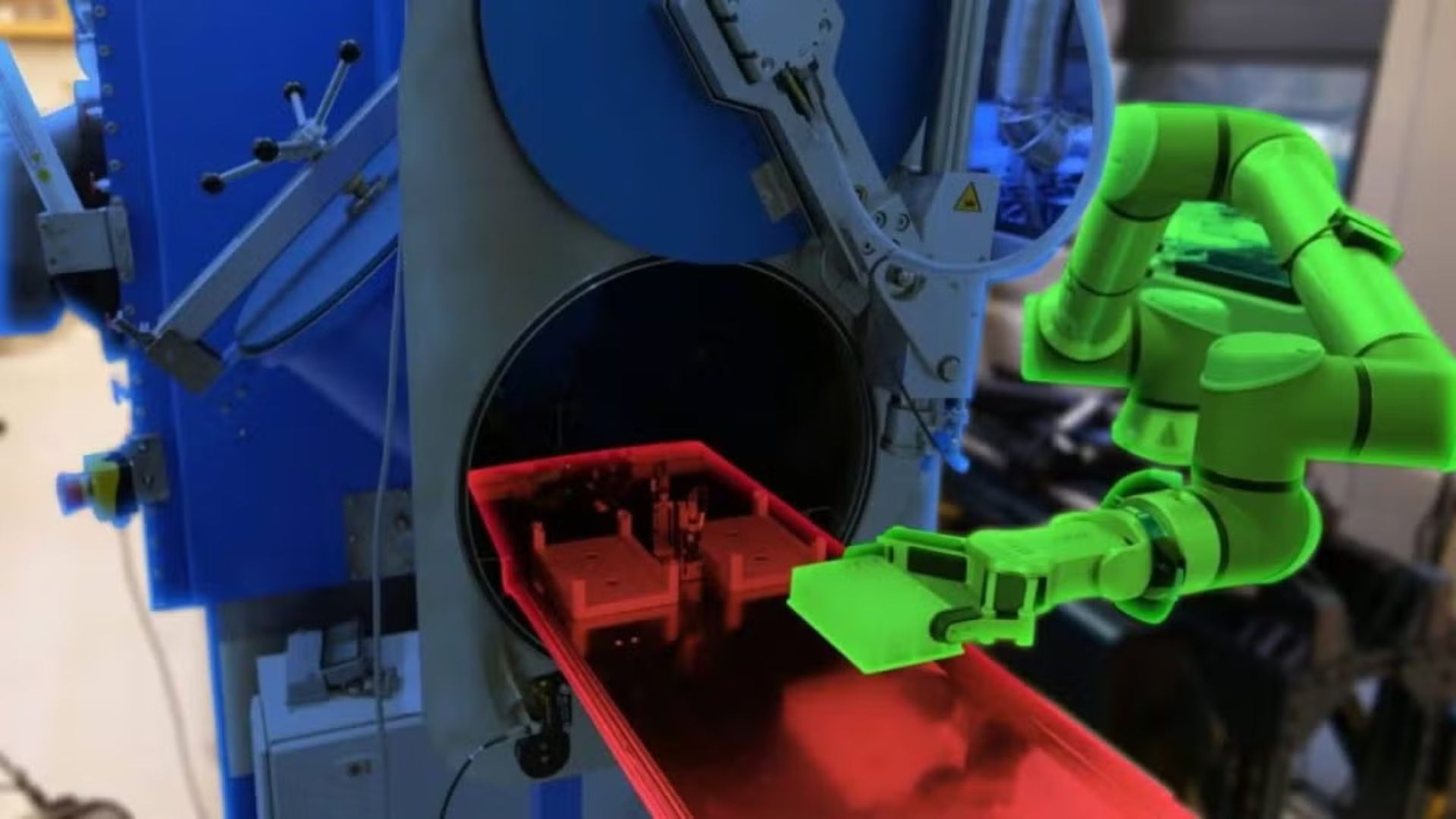
The main idea behind the SPEED Lab is that AI will be able to design experiments that are autonomously executed by robotic arms in the laboratory. These labs will essentially “learn” from each experiment they complete, allowing them to design new experiments that maximize their chances of success.
Expanding Access For Researchers
Another main focus of the SPEED Lab initiative at UNC-Chapel Hill is developing technology that enables researchers to control these laboratories remotely.
Currently, researchers who lack access to high-tech scientific facilities often struggle to test the theories they would like to investigate. With the SPEED Lab, however, researchers from any location in the United States will be able to log in to their servers, enter the parameters necessary to run their experiment, and have the robotic arm at the SPEED Lab in Raleigh, NC, physically perform it.
According to Professor Miller, these automated laboratories have the potential to reduce the time required to transition from the discovery of a molecule to the successful completion of that molecule’s intended outcome by 100-fold or more. Currently, UNC is focused on engineering the labs to perform additional types of chemical reactions, which would enable them to synthesize chemicals necessary for tasks such as producing digital displays.
 Read Exclusive Stories
 Bookmark & Save Articles For Later