For more than 30 years, a small bone discovered at England’s Boxgrove archaeological site sat unnoticed. Now, researchers using 3D scanning and microscopic analysis have revealed it was actually a 500,000-year-old tool, offering new evidence that early humans planned ahead and carefully maintained their stone tools.
Finding The Hidden Tool
The discovered object is a thick piece of what was most likely an elephant or mammoth bone, approximately 4 inches in length. This was found at the Boxgrove site in the early 1990s. However, for decades, researchers failed to identify the object.
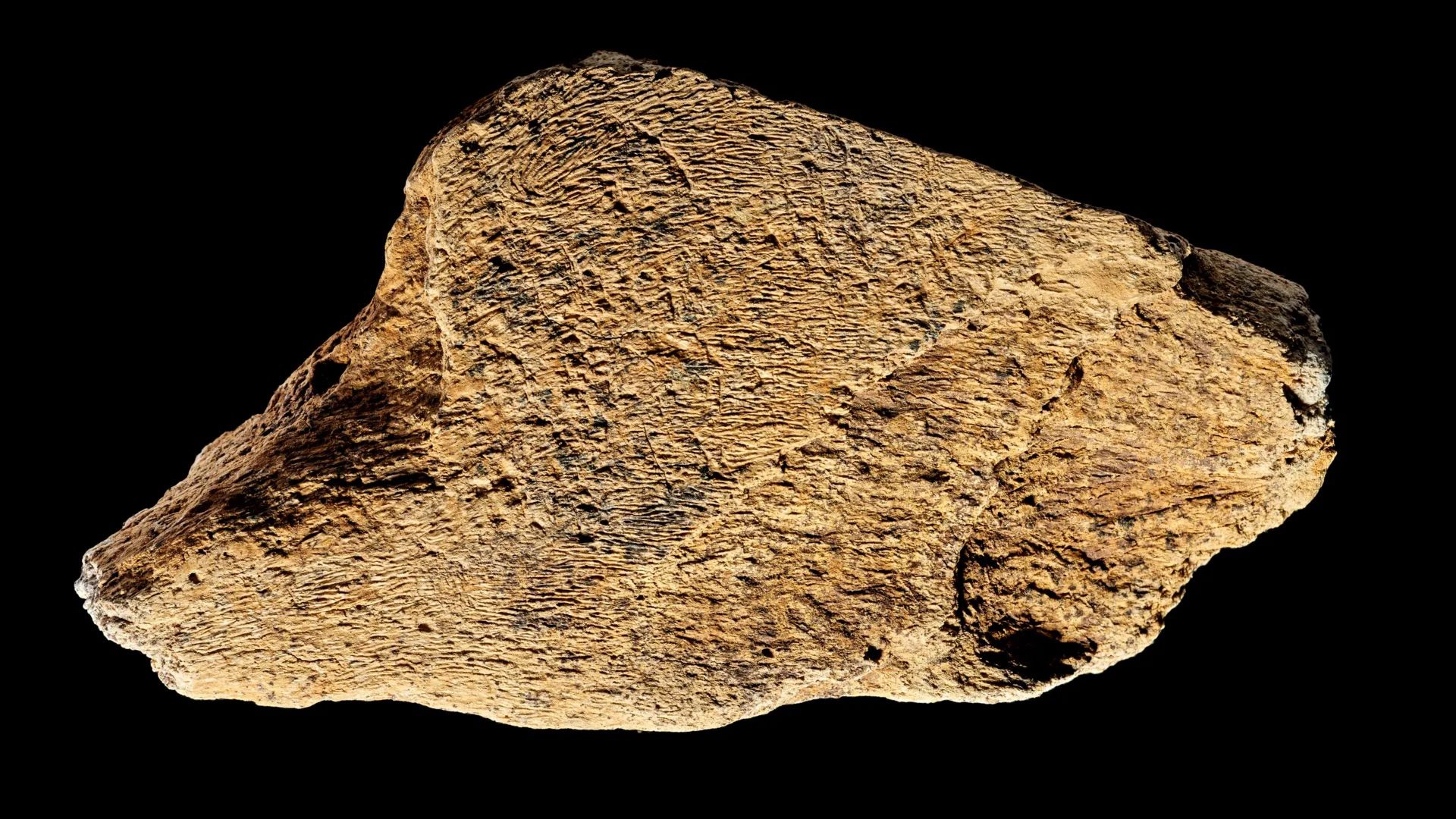
Researchers at University College London and the Natural History Museum used 3D scanning and microscopes to examine the object closely. In the findings, researchers discovered notches along the tool and microscopic pieces of flint embedded in the bone.
Experts believe that early humans used this bone as a hammer to maintain their stone-cutting tools. The process of knapping stone tools requires striking the stone with another object, since the stone is harder than the tool used to strike it. Since bone is softer than stone, early humans used this tool to maintain their stone tools without accidentally breaking them.
A Surprising Level Of Planning
Advertisement
Elephant and mammoth bones are not common finds in England. Therefore, the fact that this tool is made of such a rare find indicates that the humans who discovered and made it, most likely early Neanderthals or Homo heidelbergensis, understood its value and the resources required to obtain the materials.
Rather than using this type of bone for food or other common uses, these early humans recognized its potential for making tools. Furthermore, since the outer layer of an elephant bone is very dense, it would withstand the required force to support other tools these humans made. Their recognition and retention of this rare resource indicate their planning skills and understanding of their environment.
Redrawing The Timeline
This find in England may help archaeologists redraw the timeline of stone tools and their uses. Most of the tools made from elephant bones have been found in East Africa, Tanzania, and other areas south of Europe, where a much warmer climate is better suited to the animals that made them.
Before the discovery of this object, there was no record of tools made from elephant bones in Europe dating to more than 450,000 years ago. However, it shows that the humans who lived in Britain before were well aware of their surroundings and how to use them for their comfort.
 Read Exclusive Stories
 Bookmark & Save Articles For Later