Most volcanoes will emit glowing red lava. However, if you take a journey to the Kawah Ijen volcano in Indonesia at night, you will see bright blue flames pouring out of the volcano. It is as if the volcano is out to impress people with its otherworldly flames, but the fiery spectacle is the result of natural chemistry.
Blue Flames Instead Of Blue Lava
The blue flames you see in pictures of the Kawah Ijen volcano are not examples of blue lava. Lava cannot emit blue light; it will always be red or orange. The blue light is emitted by burning sulfur gas.
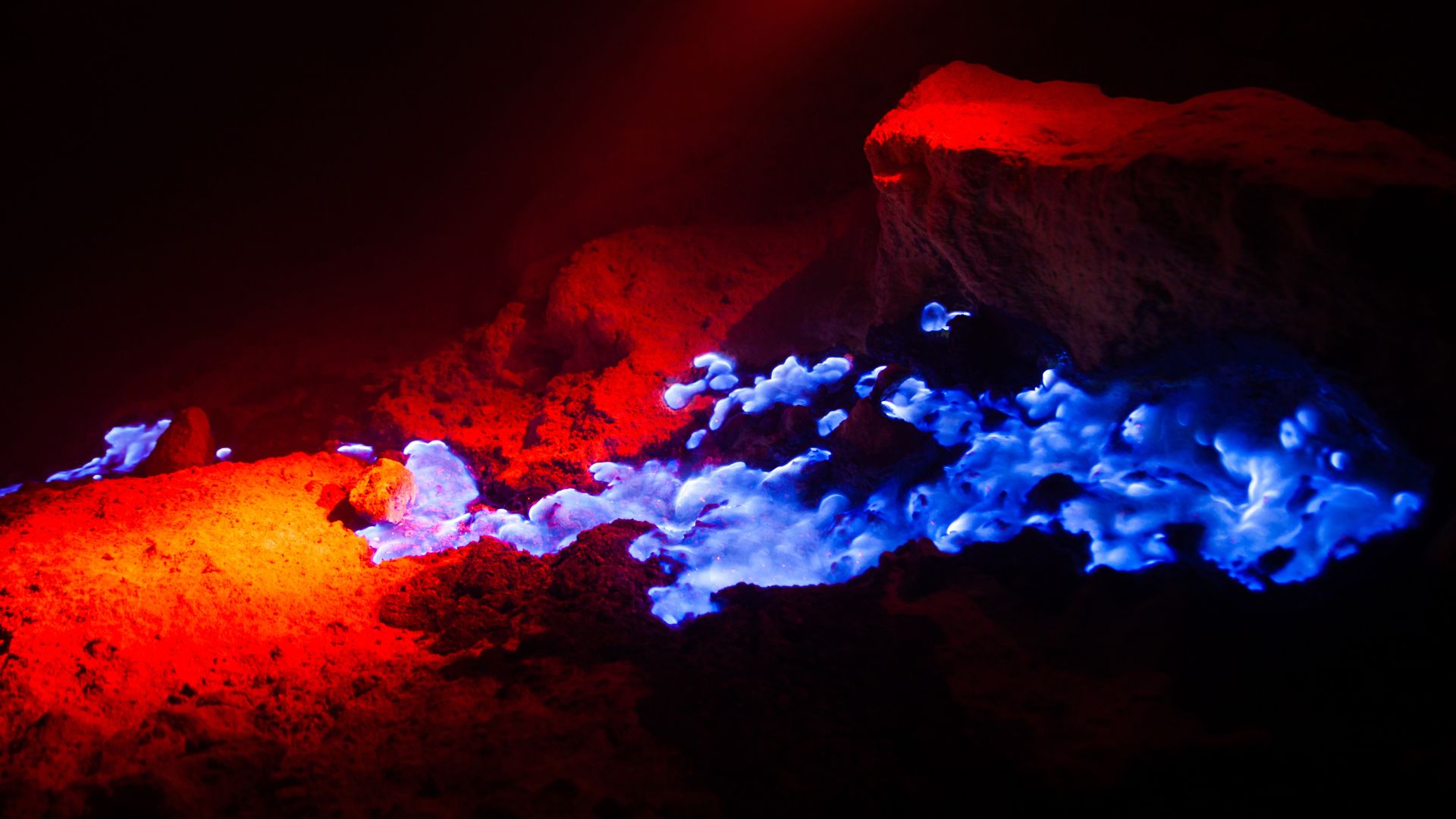
The volcanic interior contains sulfur gas under high pressure. This gas will escape from the volcano at high temperatures of over 1,000 degrees Fahrenheit. Once the gas mixes with the oxygen in the atmosphere, it will immediately catch fire and burn with an electric-blue flame up to 16 feet into the air. Some of the gas will condense into liquid sulfur that will trickle down the volcano’s slope while still burning.
The World’s Most Acidic Lake
Advertisement
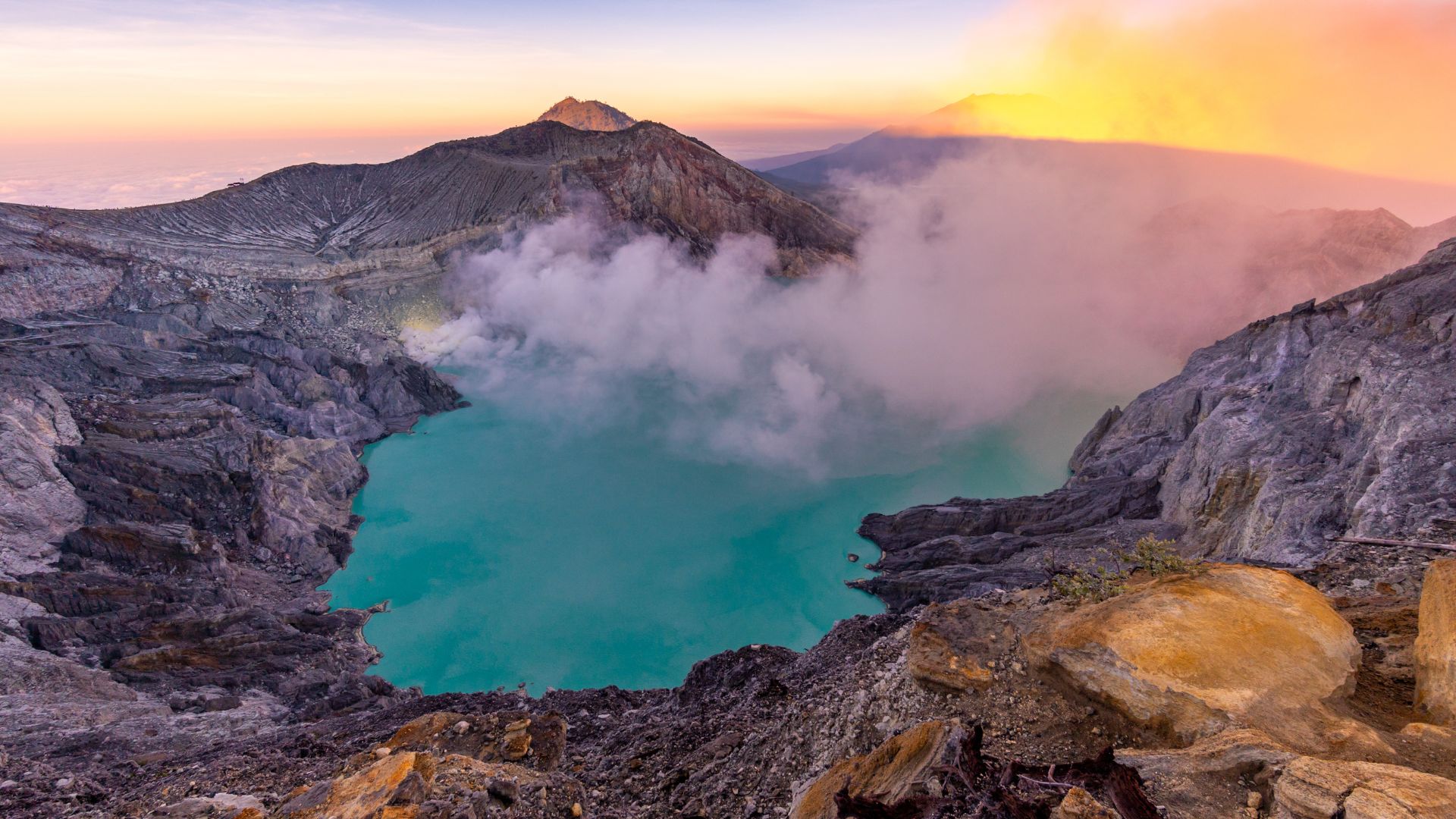
Another feature of the volcano that may intrigue people is the presence of the world’s most acidic lake within its crater. This lake contains calm and bright turquoise water. However, going into the lake is not an activity that you should undertake. The lake is filled with diluted sulfuric and hydrochloric acid. Its pH level is around zero, making it as acidic as battery acid. These acids come from the volcanic vents below the lake that continuously release chemicals into the rainwater that falls into the crater.
A Brutal Working Environment
Visitors come to the volcano to take pictures amid its otherworldly flames. However, the locals mine sulfur from the volcano each day. Sulfur is the solidified form of the volcanic gas. To extract this sulfur, miners use iron bars to break up chunks of solid sulfur. They load the sulfur into heavy baskets and carry them up the volcano’s slopes.
The air within the crater is thick with sulfur dioxide gas that can burn a person’s lungs if they do not wear masks. Most miners carry up to 200 pounds of sulfur on their shoulders during one trip into the volcano. Hence, despite the natural beauty of this geological wonder, it exists in a challenging and dangerous environment for the people who must work within it to extract its valuable resources.
 Read Exclusive Stories
 Bookmark & Save Articles For Later