Concrete is everywhere, and making it creates a lot of carbon emissions. 3D printing helps cut waste by strategically placing concrete only where it belongs, letting builders skip the molds. However, computers often design perfect shapes that big printers can’t build. The printer nozzles are too thick, and they have to print in one continuous line.
MIT researchers figured out a solution that adds a printer’s physical limits right into the math. This newly developed system creates designs that machines can build without taking days to fix manually.
“We were finding a lot of cracks you can fall through when it comes to translating these super-optimal designs into manufacturable designs,” says researcher Hajin Kim-Tackowiak. “Those cracks were like chasms.”
Testing the 3D-Printed Concrete
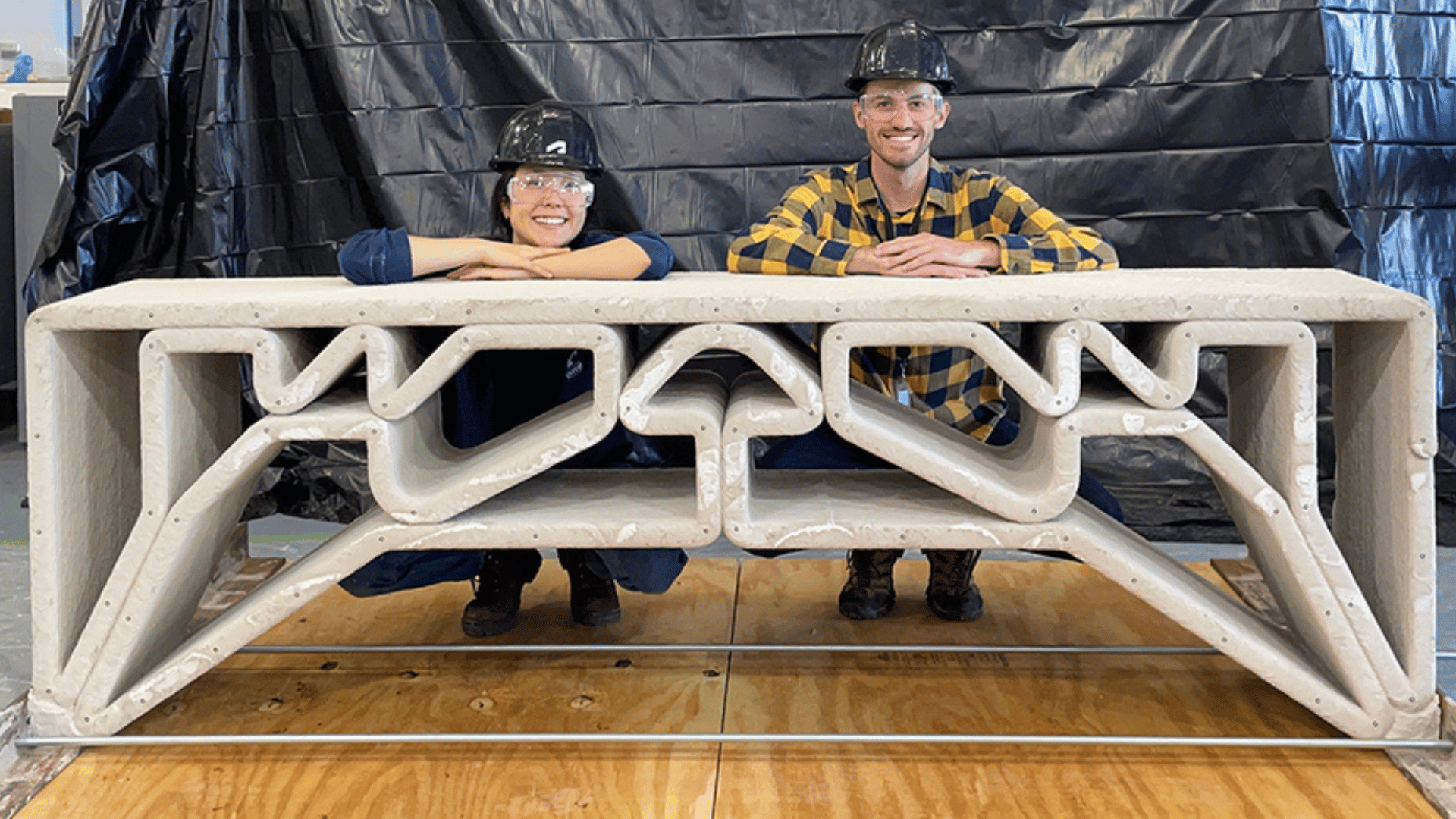
The team went to an Autodesk facility in Boston to try it out on a 7.5 feet (2.3-meter) model bridge.
“The bridge took about 30 minutes to make and was built from off-the-shelf mortar,” said researcher Josephine Carstensen.
Advertisement
The 900-pound bridge held over 2,000 pounds with almost no bending. The test also revealed that the printing hardware was the main thing holding them back.
“What we found was our result was super over-engineered,” Kim-Tackowiak says. “From zero to 200,000 pounds, your design is entirely driven by these ‘can I build it or not’ constraints. And then, after 200,000 pounds, you can start to think about the physics.”
Finding the Limits
The math showed that printing a 1-centimeter line of concrete instead of a 4-centimeter line could cut material use by up to 76 percent. The bridge also worked because it relied entirely on compression.
“With concrete, it’s really good when you push on it, really bad when you pull on it,” says researcher Zane Schemmer. “We’re able to guarantee that every piece of concrete that you see is in compression, there’s no part that’s being pulled on.”
In fact, the bridge only broke after the test when a worker lifted one corner to sweep under it. When the worker lifted it, the pulling snapped it. Looking ahead, researchers will continue to test the system’s capabilities.
“We know a pure concrete structure is not necessarily going to be the most optimal thing, so we’re moving it more into the world we live in today, which is reinforced concrete,” Kim-Tackowiak said. “Though working out how to feed rebar into a printed concrete structure, is proving its own challenge.”
 Read Exclusive Stories
 Bookmark & Save Articles For Later