If you are looking for a location that resembles an “underground cave turned inside out,” you need to head to Yellowstone National Park in Wyoming.
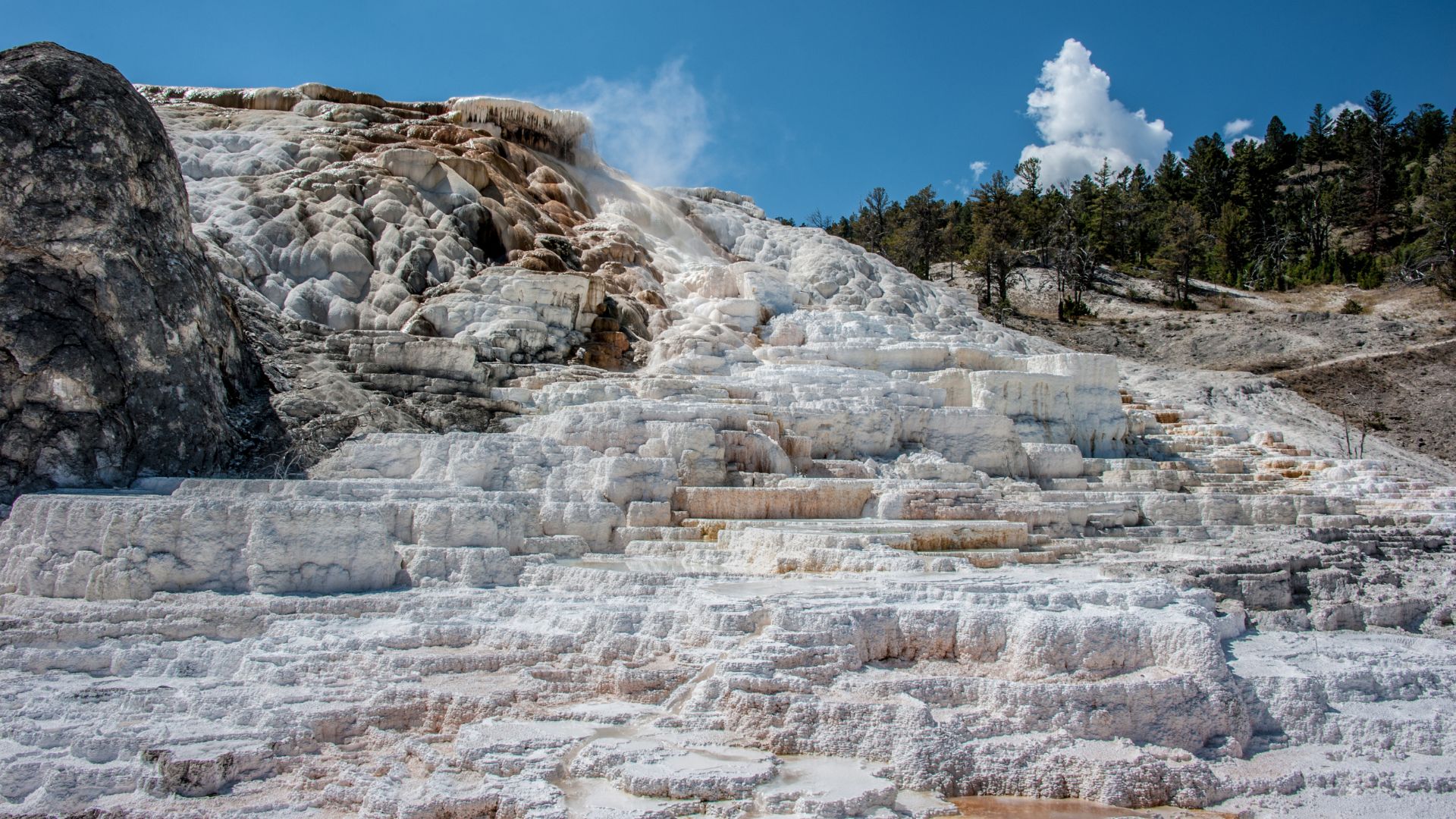
Most tourists visit the park to admire the majestic geysers that erupt from the ground. However, the most striking spot in the park is Mammoth Hot Springs. Instead of a lake or a geyser, Mammoth Hot Springs features a giant staircase of bright white, orange, and brown terraces, with a sheet of hot water covering the walkways.
An Underground Cave Turned Inside Out
The science behind the formation of Mammoth Hot Springs is fascinating. The site is comprised entirely of travertine, a type of limestone. Beneath the surface, the water in the springs is extremely hot and contains carbon dioxide, making it slightly acidic. This acidic water can dissolve the limestone beneath the park. However, as the water reaches the surface, it releases carbon dioxide, and the limestone rehardens into solid rock. Over time, this creates the giant staircase of chalk-white travertine. This exact same process forms stalactites inside caves, but here it occurs in the open air in front of everybody’s eyes.
A Constantly Shifting Landscape
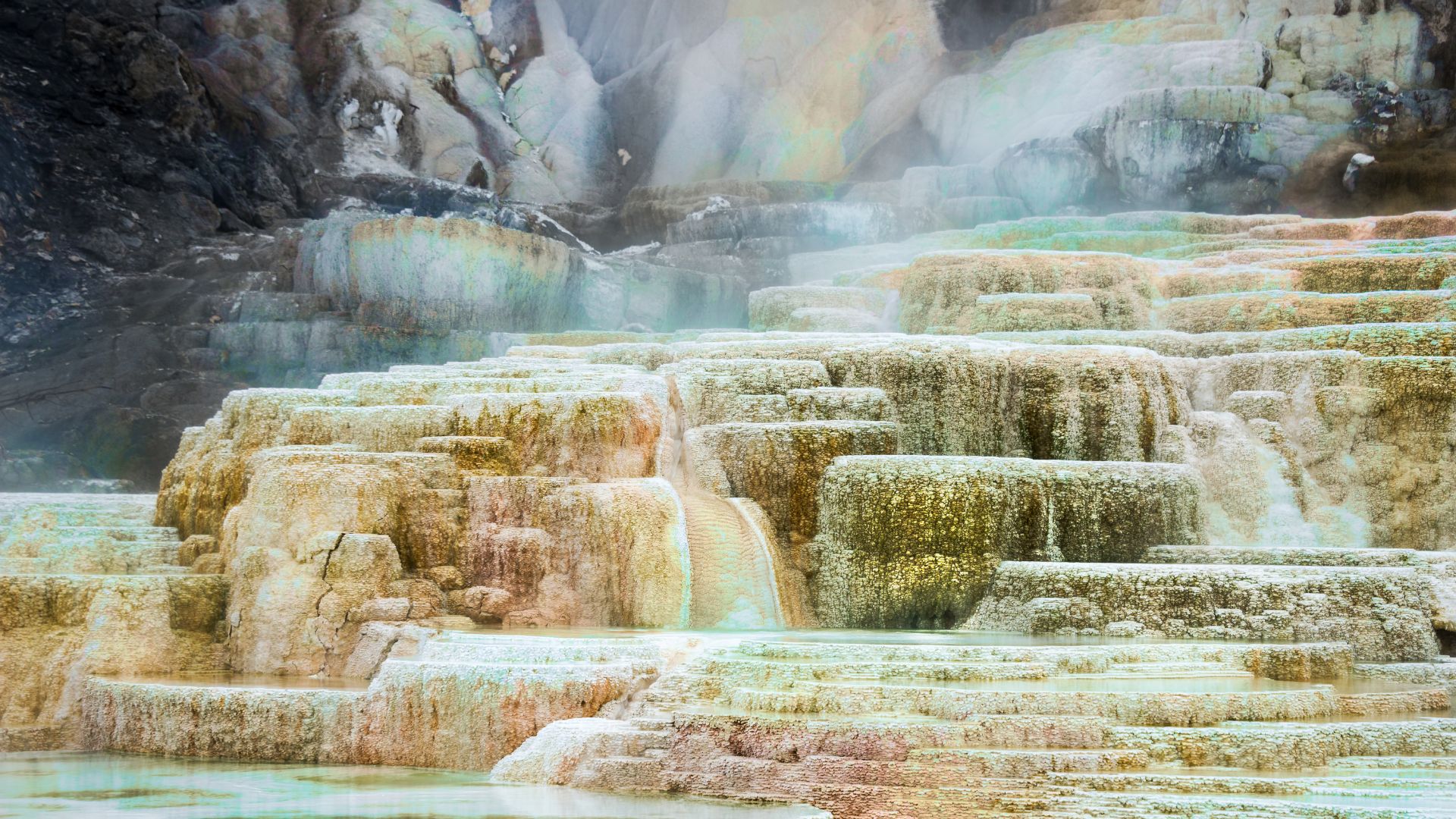
If you look at before-and-after pictures of the location, you will notice that the land at Mammoth Hot Springs has changed dramatically over the decade.
Advertisement
Most rocks take millions of years to change their appearance. However, travertine deposits at a remarkable rate. These hot springs can deposit up to two tons of limestone every day. This rapid formation of travertine creates another problem for the hot springs: blockages. As limestone builds up in specific areas, it prevents water from passing through. For instance, an area covered with hot water and colorful bacteria could be dry the following week.
The Heat Beneath the Surface
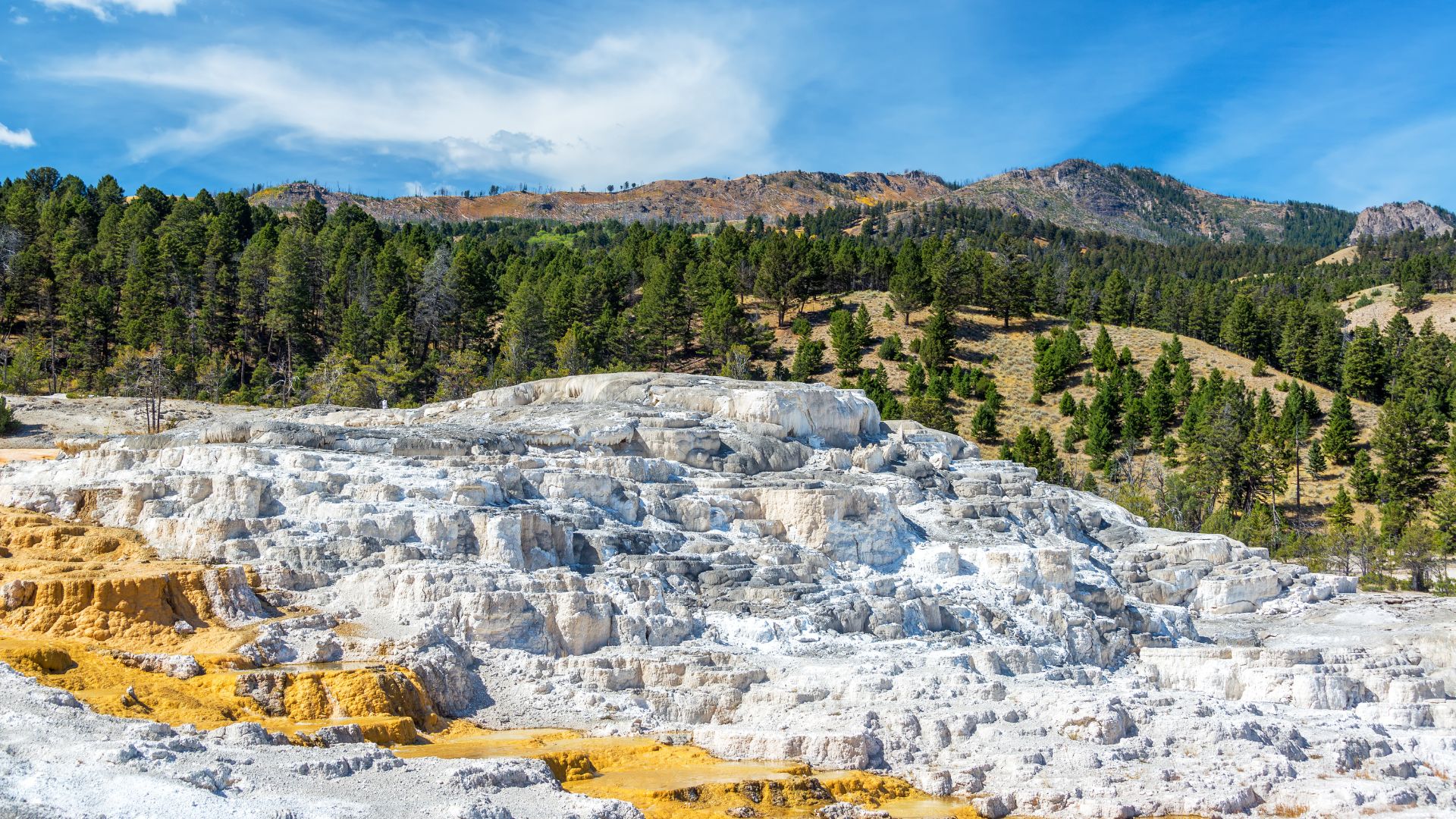
All of this formation is made possible by a massive magma chamber beneath the park. This location is an active volcano. One cannot easily spot the volcano’s peak, as the entire park lies within the collapsed crater formed millions of years ago by an eruption.
The rain and snow fall on the mountains above the park. The water percolates thousands of feet into the earth until it encounters the heated rock from the magma. This turns the water into steam, which then rushes back to the surface as hot springs. This site is one of the best examples of the vast geothermal energy beneath our feet.+
 Read Exclusive Stories
 Bookmark & Save Articles For Later