Our sun will one day run out of fuel. When it does, it will expand into a red giant, engulfing and obliterating the inner planets, Earth included. But what will happen to the rest of our solar system afterward?
With the help of the James Webb Space Telescope, researchers have finally found a clue. By looking at another solar system that has already lost its once-living star, they have found a massive planet that survived.
A Backward Solar System
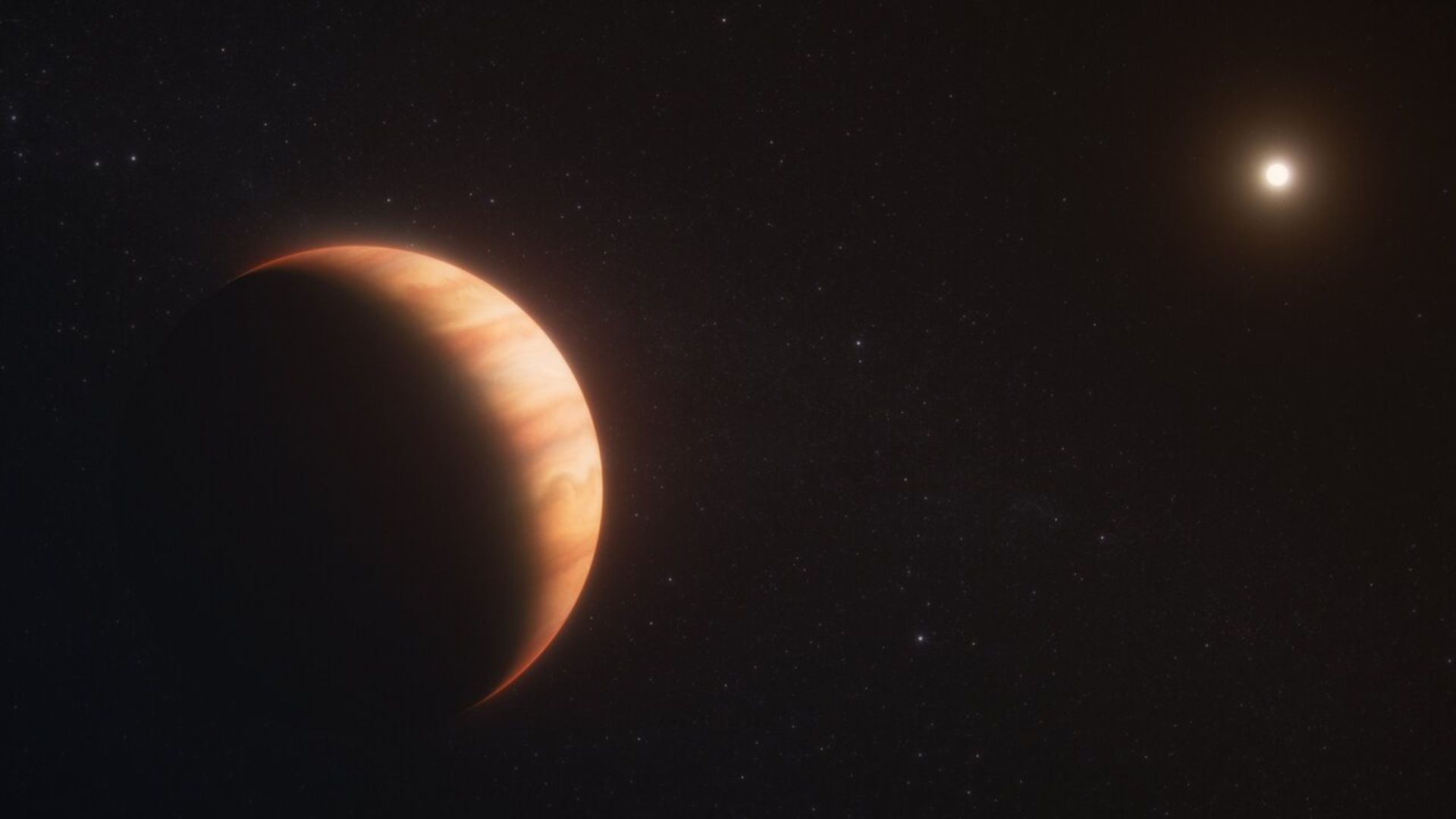
The system is located about 80 light-years from Earth. At the center of the system is a white dwarf star named WD 1856+534. These stars are the remains of dead stars, and they are small, about the same size as Earth.
Yet orbiting the white dwarf is a gas giant named WD 1856 b, which is as large as Jupiter. This makes the planet seven times larger than its host star. It also has an extremely close orbit around its host star, completing a full orbit every 34 hours.
This close orbit should be impossible for a planet to have. When the host star was still alive, it would have destroyed any object that came close to it during its red giant phase.
Solving The Temperature Mystery
Advertisement
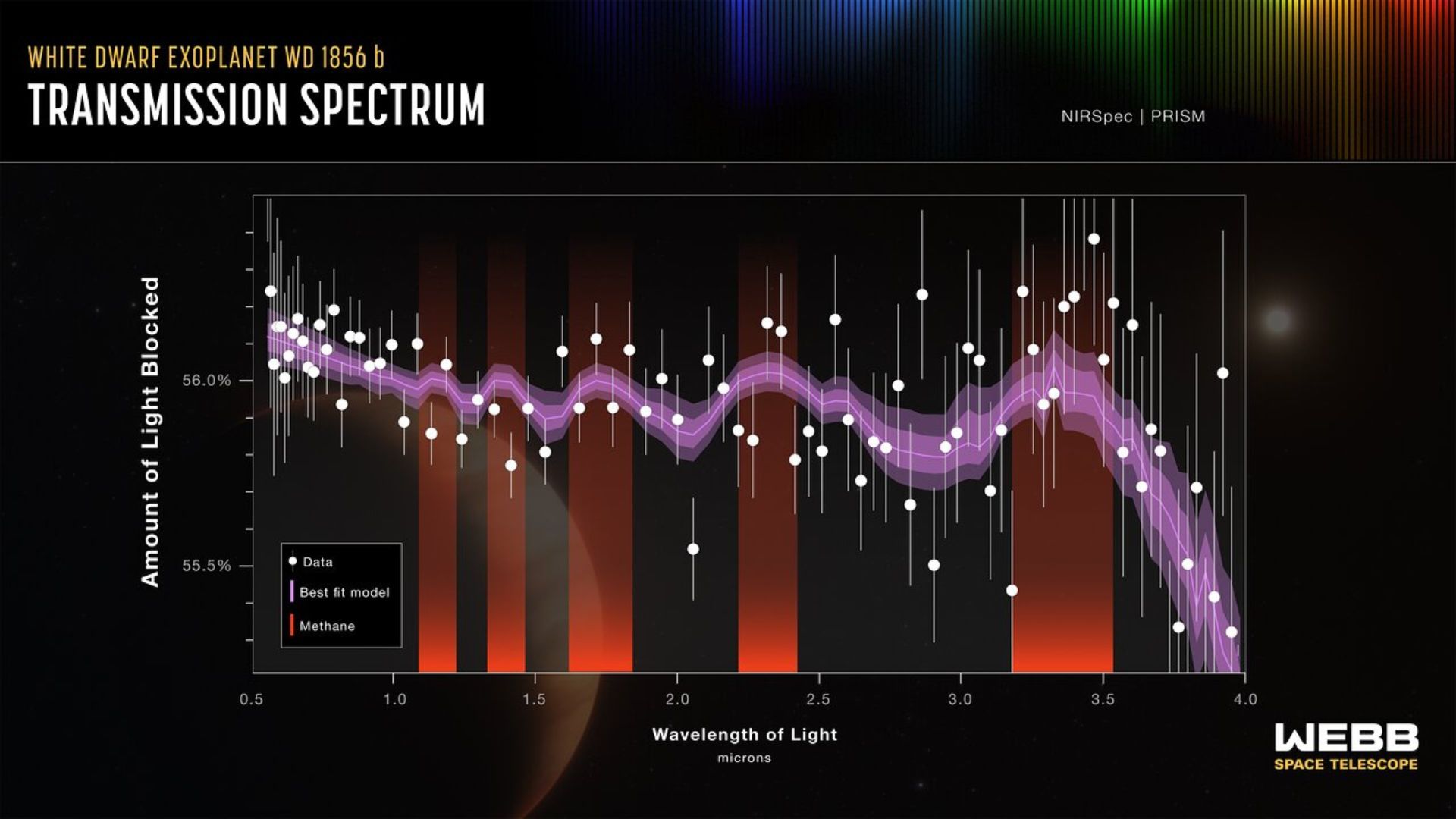
Using the James Webb Space Telescope, scientists observed the planet as it passed in front of its host star. This allowed them to collect data about its mass and temperature. The planet was determined to have a temperature of 126 degrees Celsius.
This is significantly hotter than the planet should be. Such a hot temperature would come from the host white dwarf releasing so much heat into the system, which does not emit much heat of its own. Scientists assumed that the planet’s heat came from a past event.
By understanding how long it takes for objects of this nature to cool, scientists estimated the planet’s timeline. The planet was not created within the dead star. Instead, it existed in a distant orbit around the star. Between three and five and a half billion years after the death of the star, the planet began to slowly migrate into a closer orbit around the dead star. The gravitational pull of the dead star began to distort and heat the planet as it migrated. After this event, the planet has simply been cooling down over time.
Looking Into The Future
The telescope also detected the presence of clouds and methane in the planet’s atmosphere. This was the first time scientists have detected the atmosphere of a planet in orbit around a dead star.
More importantly, though, this finding provides insight into our own solar system. This discovery confirms that gas giants can survive the death of their once-living star. Five billion years from now, when our sun becomes a red giant, gas giants like Jupiter and Saturn will likely remain in our solar system. Thus, studying this planet is as if looking into a time machine to observe the end of our own solar system.
 Read Exclusive Stories
 Bookmark & Save Articles For Later