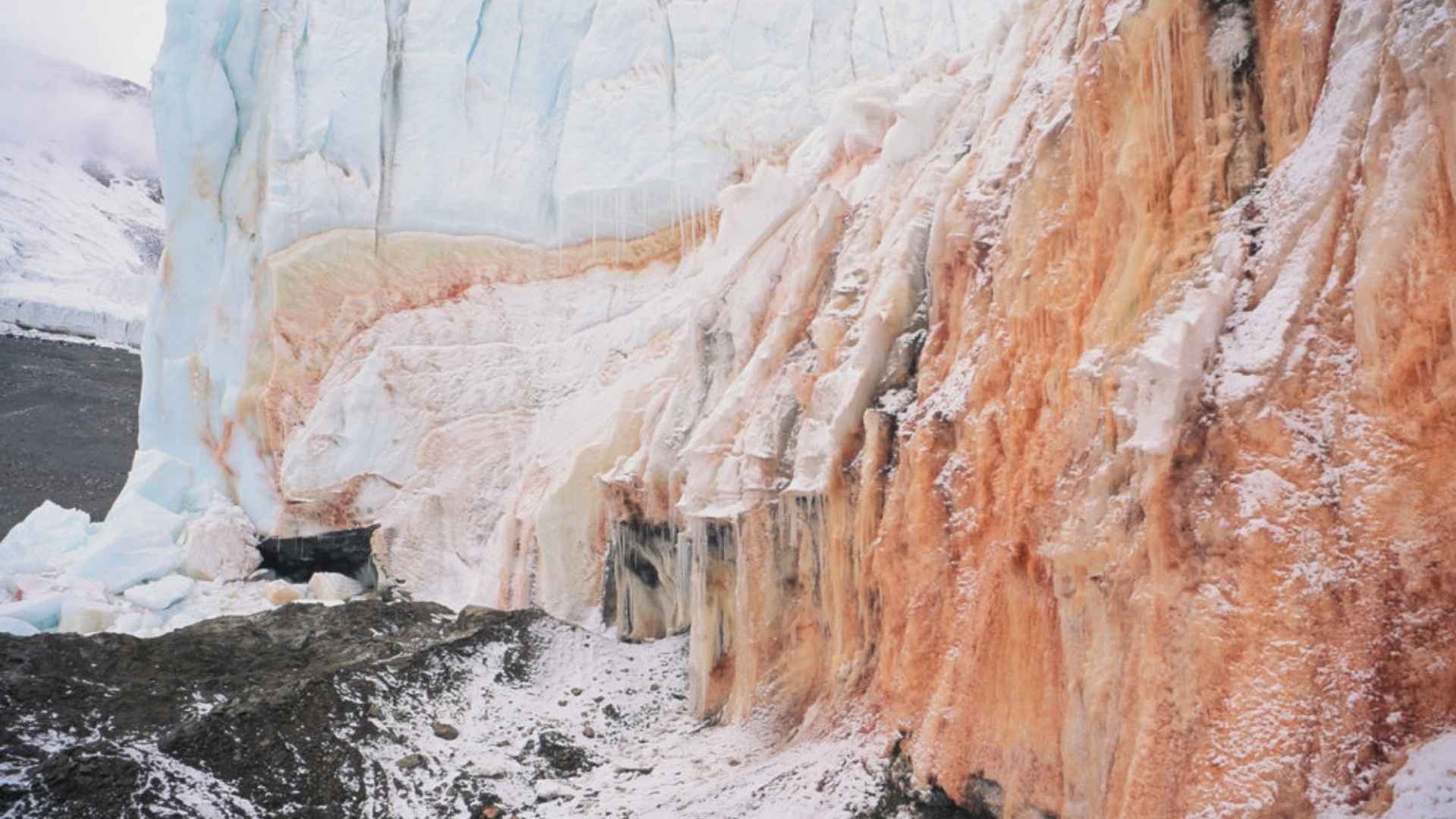
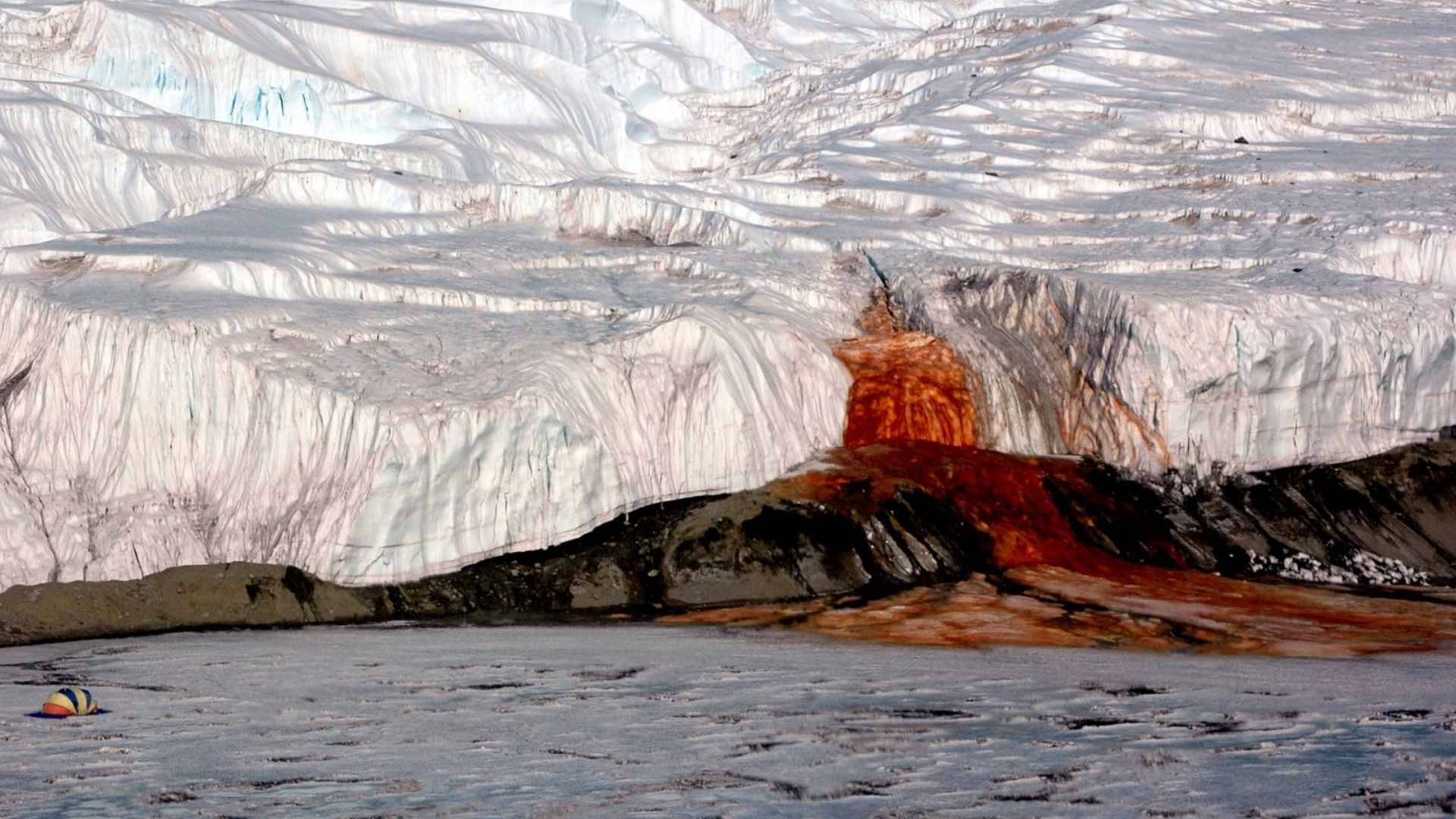
At first glance, it looks impossible. A stream of deep red water pours from the side of a glacier in Antarctica, staining the ice below like a giant splash of paint. Against the bright white landscape, the contrast is striking. This natural wonder, known as Blood Falls, has puzzled scientists for more than a century.
The Source of the Red Water
When explorer Thomas Griffith Taylor first discovered it in 1911, many people assumed the color came from red algae. It seemed like a reasonable explanation. But as researchers gathered more evidence, they realized something much more interesting was happening.
The red water comes from a hidden reservoir trapped beneath Taylor Glacier.
This underground pool contains extremely salty, iron-rich water. The water has been isolated from the surface for millions of years beneath layers of ice. When small amounts of iron escape through cracks in the glacier and into the air, the iron reacts with oxygen. The result is the same process that creates rust. That reaction turns the water a vivid red color, creating one of the most unusual sights on Earth.
Life Beneath the Ice
Advertisement
The science behind Blood Falls became even more fascinating as researchers continued their work. Scientists discovered that microbial life survives within this harsh environment despite freezing temperatures, darkness, and limited oxygen. In other words, life found a way to exist in conditions that seem almost impossible.
That discovery matters because it helps researchers better understand how organisms adapt to extreme environments. Some scientists believe these findings may even help guide future studies of places beyond Earth, including icy moons such as Europa and Enceladus, where liquid water may exist beneath frozen surfaces.
Of course, Antarctica is challenging enough on its own. The continent remains one of the least explored places on the planet. Every new discovery reminds us how much remains hidden beneath the ice.
A Reminder That Discovery Never Ends
And that’s part of what makes Blood Falls so inspiring. Even in an age of satellites, artificial intelligence, and advanced technology, our world still holds mysteries. There are still places where nature can surprise us.
Blood Falls is more than a geological curiosity. It’s a reminder that discovery isn’t something that happened only in the past. Scientists continue to uncover new information about our planet every year. The next great insight may come from a laboratory, a rainforest, the ocean floor, or a glacier in Antarctica. That’s one of the most exciting things about science. The more we learn, the more we realize there is still waiting to be discovered.
 Read Exclusive Stories
 Bookmark & Save Articles For Later