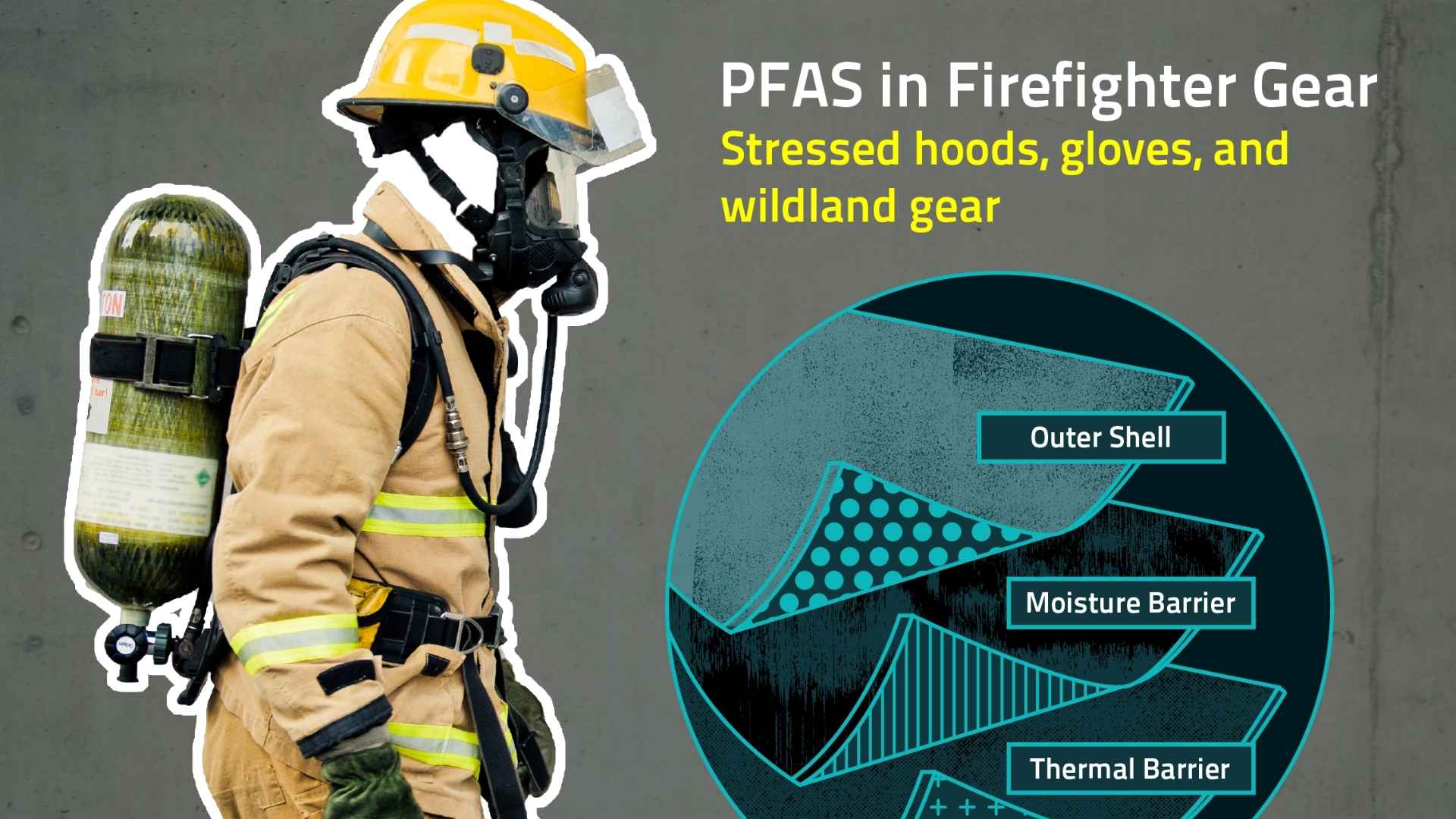
Firefighters have many concerns about their jobs, but lately, people have started to care about one specific thing: the gear they wear to fight fires. The gear that firefighters wear contains PFAS, also known as “forever chemicals.” These chemicals are helpful for repelling water and oil. However, they do not break down in the environment and can cause various health problems, such as cancer.
A recent report from the National Institute of Standards and Technology (NIST) examined the wear and tear on the chemicals in the firefighting gear that firefighters use. Here’s what they found.
The Mystery of the Rising Levels
As the firefighters’ gear wears down, one might assume that the chemicals would wash away. However, according to research, the gear firefighters use to fight fires contains decreasing levels of PFAS chemicals. However, the decrease in levels is due to PFAS chemicals that were previously “hidden” within the clothing, emerging under physical and thermal stress. Additionally, the decrease in chemical chains is due to larger chains breaking down into smaller ones, which are easier for scientists to measure. Thus, older gear has higher levels of measurable PFAS than newer gear.
Advertisement
Different Results for Wildfires
In contrast, firefighters who use gear to fight wildfires have PFAS levels that decrease over time when exposed to sunlight, moisture, and friction within wildfires. Due to the thinner, more varied environments the gear is meant to withstand, it reacts differently to environmental factors.
What This Means for the Future
NIST does not claim that the firefighters are getting sick from these chemicals. However, they have provided data for the doctors and toxicologists to use for their research on the chemicals in firefighting gear. Until now, no one knew for certain how many PFAS chemicals were in firefighting gear or how they would break down over time. The creation of PFAS-free firefighting gear is already underway, and with these new measurements, firefighters’ gear can be designed to better protect them from fires without introducing additional risks.
 Read Exclusive Stories
 Bookmark & Save Articles For Later