NASA’s Curiosity rover has been roaming across the surface of Mars since 2012, and its latest discovery is giving scientists new information about the Red Planet. The rover recently found a diverse mix of organic molecules in the soil of Gale Crater. These chemicals are often called the “building blocks of life” because they are similar to what we see here on Earth.
While this doesn’t mean we’ve found “life on Mars,” it does show that Mars is capable of holding onto complex chemicals for a long time.
A Time Capsule on Mars
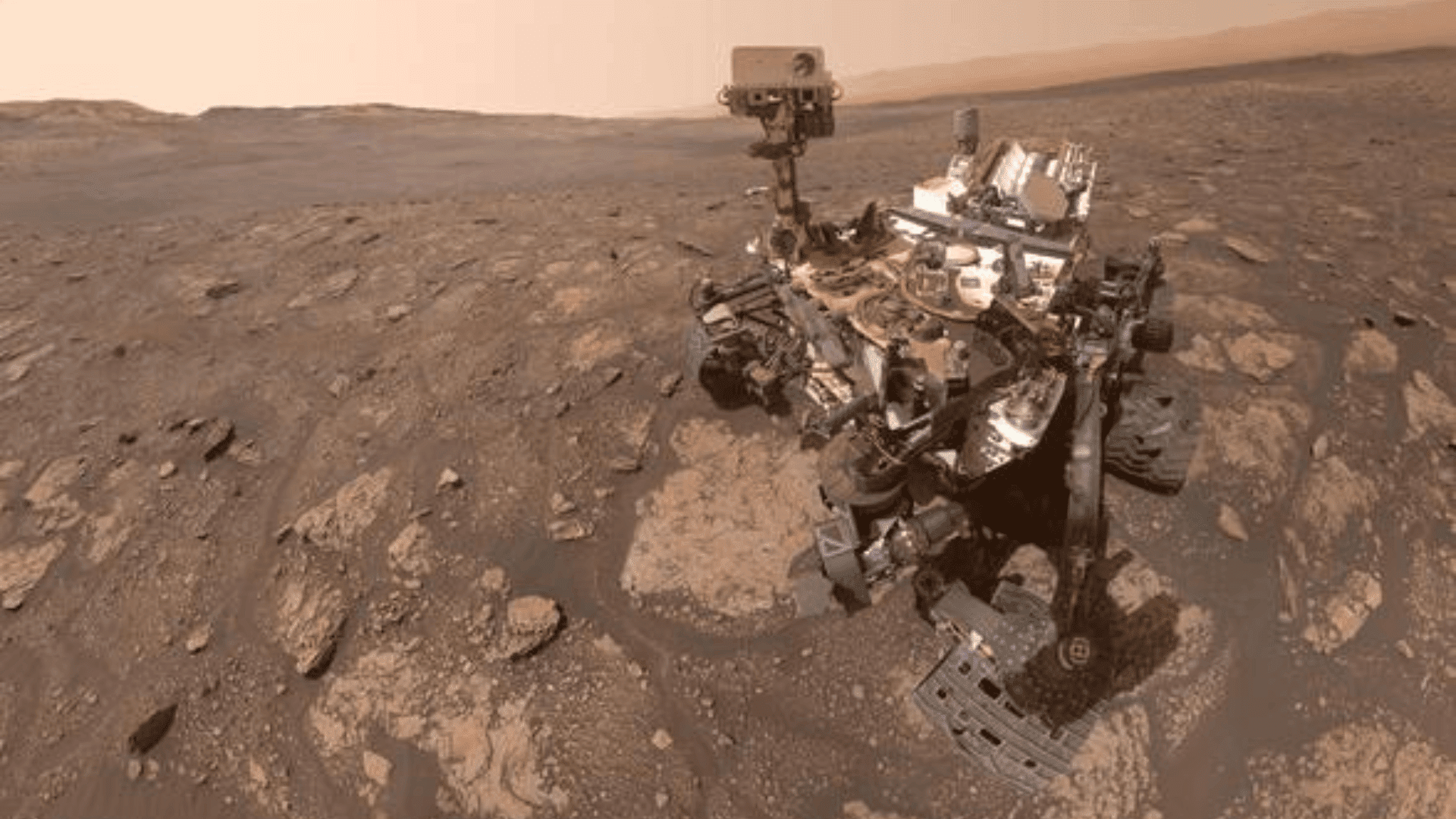
The experiment took place in an area called Glen Torridon. This spot is full of clay, which is significant because clay is great at trapping and protecting organic matter. Scientists believe the rover is looking at material that has been sitting there for billions of years.
“We think we’re looking at organic matter that’s been preserved on Mars for 3.5 billion years,” said Amy Williams, a professor at the University of Florida who led the study. “It’s really useful to have evidence that ancient organic matter is preserved, because that is a way to assess the habitability of an environment. And if we want to search for evidence of life in the form of preserved organic carbon, this demonstrates it’s possible.”
One of the most interesting finds was a nitrogen-bearing molecule that looks a lot like the precursors to DNA. The rover also found benzothiophene, a sulfur-heavy chemical often carried by meteorites.
Advertisement
Testing the Samples
To find these tiny bits of history, Curiosity used its Sample Analysis at Mars (SAM) instrument suite. Since the rover only had two small cups of a specific chemical called TMAH to help break down the soil samples, the team had to be very careful about where they used them.
Right now, Curiosity distinguishes whether these chemicals came from ancient living things or if they were just delivered by space rocks or geological shifts. Williams noted that the same materials found on Mars were likely present on early Earth, too.
“The same stuff that rained down on Mars from meteorites is what rained down on Earth, and it probably provided the building blocks for life as we know it on our planet,” Williams said.
For now, the team is optimistic about what this means for future exploration.
“We now know that there are big complex organics preserved in the shallow subsurface of Mars, and that holds a lot of promise for preserving large complex organics that might be diagnostic of life,” Williams said. To get a final answer on whether life actually existed there, we will likely need to bring some of those rocks back to a lab on Earth.
 Read Exclusive Stories
 Bookmark & Save Articles For Later