A five-year survey of the sky has recently been completed, capturing more than 47 million galaxies and quasars in the most detailed map of the universe ever created.
Most Detailed Map of the Universe Ever
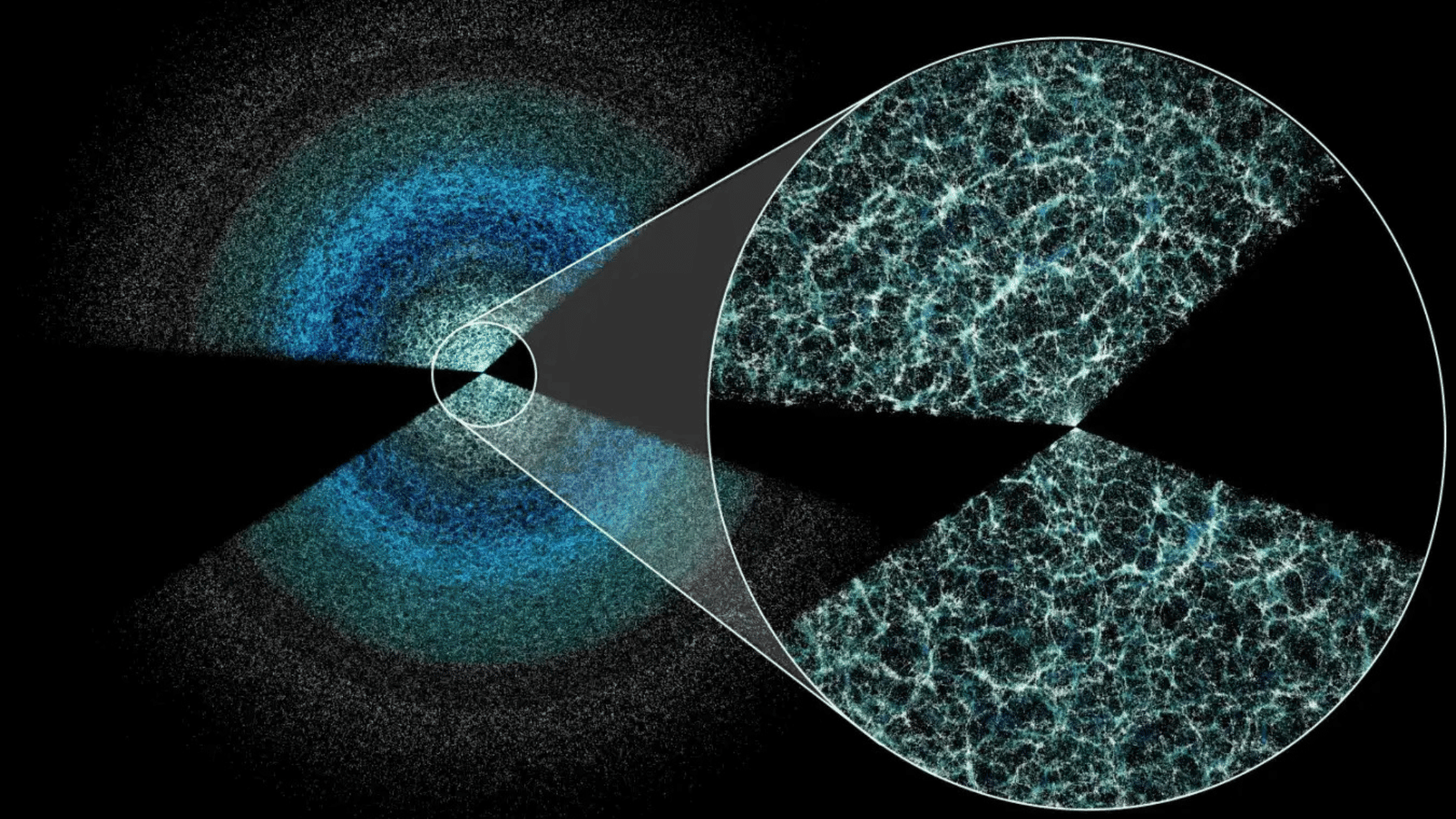
The Dark Energy Spectroscopic Instrument (DESI) at Kitt Peak National Observatory in Arizona has been scanning the sky since 2021. Examining the new data could help researchers learn more about the origins of the weakening of dark energy.
The DESI was much more efficient than expected, as researchers had originally only expected to gather data on 34 million galaxies and quasars. According to David Schlegel at the Lawrence Berkeley National Laboratory in California, previous maps of the universe included approximately 5 million galaxies.
Advertisement
“We’ve actually been on this curve now for my whole career where, every 10 years, we’re making 10-times-larger maps,” Schlege said. “You can ask the question, at what point have you mapped every observable galaxy within 10 billion light years… and if we stayed on the curve, we would do that by 2061.”
Though the main survey is complete, the data will still take another year to analyze before becoming available to researchers. The project will also continue collecting data for another two and a half years.
The new data will allow scientists to compare the distribution of galaxies in the distant past versus today, which may enable them to analyze dark matter and whether or not it’s weakening in more detail. As dark matter makes up approximately 70 percent of the universe, it would deeply impact the standard model of cosmology if it were indeed weakening over time.
“When I was a PhD student in Cambridge, 40 years ago, we had a sample of thousands of galaxies. The community was starving for data,” he says. “I think my students [today] may have the opposite problem; to have been flooded with data, and it’s very challenging to analyse it,” stated Ofer Lahav, Perren Chair of Astronomy at University College London.
 Read Exclusive Stories
 Bookmark & Save Articles For Later