Data centers are growing at a massive rate, and with that growth comes a demand for electricity. To keep up, engineers at the University of California, San Diego developed a new chip design that changes how graphics processing units (GPUs) handle power.
The tech focuses on a common part of almost every electronic device called the DC-DC step-down converter. This component acts as a bridge, taking high voltage from a power source and dropping it down to the low levels that sensitive computer parts need to run safely. In a typical data center, power comes in at 48 volts, but a GPU might only need 1 to 5 volts.
Pushing the Limits
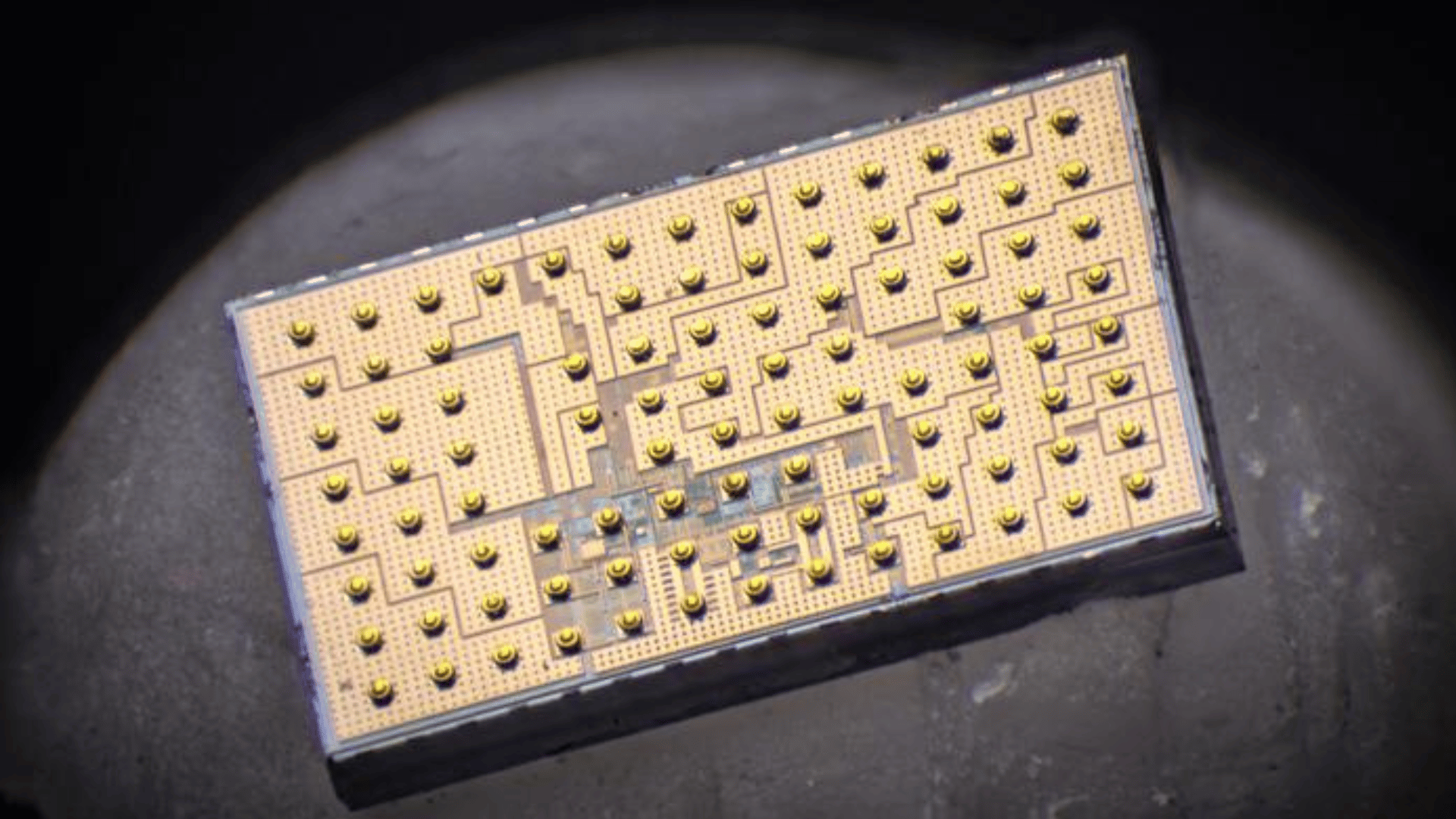
For a long time, we’ve relied on magnetic parts called inductors to do this job. However, they are getting harder to shrink down, and they lose a lot of efficiency when they have to make a big jump from high to low voltage.
“We’ve gotten so good at designing inductive converters that there’s not really much room left to improve them to meet future needs,” said Patrick Mercier, a professor at the UC San Diego Jacobs School of Engineering.
Advertisement
To fix this, the team looked at piezoelectric resonators. These tiny devices move energy through physical vibrations instead of magnets. They are smaller and potentially easier to make in large numbers. According to Mercier, “They have a lot of room to grow and have the potential to deliver better performance than anything that’s come before them.”
More Efficient Data Centers
In the past, these vibration-based chips struggled to stay efficient when dealing with large voltage gaps. The UCSD team solved this by combining the resonator with a specific layout of small capacitors. This hybrid design creates extra paths for electricity to flow, which cuts down on wasted energy.
In lab tests, a prototype chip turned 48 volts into 4.8 volts with 96.2% efficiency. It also pushed out about four times more current than previous versions of this technology.
There is still work to do before these chips show up in your local server farm. Since the parts actually vibrate, they can’t be soldered onto a board the way we do things now.
“Piezoelectric-based converters aren’t quite ready to replace existing power converter technologies yet,” Mercier said. “But they offer a trajectory for improvement. We need to continue to improve on multiple areas — materials, circuits and packaging — to make this technology ready for data center applications.”
 Read Exclusive Stories
 Bookmark & Save Articles For Later