Doctors usually have to find the source of a heart problem while the patient is already on the operating table. It’s a high-stakes guessing game that can take hours. But researchers at Johns Hopkins University recently finished a small trial that changes the order of operations. They created “digital twins” of patients’ hearts to test out surgeries in a simulator before ever touching the real person.
The results, recently published in the New England Journal of Medicine, show that this approach is much faster and more accurate than the old way.
A Personalized Map of the Heart
The study focused on ten patients who had survived heart attacks but were left with life-threatening irregular heartbeats, known as ventricular tachycardia. Doctors usually treat this with “ablation,” which involves destroying the tiny pieces of heart tissue causing the electrical glitches. The problem is that it’s hard to see exactly where those spots are. Often, the surgery has to be repeated, which causes more scarring and damage to the heart.
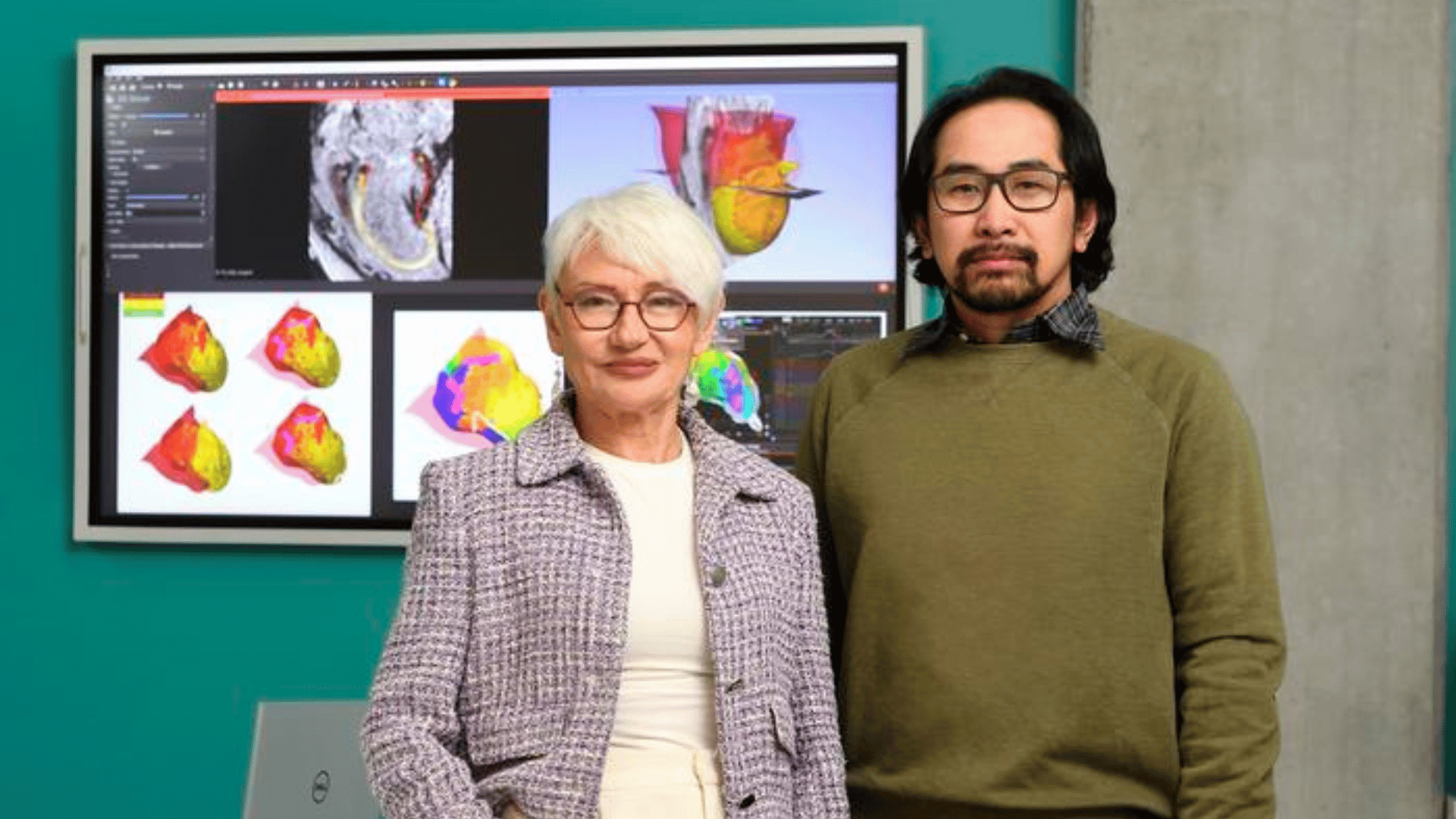
To solve this, the team used MRI scans to build a 3D digital replica of each patient’s heart. This allowed them to see how electricity moved through that specific person’s anatomy.
Advertisement
“In the patient’s digital twin, we can try different scenarios for treatment before we treat the actual patient and provide the treating physician with the best, most optimal scenario, minimizing damage to the heart, and increasing the potential for a successful treatment,” said senior author Natalia Trayanova. “The digital twin allows us to address all potential sources of arrythmias that may not be seen by clinical interrogation. We exhaust all possibilities.”
Better Results and Shorter Recovery
Once the digital twin showed the doctors exactly where to go, they imported that map into their surgical tools. The actual procedures were much shorter because the team already had their targets.
Usually, these procedures only work long-term about 60% of the time. In this trial, every single patient was free of their heart rhythm issues more than a year later. Most of them were even able to stop taking their heart medications entirely.
“For patients, digital twins can be life-changing and life-saving,” said cardiologist Jonathan Chrispin. “We show we can make their procedures safer, shorter and more effective by targeting only the critical portions of the heart.”
The researchers are now looking to start a much larger trial. They are also working on a version of the software that runs on a standard desktop, which would give doctors these digital maps in just a few minutes.
 Read Exclusive Stories
 Bookmark & Save Articles For Later