A phenomenon called the “overview effect”, which is a deep feeling of awe and appreciation of the planet’s interconnectedness, is often experienced by astronauts while observing the Earth from space. Researchers have now documented a similar cognitive shift from aquanauts, or people living and working under the sea using special underwater laboratories, that they’re calling the “underview effect”.
The Underview Effect
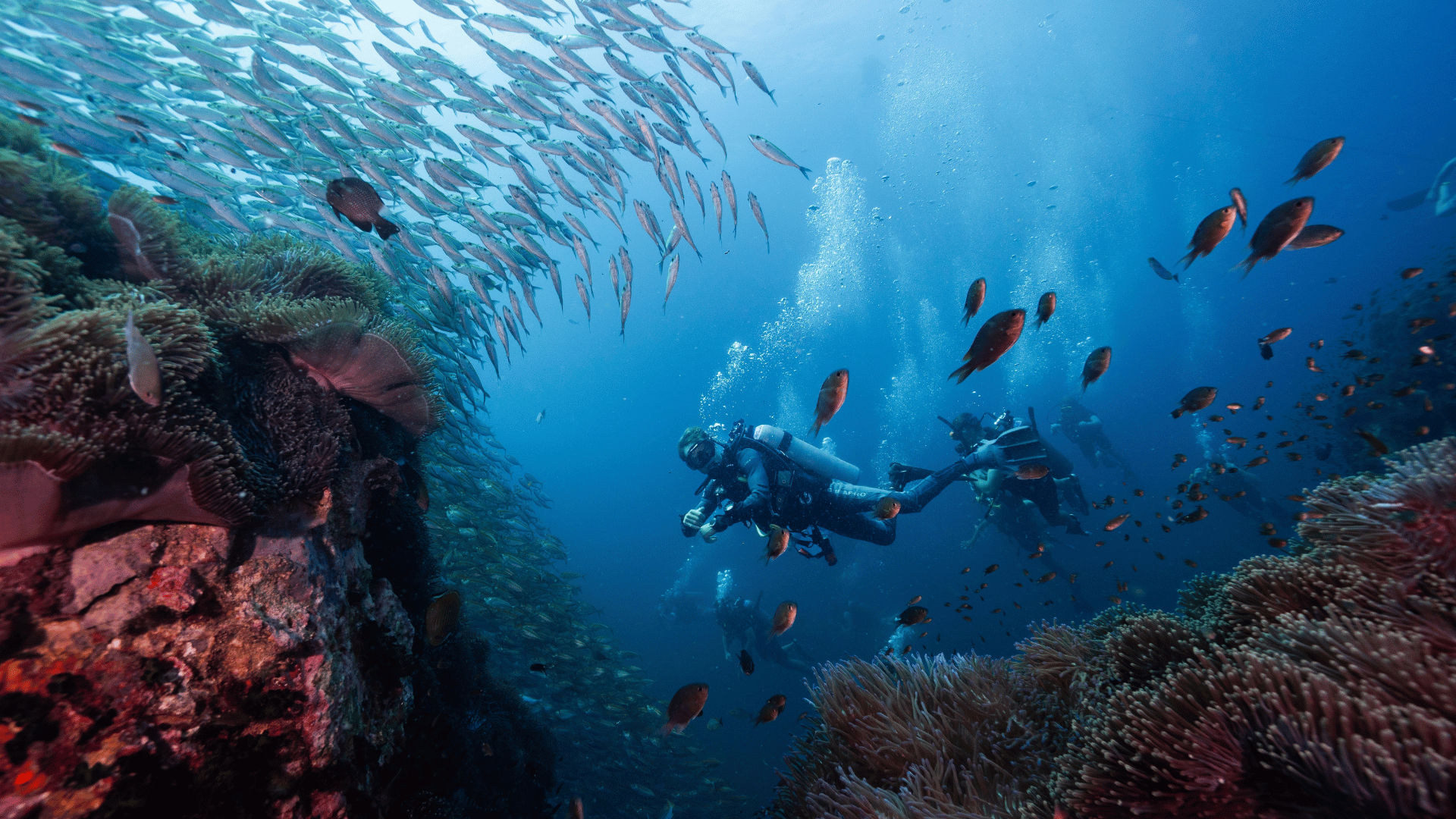
As there are only around 100 living members, aquanauts are a largely understudied population. The underwater stations they use are designed to have pressure equal to the outside aquatic environment, allowing researchers to spend a longer time scuba diving without the need to decompress.
Normally, divers can only descend up to 60 feet for 45 minutes before needing to resurface, but saturation divers can remain underwater for sometimes over 8 hours per day.
Advertisement
Senior author Brian Helmuth, a marine and environmental studies professor at Northeastern University, compared the scenario to the quality of observations made by someone like Jane Goodall, the world-renowned primatologist who was able to live in the forest and study chimpanzees, versus someone who was dropped into the location by a helicopter for 30 minutes at a time.
Helmuth and Kristen Kilgallen, a third-year PhD student at Northeastern University and the lead author, interviewed 14 aquanauts (one of whom is also an astronaut) about the psychological, behavioral, and cognitive changes they experienced living underwater for extended periods of time.
Their results showed that 70 percent of respondents reported heightened awe and gratitude, and 64 percent reported increased engagement with their surroundings because of the challenges posed by living underwater.
Though even small periods of time scuba diving can provide this sense of awe, research indicates that the feeling is amplified the more time spent underwater. If this sense of wonder and kinship with nature can be shared, it could help people appreciate the natural world more and support conservation efforts.
The study is published in the journal Environment and Behavior.
 Read Exclusive Stories
 Bookmark & Save Articles For Later