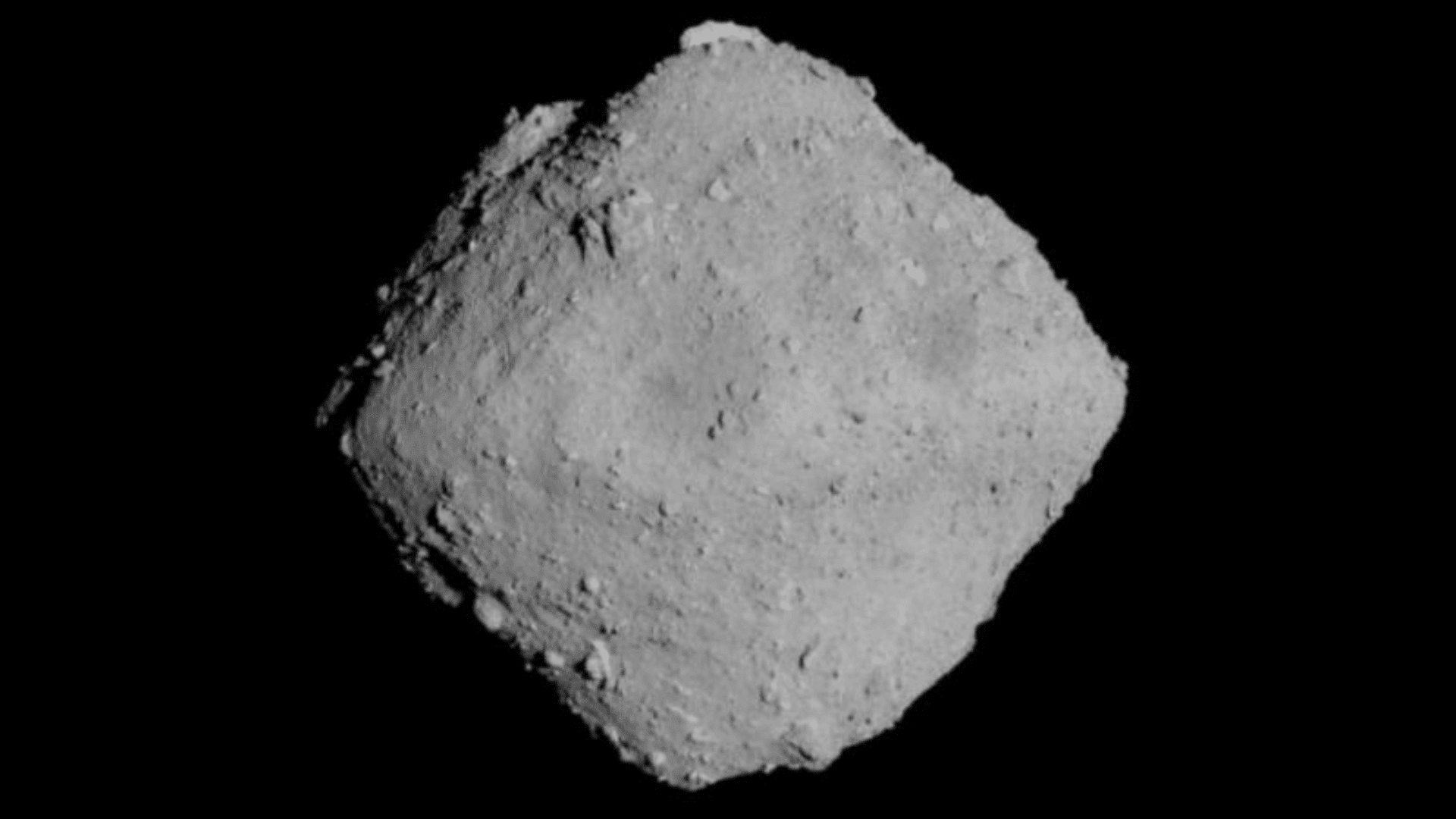
An analysis of samples collected from asteroid Ryugu showed all five key genetic ingredients for life on Earth, or the five canonical nucleobases that make up RNA and DNA.
Genetic Ingredients for Life on Earth
Though this has previously been found in asteroid Bennu, the new discovery suggests that ingredients for life may not be as rare in the Solar System as previously believed.
“The detection of diverse nucleobases in asteroid and meteorite materials demonstrates their widespread presence throughout the Solar System,” writes a team led by biogeochemist Toshiki Koga of the Japan Agency for Marine-Earth Science and Technology, “and reinforces the hypothesis that carbonaceous asteroids contributed to the prebiotic chemical inventory of early Earth.”
Advertisement
Life on Earth relies on two molecules, deoxyribonucleic acid (DNA) and ribonucleic acid (RNA), storing and transferring genetic information. These molecules are made up of five base ingredients: adenine, cytosine, guanine, thymine, and uracil. Understanding the abundance of these components and where they come from could help us understand how life first emerged in the early history of the Solar System.
Koga and his colleagues analyzed two distinct samples of Ryugu material, finding that both contained the five nucleobases. Researchers also compared the contents of Ryugu with those of Bennu and samples from two meteorites, Orgueil and Murchison, which also contained nucleobases.
They found that the five nucleobases fit within two categories: The purines, which are adenine and guanine; and the pyrimidines, which are cytosine, thymine, and uracil. While Ryugu had almost equal amounts of pyrimidines and purines, Murchison was richer in purines, and both Bennu and Orgueil were richer in pyrimidines. Researchers believe these differences relate to ammonia levels in the samples, meaning the chemical environment within an asteroid could impact the formation of nucleobases.
“The universal detection of all five canonical nucleobases in samples from the carbonaceous asteroids Ryugu and Bennu highlights the potential contribution of these exogenous molecules to the organic inventory that supported prebiotic molecular evolution and ultimately enabled the emergence of RNA and DNA on the early Earth,” the researchers write.
The findings have been published in Nature Astronomy.
 Read Exclusive Stories
 Bookmark & Save Articles For Later