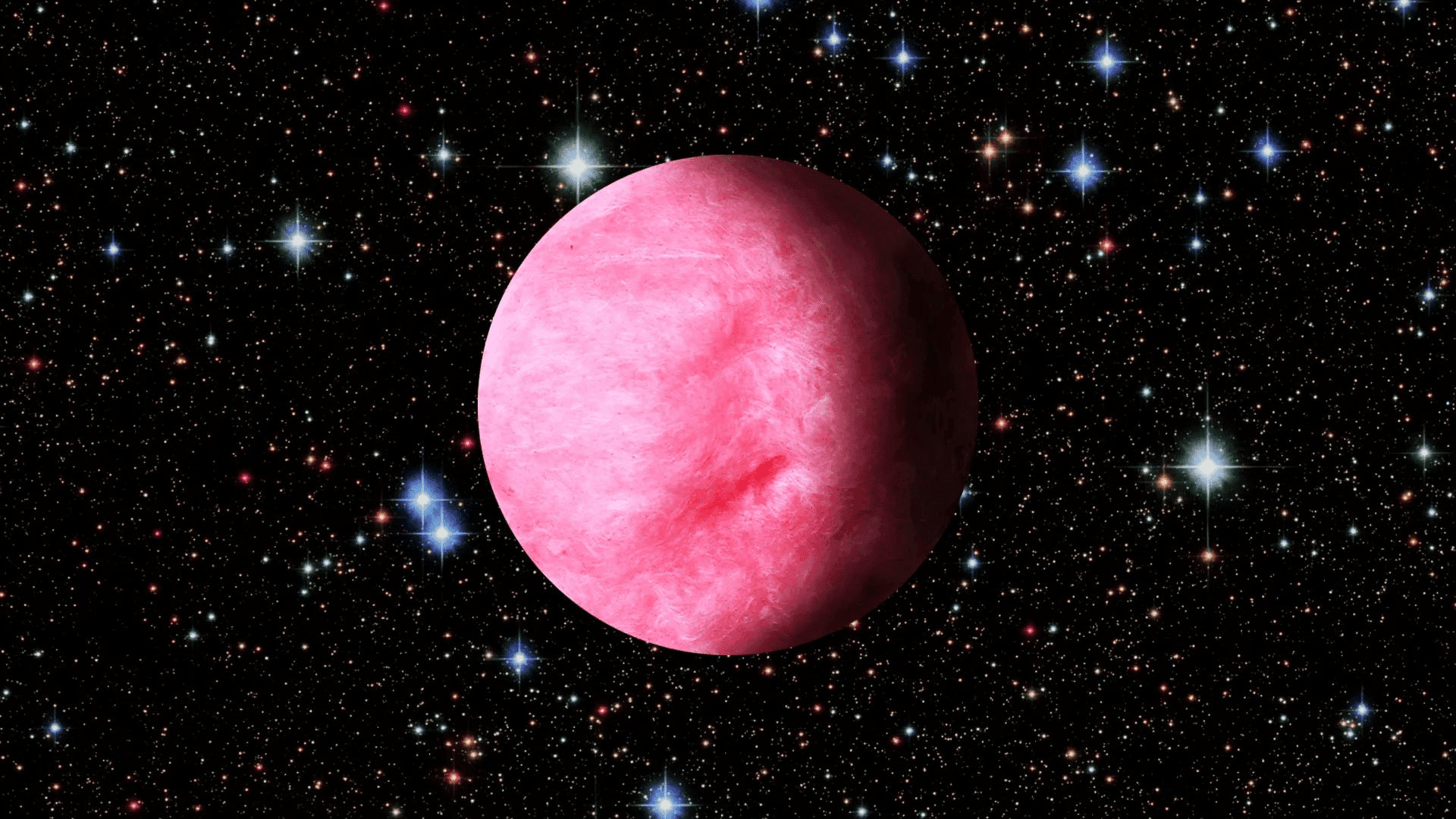
For years, astronomers have been baffled by the Kepler-51 system. Found 2,600 light-years from Earth, the system contains planets as big as Jupiter but as light as a handful of cotton candy. New data from researchers at Penn State, published this week in the Astronomical Journal using the James Webb Space Telescope (JWST), finally explains why the planets can’t be seen.
The planet, called Kepler-51d, has a haze the size of Earth. Using the JWST’s Near-Infrared Spectrograph, scientists attempted to look through its atmosphere to find signs of water or methane. Instead, they encountered a brick wall.
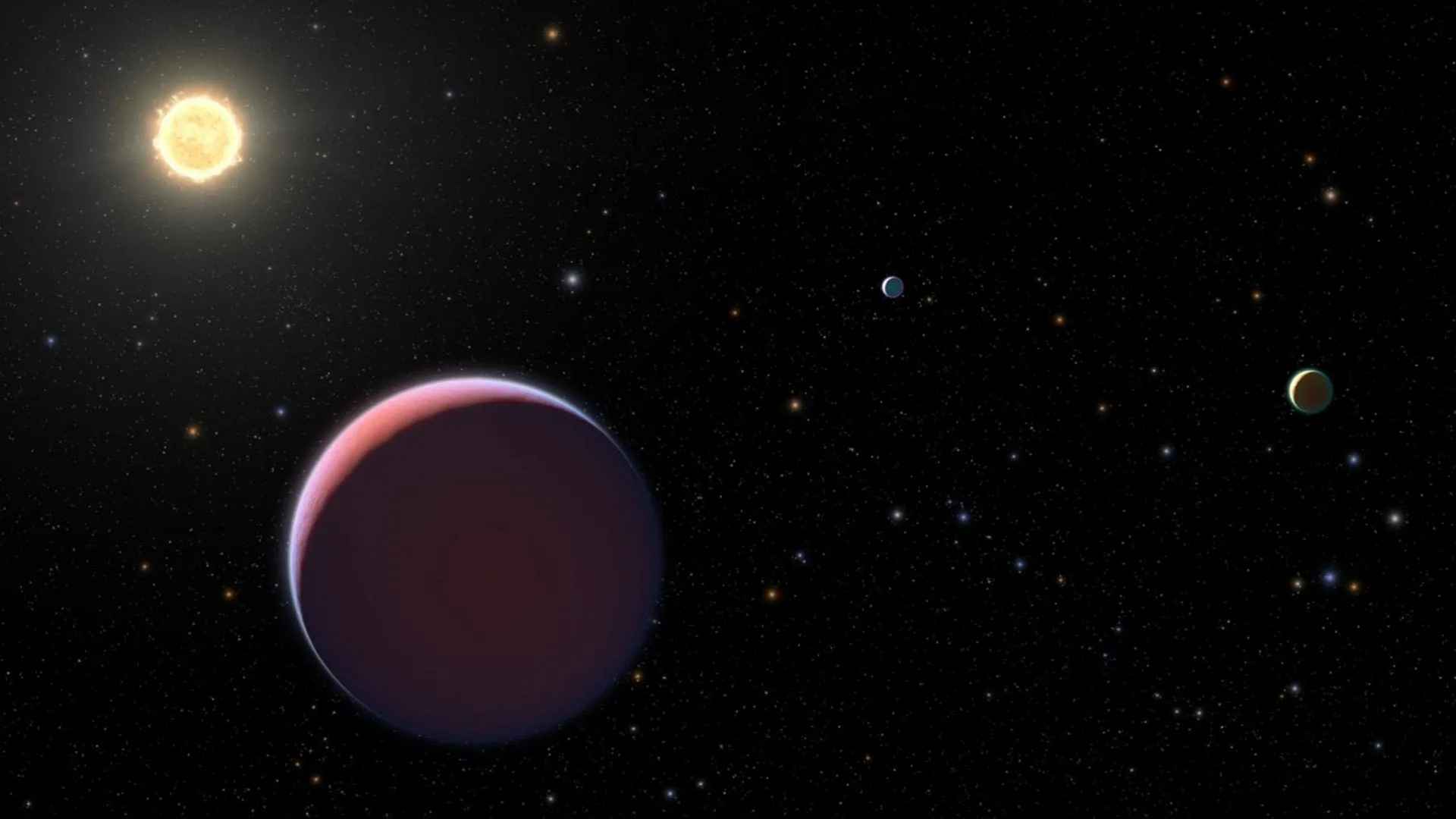
The planet is enveloped in a photochemical haze the size of Earth. Like the smog on Saturn’s moon, Titan, this haze is made up of hydrocarbons.
This discovery presents two mysteries for the researchers:
Advertisement
The planet is relatively close to its host star, meaning the intense radiation from the star should cook off the light gases that make up the planet. Additionally, the planet lacks a massive core of heavy elements that would be necessary for such a giant planet to exist in the first place.
“We think these planets have tiny cores and huge atmospheres of hydrogen and helium,” says Jessica Libby-Roberts, the lead author on the newly published paper. “The mystery is how they formed and how they kept their atmospheres without them getting blown away by the star.”
The Hidden Rings Theory
Because the planet is so cloudy that no light reaches the planet’s surface, some researchers are considering an alternative explanation for how the planet was formed. The theory suggests that Kepler-51d has a series of massive, tilted rings around the planet, similar to the Saturn system. These rings would block the light reaching the planet, making it appear to have a massive atmosphere of hydrogen and helium.
No matter what the cause of the planet’s massive haze and the odd properties of the planet, one thing is for certain: the universe continues to reveal its many secrets – or rather, its many ways of hiding them from even the world’s most powerful telescopes.
 Read Exclusive Stories
 Bookmark & Save Articles For Later