Scientists are always hunting for better batteries, which are stuck in a cycle of “trial and error.” It is usually a slow, expensive process of mixing chemicals in a lab and hoping for a breakthrough. However, according to a new review from researchers at Tongji University, that old-school approach is finally hitting a wall.
The study, published in the journal ENGINEERING Energy, shows how researchers are moving away from manual testing and toward a smarter, AI-driven system. Led by Professor Menghao Yang, the team mapped out how we got from simple computer models to the advanced AI we see today.
Working for Better Tech
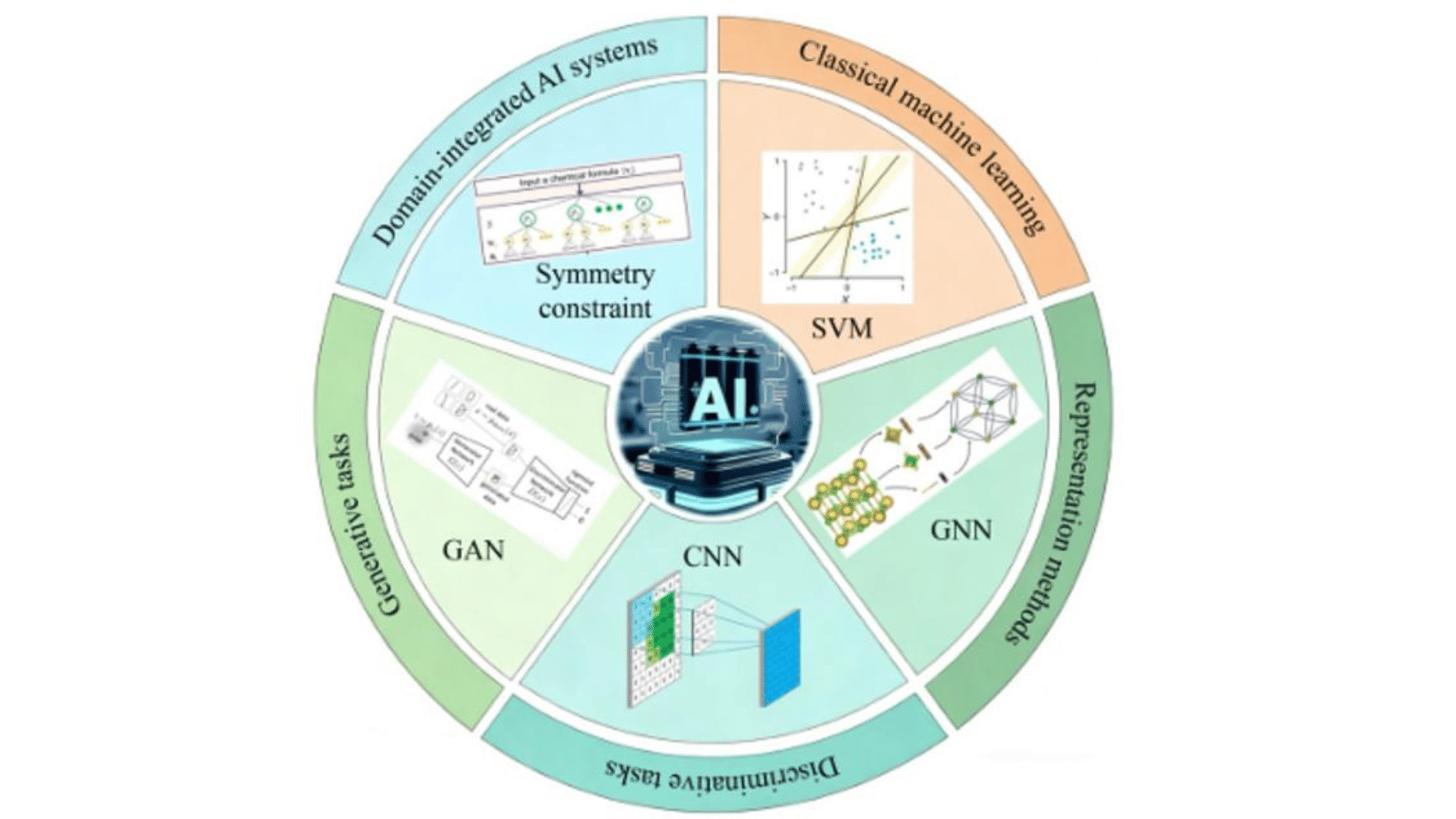
One of the most interesting shifts mentioned in the research is something called “Inverse Design.” Usually, a scientist makes a material and then tests it to see what it can do. With AI, scientists can start with a goal, like a battery that charges faster or lasts longer, and let the AI work backward to find the exact chemical structure needed to make it happen.
“The integration of AI into energy materials research is no longer just a trend; it is a necessity for efficiency,” said Professor Yang. “By utilizing generative AI and Large Language Models, we can navigate the vast chemical space of potential materials at speeds that were previously unimaginable.”
Advertisement
Better Batteries and Green Hydrogen
The research focuses on two main areas where this tech is actually making a difference:
Next-Gen Batteries: AI is helping predict how long a battery will live and finding better ways to make lithium-ion cells safer.
Clean Energy: For things like green hydrogen production, AI helps identify the best surfaces for catalysts, which helps lower CO2 emissions.
The team is especially excited about “Large Models.” These systems can read through a mountain of scientific papers to find connections that humans might miss. They act like an intelligent co-pilot, suggesting new ways to build materials that haven’t been tried yet.
The researchers pointed out that AI is only as good as the data it gets, and sometimes it is hard to tell exactly how an AI reached its conclusion. However, the goal is a future of “Self-Driving Laboratories” where AI handles the design and the experiments all on its own.
 Read Exclusive Stories
 Bookmark & Save Articles For Later