Nuclear energy research is getting more practical. Starting this March, the National Reactor Innovation Center (NRIC) is launching a new facility called the Molten Salt Thermophysical Examination Capability, or MSTEC for short. Based at the Idaho National Laboratory (INL), this lab is designed to help scientists figure out how high-temperature liquid fuel salts behave when things get hot.
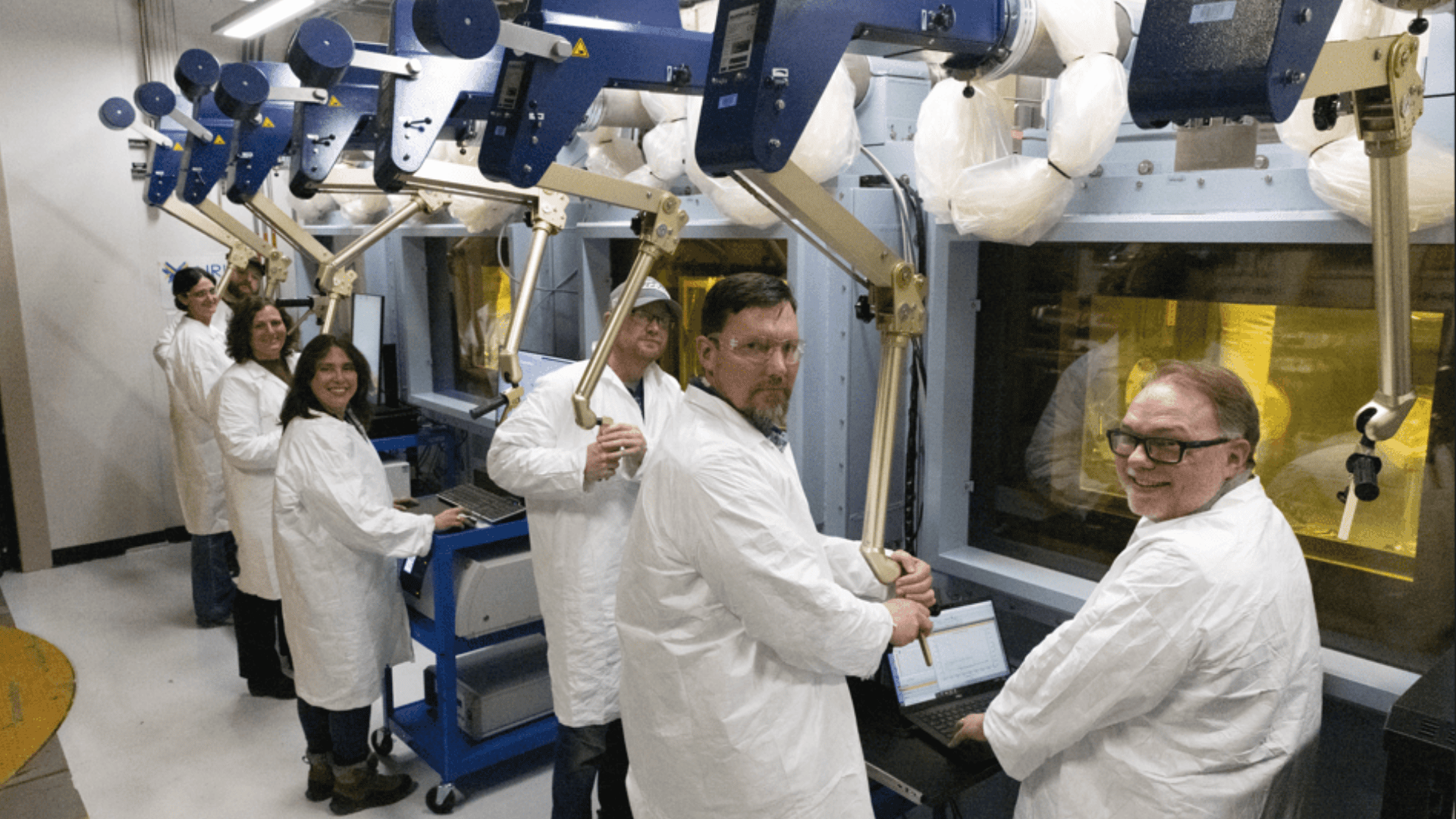
The facility is a specialized, shielded argon glove box built to handle both irradiated and nonirradiated materials. In simpler terms, it’s a safe, controlled space where researchers can poke and prod the materials that will power the next generation of reactors. By understanding how these salts perform, the team hopes to make molten salt reactors easier to design, license, and eventually get onto the power grid.
“The establishment of MSTEC marks a major achievement in our quest to advance next-generation nuclear reactor technologies,” said Brad Tomer, director of NRIC. “By offering the essential experimental infrastructure and expertise to industry, MSTEC will be pivotal in addressing our national energy objectives and propelling the future of nuclear power.”
Moving From Theory to Testing
Advertisement
Right now, companies all over the world are working on molten salt reactor concepts. However, there is a gap between a good idea on paper and a working power plant. To bridge that gap, engineers need reliable data on how these fuels hold up under pressure and radiation. MSTEC fills that void with tools to measure material behavior and flexible spaces for small-scale experiments.
Additionally, the location is a big draw. Being at the Idaho National Laboratory means the MSTEC team can work alongside other heavy-duty equipment, like the Advanced Test Reactor and the Analytical Research Laboratories. This setup allows researchers to irradiate salts and then immediately analyze them for precise isotopic changes.
“MSTEC will significantly advance fuel salt technologies for the Department of Energy, industry and academia,” said INL’s senior molten salt researcher, Toni Karlsson. “It also offers a unique platform for training future actinide scientists and fuel cycle researchers.”
By giving the industry a place to test their theories, the new facility helps lower the risk for the companies building these reactors.
 Read Exclusive Stories
 Bookmark & Save Articles For Later