Commuter rail in North America is getting a sustainable train option.
On October 5th, Stadler and Chicago’s Metra will showcase the first battery-electric FLIRT train built specifically for the U.S. market. According to the companies, it is a much-needed zero-emission passenger transportation option.
Leaders promise that it will make train rides cleaner and quieter.
Metra ordered eight of these new trainsets, and the plan is to have them carrying passengers by 2028. What makes this train special is how it works on routes that do not have overhead electric lines. Instead of relying on expensive full-corridor electrification, the train uses onboard lithium-ion batteries. It can recharge through existing 480V yard cables, dedicated charging stations, or even by recovering energy while braking.
“As transit agencies across North America explore practical pathways toward reducing emissions, battery-electric rail technology is becoming an increasingly attractive solution,” said Martin Ritter, CEO of Stadler North America. “We are proud to present the first U.S. battery FLIRT and demonstrate how innovative vehicle technology can help agencies achieve their sustainability, service, and operational goals.”
Moving Past Diesel
Advertisement
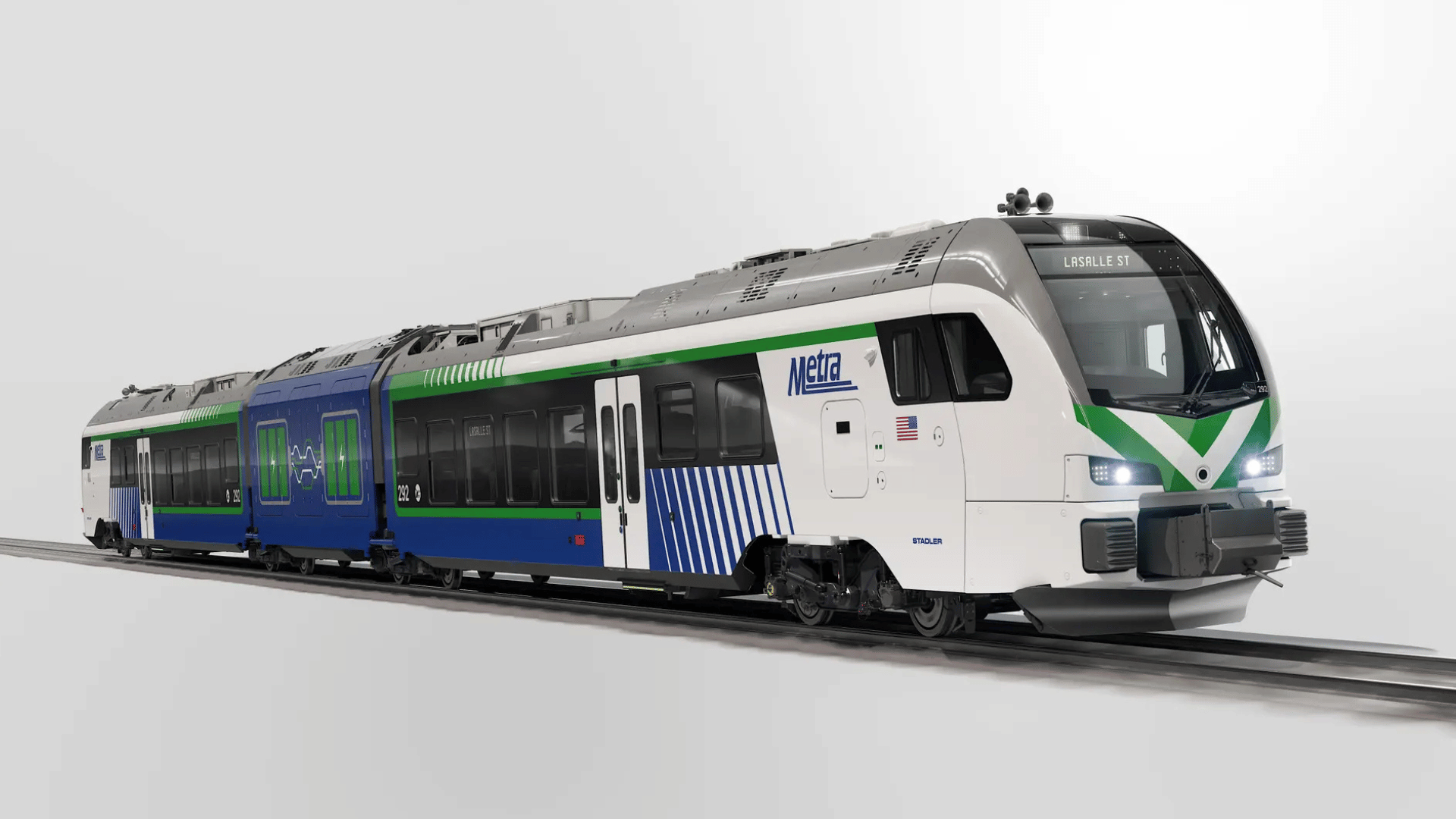
Stadler already has battery-powered trains running in Germany, where it began replacing diesel engines on regional networks in 2023. These new trains bring several benefits to Chicago. They accelerate faster, use energy more efficiently, and give passengers a smoother ride. Additionally, they give transit agencies a practical way to cut emissions and noise without spending a fortune on new infrastructure.
“This purchase demonstrates Metra’s commitment to cleaner power, to quieter trains, and to thinking outside the box as we plan for our future,” said Metra Executive Director/CEO Jim Derwinski. “We are excited to bring this technology, and its efficiency, flexibility, and reliability, to Chicago and to our riders.”
The timing also aligns with broader regional transit plans.
“These new trainsets are coming at a perfect time,” said Northern Illinois Transit Authority Chairman Tom Kotarac. “As NITA begins its work to create a more cohesive and useful public transportation system in northeast Illinois, we are excited about the potential for these new trainsets to help increase service and improve regional connectivity, while at the same time reducing regional pollution and noise.”
 Read Exclusive Stories
 Bookmark & Save Articles For Later