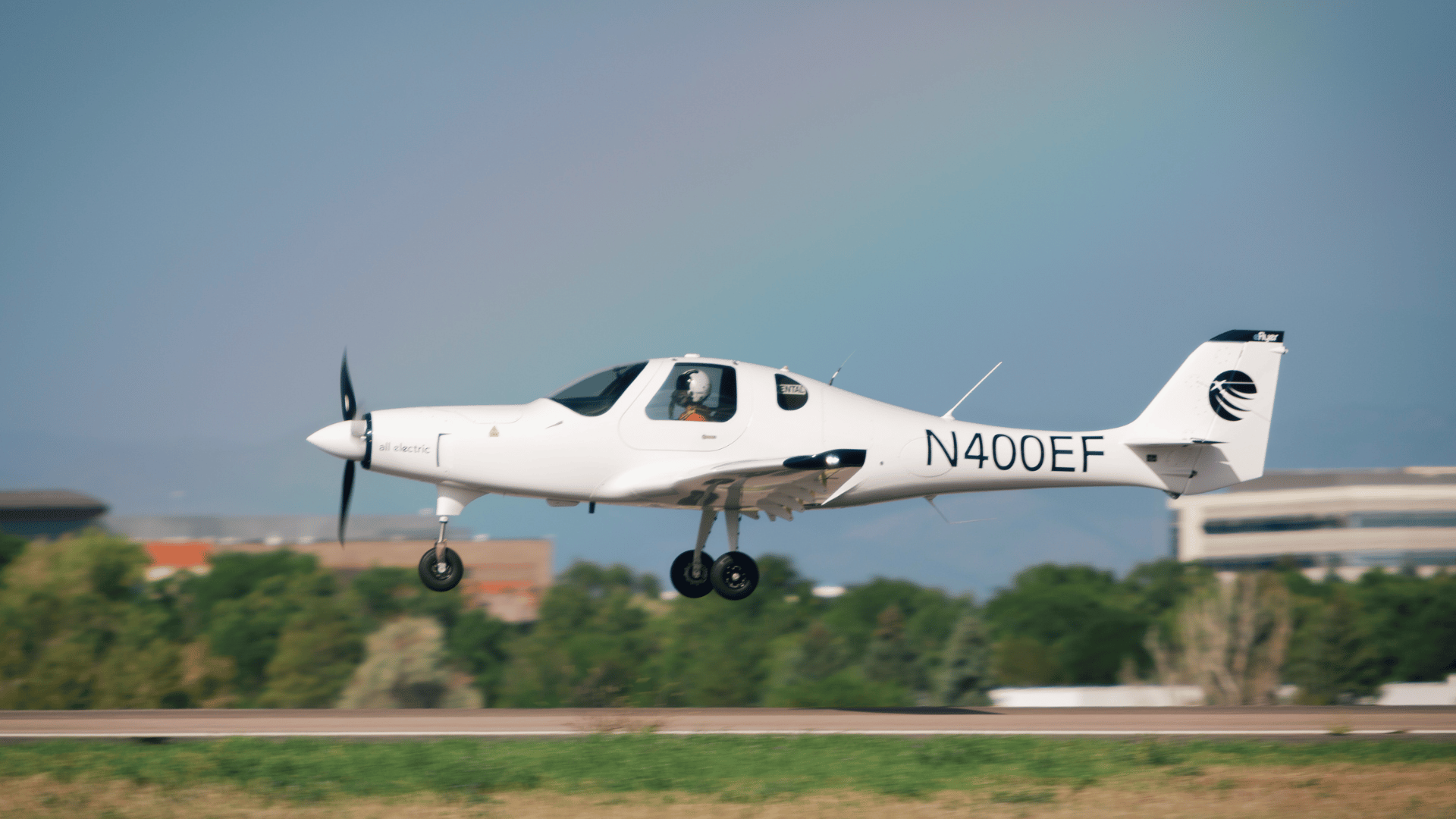
Bye Aerospace hit a major milestone in electric aviation. The company’s all-electric training aircraft, the eFlyer 2, recently completed its successful first flight. This kicks off its official flight test program, moving the company closer to FAA certification and customer deliveries.
Built for flight schools, the eFlyer 2 pairs an advanced electric propulsion system with a lightweight composite body. It produces zero in-flight emissions and cuts operating costs by up to 80 percent.
Chief Test Pilot Elliot Seguin flew the plane from Centennial Airport near Denver, Colorado. He evaluated its handling, checked aerodynamics, and monitored system performance while gathering data for future tests.
Cheaper Aviation Training
Flight training is notoriously expensive. By ditching traditional fuel and avoiding long engine overhaul delays, the eFlyer 2 gives flight schools and private owners a break from high costs. With a growing global demand for pilots, lowering expenses helps remove the financial barriers keeping people out of the cockpit.
Advertisement
“The first flight of eFlyer 2 exceeded all of our expectations in terms of aerodynamics, handling, propulsion, and overall performance—and there were no maintenance discrepancies during the flight,” Rod Zastrow, CEO of Bye Aerospace, said. “This program is an important step in demonstrating that electric aircraft can deliver disruptive operational cost advantages while maintaining the performance, safety, and handling qualities required for real-world training environments. Today’s flight of eFlyer 2 is an exciting milestone for our team, our partners, and the future of electric aviation by helping reduce the oftentimes prohibitive costs of flight training.”
Ensuring the Aircraft is Ready
Getting the plane off the ground took major teamwork. Bye Aerospace worked with a massive supplier team to bring the eFlyer 2 to life. Partners include Safran Electrical and Power, magniX, Siemens, Toray, Composite Approach, Garmin, Sensenich Propeller, Electro.Aero, Flying S, M4 Engineering, ACME Aero, and Risse Racing.
“First flights are always significant moments for any new aircraft program. This team has worked hard, and they will remember this achievement for a long time,” Seguin added. “The eFlyer 2 handled well during the flight and validated the work the engineering team has put into designing and testing the aircraft over the past several years. It’s exciting to help advance a platform designed specifically for the future of pilot training.”
Next up, the team wants to verify safety and gather the performance data needed to ensure the plane handles predictably for student pilots.
 Read Exclusive Stories
 Bookmark & Save Articles For Later