In our current digital age, there are plenty of health tracking wearables on the market, such as watches. However, removing watches to charge them can be inconvenient. Researchers go so far as to say people could forget they even have the device after taking it off their wrist.
“Once you put it onto the charger, you typically forget about it, and then you don’t wear it,” Niu said. “Those wearables cannot monitor your health if you just leave them in your drawer.”
Simiao Niu is a biomedical engineering professor at Rutgers University-New Brunswick who also knows this struggle from his time working on Apple Watch sensors. His research team is working on a pair of shoes that could track the same health data as a smart watch.
The shoe counts steps, estimates calories burned, and analyzes your movement with 95.4% accuracy. Significantly, the researchers explained that the shoes do not need to be plugged in because footsteps power them.
“When you are walking or running, you automatically have biomechanical energy available so that you can harvest this energy,” said Niu. “When you sit down, there is no energy available, but you don’t need gait monitoring.”
Powering the Shoe
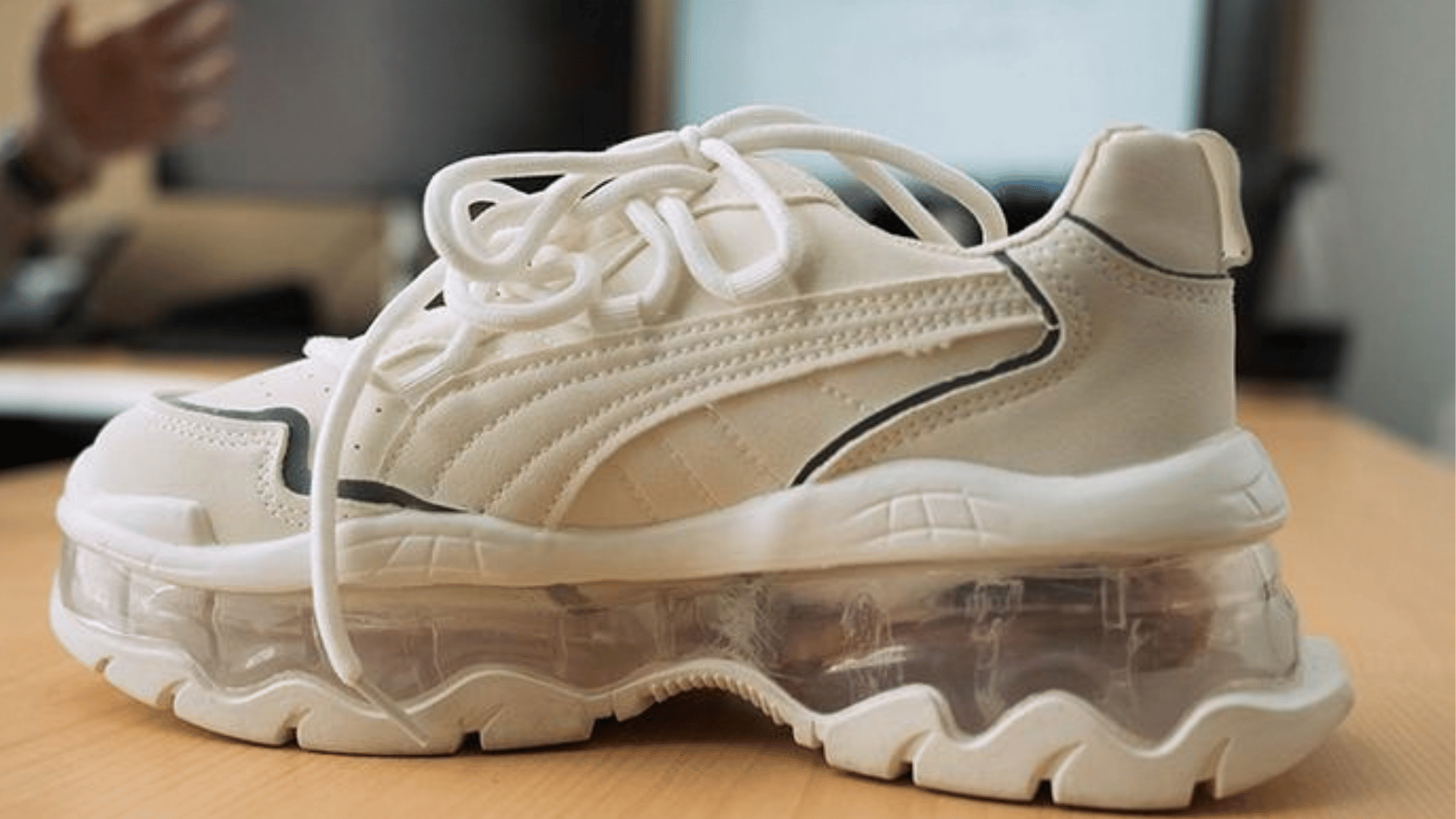
A device in the sole uses the friction and pressure from your steps to generate electricity, producing irregular bursts of power. To fix that, the team designed a circuit that smooths out the bursts and increases the usable energy by up to 120 times.
Advertisement
A tiny processor analyzes your movement every 15 seconds, determining whether you are walking slowly, walking fast, running, or climbing stairs. The results show up on a screen attached to the shoe.
Because the shoe does the math itself instead of sending raw data to a phone, it uses very little power. Even slow walking makes enough electricity to run the whole system.
Tracking Health
Right now, this white athletic shoe is an early prototype, not a medical device. Eventually, the researchers believe that similar shoes could monitor conditions like Parkinson’s disease, spinal cord injuries, and traumatic brain injuries.
“Gait is one of the most significant biomarkers for a lot of diseases,” said Niu. “If you are able to use what I call the ‘worry-free shoes’ we’ve developed, patients can just wear them, and the shoes can automatically collect their gait pattern.”
Fuying Dong, a doctoral student and the study’s first author, said building it changed how they tackle engineering problems.
“The idea of how to co-design the whole system is the best thing I learned from this project,” Dong said. “You break a huge project into smaller pieces, finish them one by one, and try to figure out what’s the biggest story behind it.”
 Read Exclusive Stories
 Bookmark & Save Articles For Later