Scientists have recently released the Human Organ Atlas, a massive digital project that lets you “fly through” the human body. It’s a 3D map of our internal organs that you can access right from a regular web browser.
The project uses a special X-ray technique called HiP-CT, developed at the European Synchrotron in France. This scanner is about 100 billion times brighter than the CT scanners you’d find in a hospital. Because the light is so intense, researchers can scan a whole donated organ and then zoom in until they can see details 50 times thinner than a human hair.
A 3D Map of Human Organs
This project started during the pandemic to help doctors see exactly how COVID-19 was damaging the tiny blood vessels in people’s lungs. Since then, it’s been used to study everything from heart disease to gynecological disorders.
“To create the Human Organ Atlas, we brought together scientists and medics from nine institutes worldwide,” said Professor Peter Lee, the lead investigator on the project. “This grouping is continuing to expand, helping gain new insights into diseases from osteoarthritis to heart disease and changing how we learn about the human body.”
It’s also helping medical students learn. For example, instead of looking at flat drawings in a textbook, they can virtually move through a heart or a brain. Dr. Alexandre Bellier from Grenoble Alpes University Hospital noted that it “fundamentally shifts anatomy learning from static description to guided, interactive discovery.”
Advertisement
A Growing Resource for Everyone
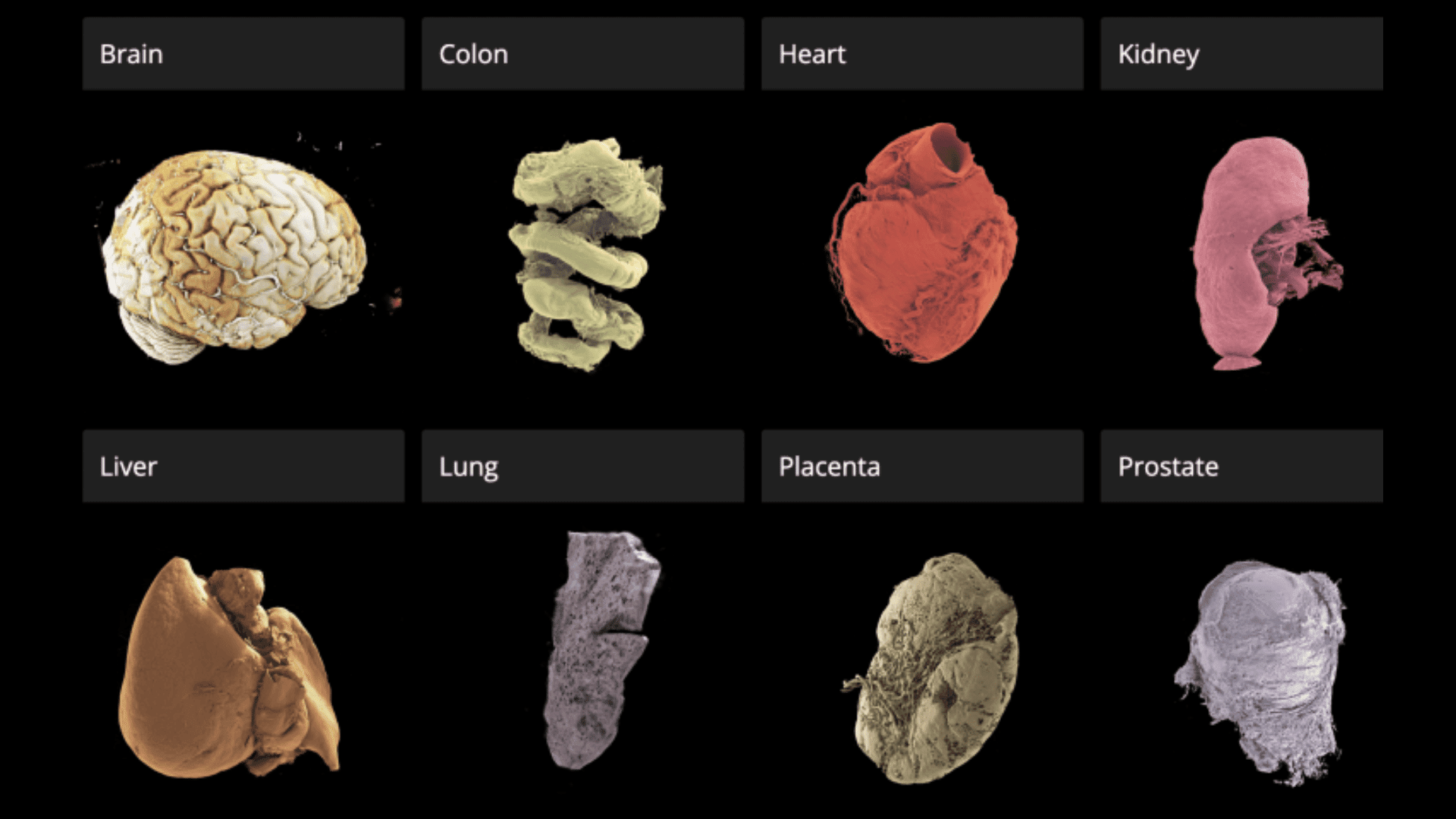
Right now, the Atlas has over 300 datasets from 12 different types of organs, including the brain, lungs, and kidneys. Some of these files are huge; one scan of a brain is 14 terabytes, but the team made sure the portal works without any special software, so anyone can use it.
“The Human Organ Atlas shows what team science can achieve at its best – we went into this project wanting this data to be used by others and to help further the understanding of human physiology,” Dr. Claire Walsh, Director of the Human Organ Atlas Hub, said. “The Human Organ Atlas is an incredible resource that will continue to grow.”
Dr. Walsh added, “I am personally hugely excited to see how the AI community use the Human Organ Atlas in AI foundation models.”
The team plans to keep adding more organs and better tools. Dr. Paul Tafforeau, who pioneered the imaging technique, says they eventually want to image entire human bodies at a much higher resolution.
“We are opening a new window into the inner architecture of the human body,” he said. “After 6 years of efforts, we are still only at the beginning.”