Researchers at MIT developed smart building blocks that could make furniture modular, and know exactly when it turns into something else. Think of a table knowing when it transforms into a chair. These 3D-printed building blocks are called “bifur-circuits.” They are mechanical metamaterials that connect to build smart devices.
According to the researchers, the electrical connections work even if you twist or fold the object. Instead of breaking, it senses its own shape without needing additional wires.
Building with Smart Blocks
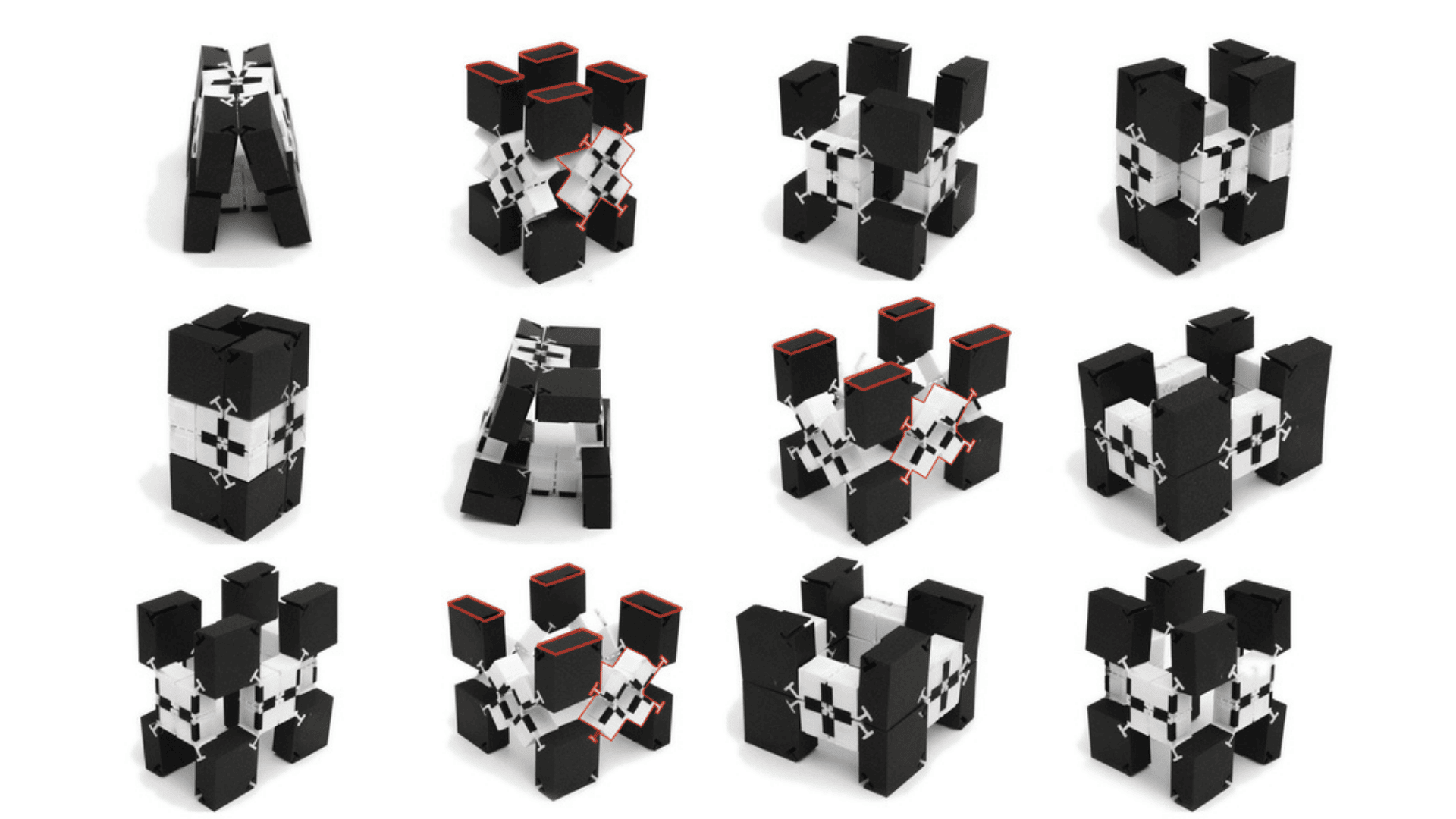
To demonstrate how this innovative technology works, the team built a chair that converts into a table. They say the furniture senses its shapes and sends messages to a display to confirm the new setup.
“Metamaterials can make complex mechanical assemblies easy to manufacture just by using repeating units. Our work expands on this design space. If we think of mechanical metamaterials as building blocks, then our work is one way to take advantage of their geometry to embed intrinsic intelligence into hardware, which could open many possibilities,” explained Marwa AlAlawi, the lead author from MIT.
The blocks use mechanical bifurcation, which is similar to bending a plastic ruler until it suddenly buckles. In these circuits, this happens when connected blocks rotate around a pivot point.
Advertisement
“Bifurcation allows us to expand on this reconfigurability space significantly. Just adding one extra unit gives us so many more combinations out of the same structure,” said AlAlawi.
Keeping the Power Flowing
Despite the demonstration’s success, it was challenging to get the electricity to flow. It required a conductive material flexible enough to bend, but efficient enough to carry a current.
“The conductive material was a constraint we had to work around in the design process, and it dictated how the sensing between blocks would happen,” AlAlawi added.
Researchers designed a software tool to print the blocks in one pass. Then, they tested the circuits by compressing them 10,000 times. The result was a continuous flow of electricity.
According to the team, the possibilities with the technology are endless. For example, the blocks could help create shape-shifting video game controllers, robotic grippers, or emergency shelters that adjust to the weather.
“Bifur-circuits are one step toward developing mechanical building blocks with integrated intelligence. It would be interesting to build on this work and come up with building blocks that allow us to create a structure with any form or shape we want, and which are structurally stable and can be actuated,” AlAlawi concluded.
 Read Exclusive Stories
 Bookmark & Save Articles For Later