Firefighters often have to walk into situations where they can’t see their own hands in front of their faces due to thick, toxic smoke. It’s dangerous work, and they usually have to go in blind to find out whether anyone is trapped or if the building is about to collapse. Drones would seem like a perfect fix for this, but most of them melt or stop working once the temperature hits about 104 degrees Fahrenheit (40 degrees Celsius).
That is where the FireDrone comes in. Developed by researchers at Empa and now moving forward as a spin-off, this drone is built to handle the heat that would destroy a normal gadget. It can fly into environments reaching 392 degrees Fahrenheit (200 degrees Celsius), giving emergency teams a pair of eyes where they need them most.
How the Drone Handles the Heat
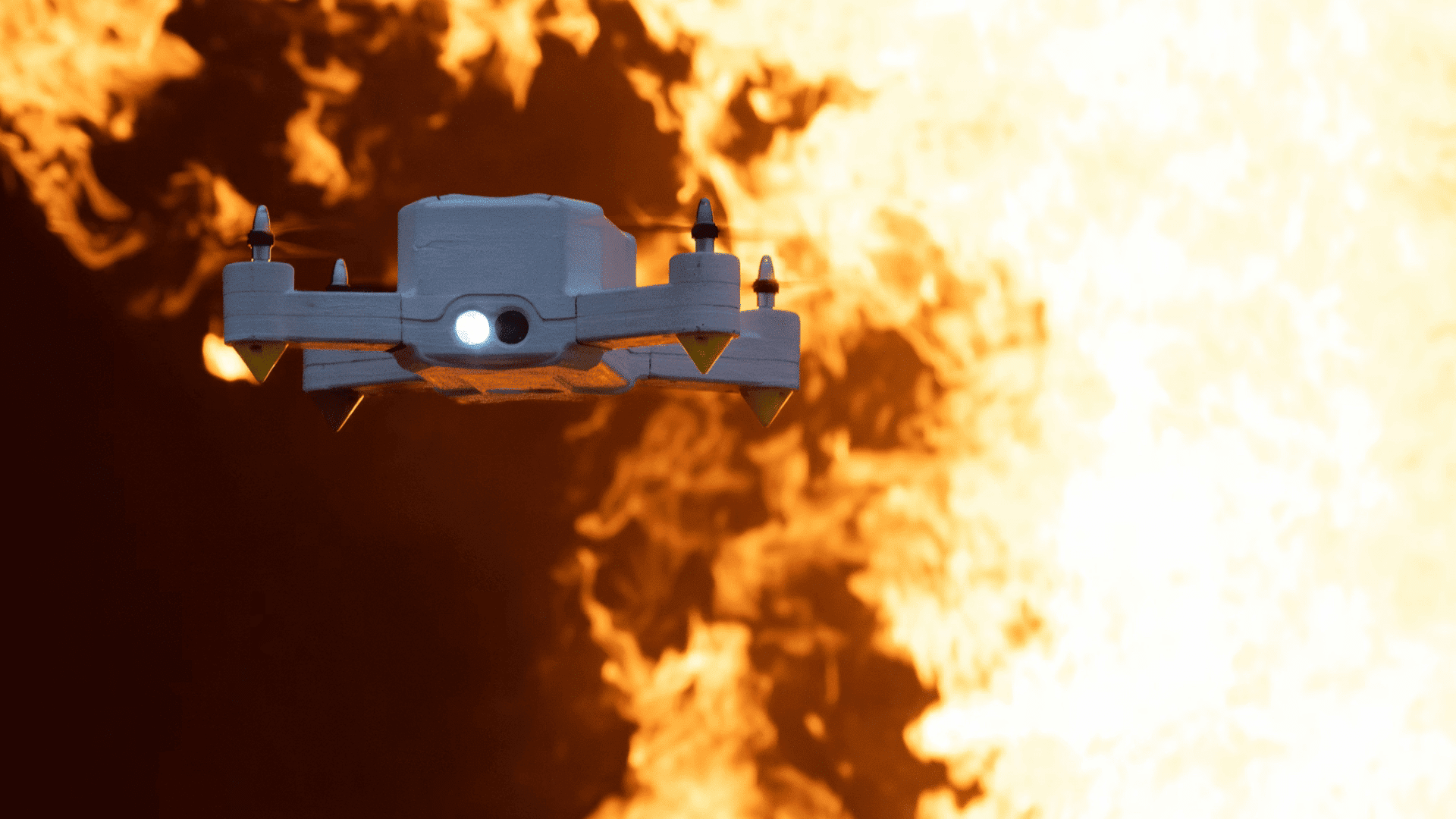
“Today, firefighters have to physically enter burning buildings to locate hazardous materials or missing persons,” said Fabian Wiesemüller, Empa researcher and co-founder of the FireDrone start-up. “With the FireDrone, we can now send a drone into hazardous areas to do just that – significantly minimizing the risk during operations.”
The secret to the drone’s toughness is a special type of insulation called aerogel. It’s an incredibly light material that is mostly made of air, but it acts like a high-tech thermal blanket. The team found a way to cast this aerogel into specific shapes, so it can wrap around the drone’s sensitive electronics in one solid piece.
Advertisement
Researchers say the new drone is not just for house fires. For example, the drone is being used to help big industrial plants, like steel mills or refineries. Normally, if a furnace needs an inspection, the whole plant has to shut down for days just to let things cool down so a human can get close. The FireDrone can fly right in while things are still hot, saving time and energy.
Real-Time Data Without the GPS
Because it’s often flying inside concrete tunnels or large warehouses, the drone can’t rely on GPS. The team is working on systems that help it stay on track, even when it’s cut off from satellites. It carries an infrared camera that sends a live feed back to a screen, so the whole team can see what’s happening.
“Today, often only the first firefighters inside the building can see what it looks like inside,” co-founder David Häusermann explained. “With the drone, the incident commander can get an overview of the situation before anyone enters the building.”
The drone has already been tested at cement plants and training centers. The goal is to make it so easy to fly that pilots can use it in high-stress situations with very little training.