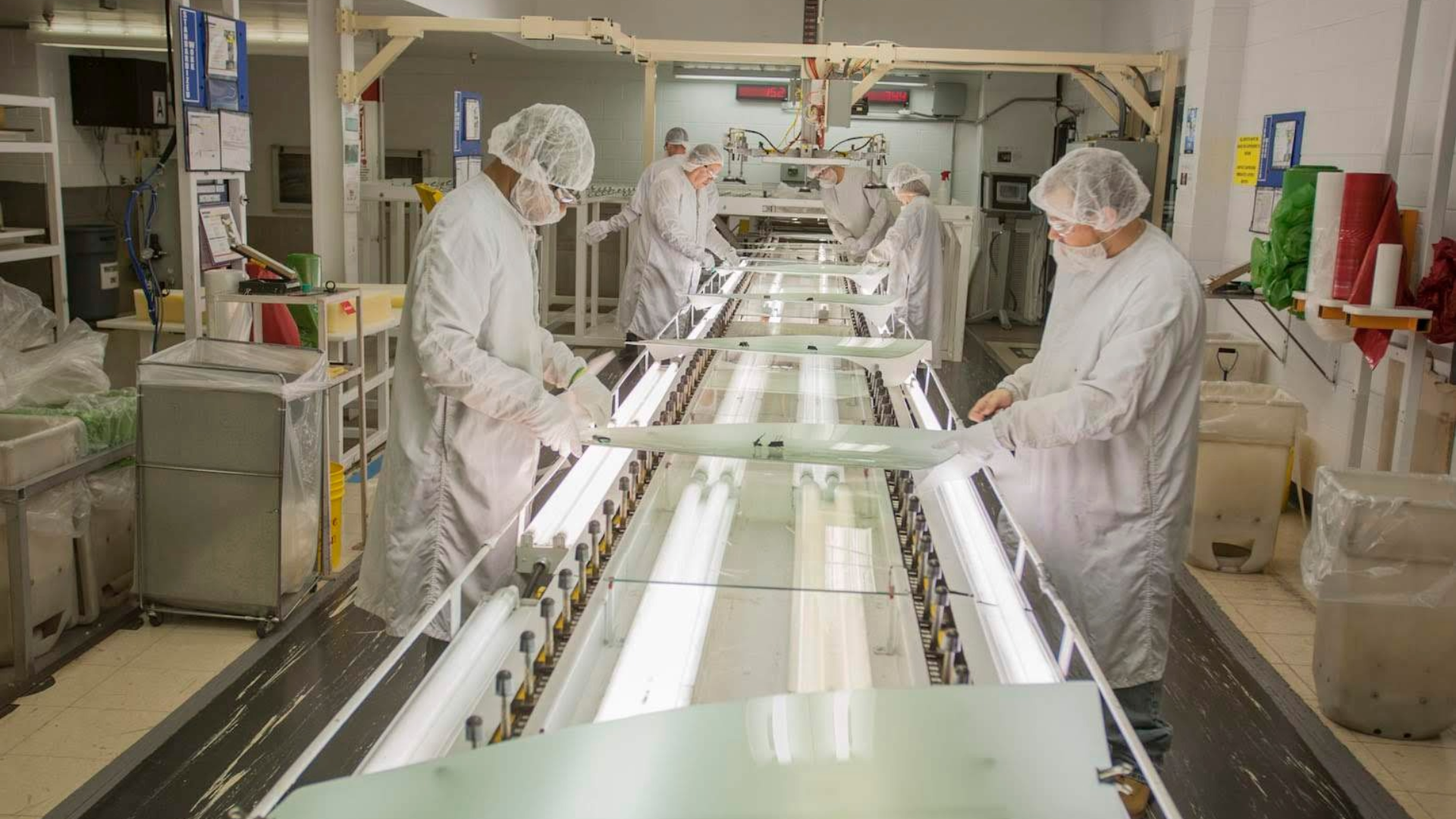
A panoramic roof gives you a view of the sky. When the afternoon sun starts coming through, what if the glass itself could give you some shade?
In Clearly Visionary, Tomorrow’s World Today visits Carlex Glass America in Nashville, Tennessee, to see how the company is building that choice into automotive glass. Massimo Michetti, Carlex’s vice president of technology, shows TWT a roof panel that changes how light passes through it. The change starts with a thin film between two panes of glass.
What Makes Carlex’s Glass Look Frosted?
The panel Michetti demonstrates uses a film called polymer-dispersed liquid crystal, or PDLC. When voltage is applied, tiny liquid crystals in the film line up, allowing light to pass through with less scattering. When the voltage is switched off, the crystals point in different directions and scatter the light. The glass looks frosted, so daylight can still reach the cabin while the view through the roof becomes less clear.
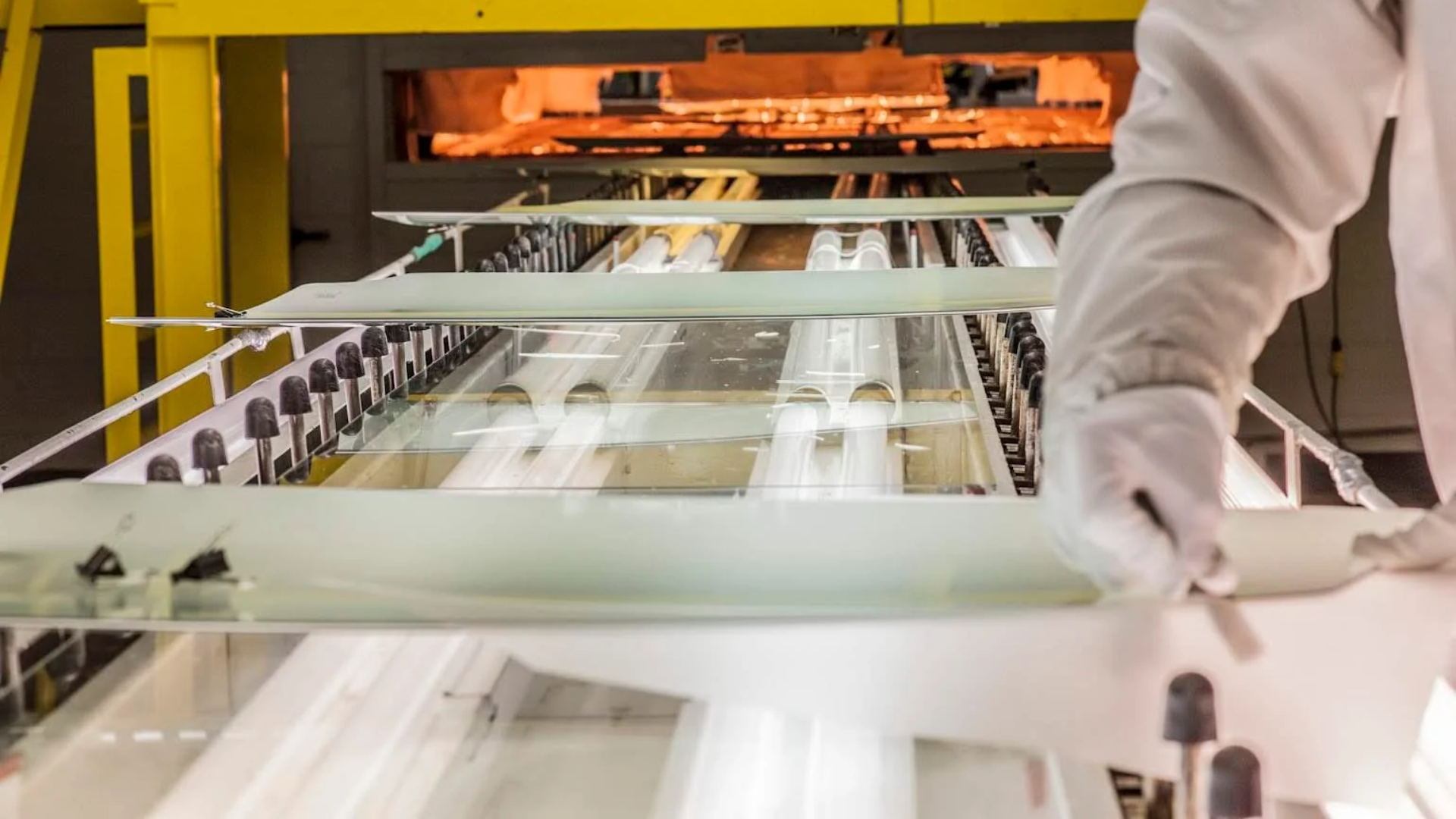
Michetti points to privacy as one reason to use the technology. Passengers can look up at the sky when the glass is clear, then switch to the frosted setting for more privacy.
Advertisement
How Carlex Is Developing a Roof That Dims in Stages
Carlex is also working on electrochromic glass. Michetti compares it to sunglasses with an adjustable tint. An electrical signal changes how much light the material absorbs, so the glass can darken in stages. That could give passengers the option to turn down the brightness and still see through the roof.
Carlex Chief Commercial Officer Mark Hebert explains how dimmable glass could also help with cabin comfort. He describes glass that adjusts with the sunlight or dims at the push of a button. When less heat enters the cabin, the air conditioning may have less work to do.
Watch ‘Clearly Visionary’ on Tomorrow’s World Today!
Tune in on Saturday, November 21st, at 10 am/ET on the Science Channel and Sunday, November 22nd, at 8:30 am on the Discovery Channel.
Plus, stream the episode on our YouTube Channel starting on November 22nd, 2026
 Read Exclusive Stories
 Bookmark & Save Articles For Later