Flying a drone through a thick forest or a smoky building is a lot harder than it looks. Most small drones rely on cameras or lasers to see where they’re going, but those systems tend to fail when it’s dark, foggy, or dusty. Additionally, they tend to be heavy and eat up a lot of battery life.
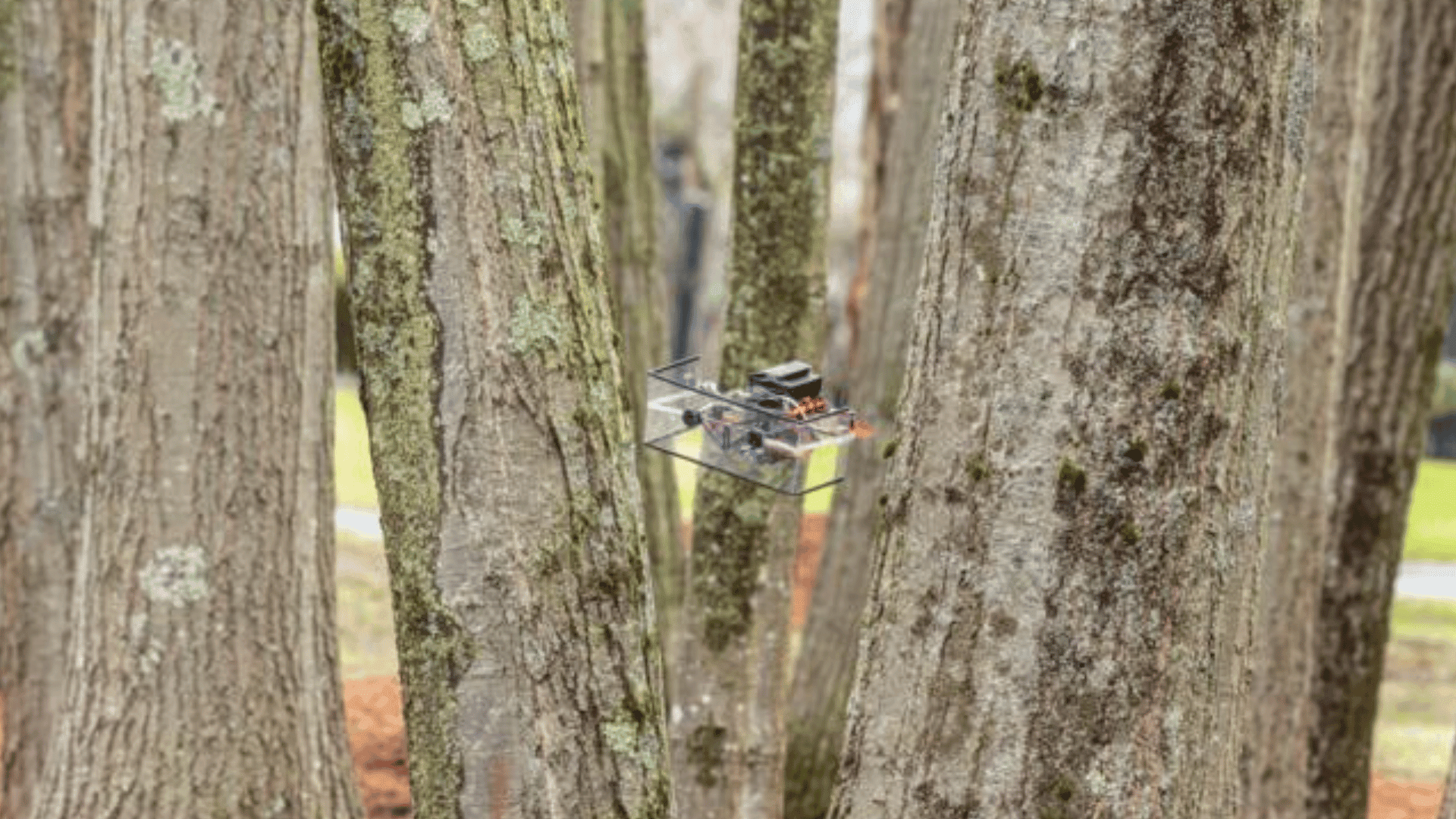
Researchers at Worcester Polytechnic Institute (WPI) think the solution is better “ears” rather than better cameras. A team led by Nitin J. Sanket recently showed off a tiny, 1-pound drone that navigates using ultrasound, essentially mimicking how a bat flies through a cave.
The Robot Learns From Bats
Bats are the pros of low-power navigation, as they zip through cluttered, pitch-black environments just by listening to echoes. Sanket wanted to see if a robot could do the same with just a couple of sensors and a small amount of computing power.
“Bats that weigh less than two paper clips can accurately navigate in dark, damp, and dusty caves by sending out short chirps and listening to the weak echoes with a limited number of neurons,” said Sanket. “By creating an ultrasound-based system that needs just two tiny sensors and little computation, we can open up opportunities for small aerial robots to perceive their surroundings, make decisions, and independently operate longer in cluttered, hazardous places where current aerial robots struggle.”
Advertisement
To make this work, the team had to solve the noise problem with drones. They added a physical “acoustic shield” to block out the motor noise and used deep learning to help the drone’s brain pick out the right echoes.
Put to the Test
The team tested their 6-inch quadrotor in woods, dark rooms, and even through man-made fog and snow. In 180 different tests, the drone successfully navigated these obstacles between 72% and 100% of the time. It did struggle a bit with very thin objects, like metal poles and skinny branches, which don’t bounce sound back very well.
Right now, the drone can stay in the air for about five minutes. That might not sound like much, but for a tiny robot in a high-stakes situation, every second counts.
“In a real search-and-rescue mission, a few more seconds of flight time could mean the difference between life and death for a survivor,” Sanket said.