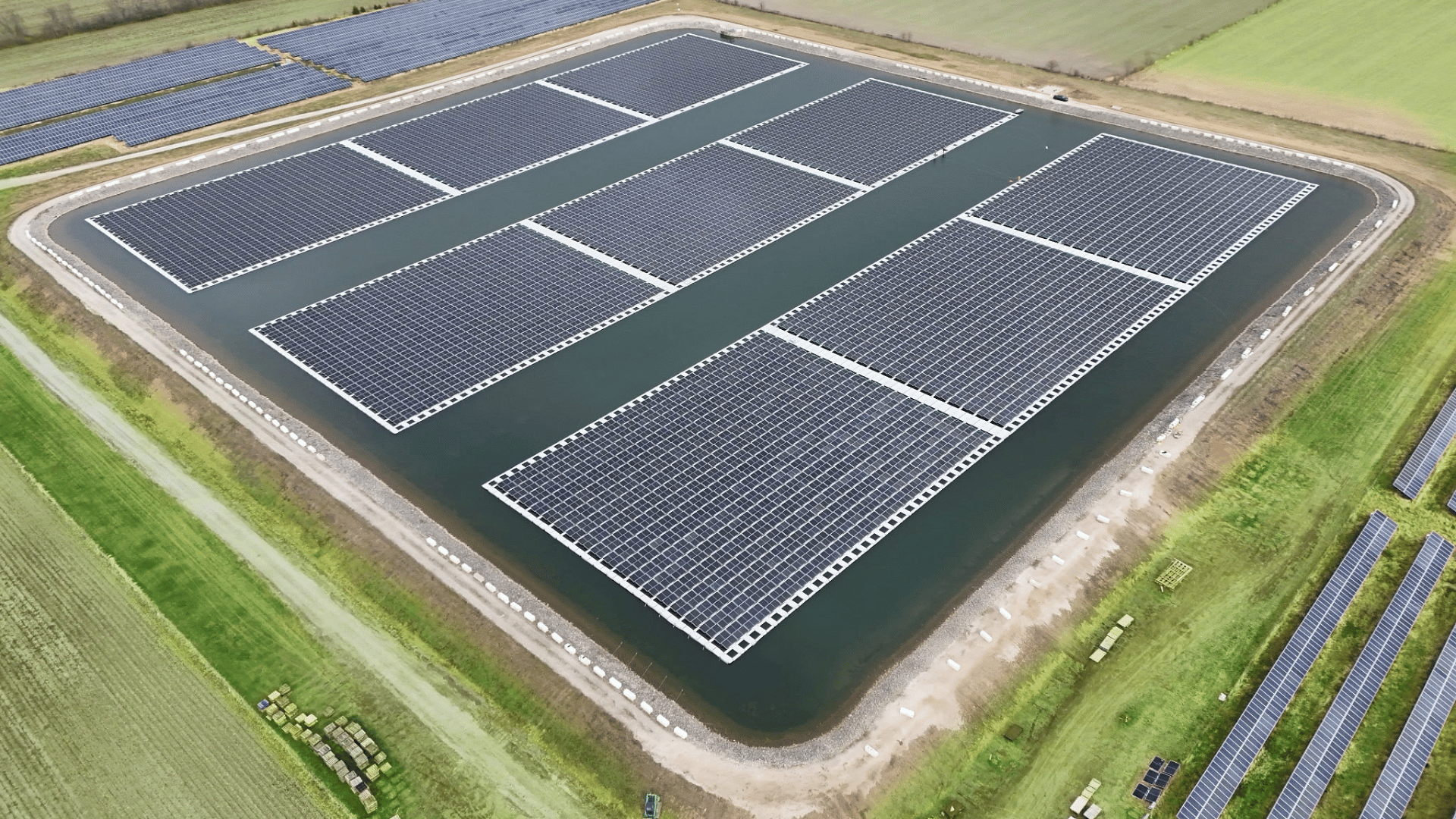
A small village in Ohio is making a significant investment in renewable energy. D3Energy is transforming the Village of Monroeville’s reservoir into a 6-megawatt floating solar array. What is now the state’s largest solar array covers 12 acres and utilizes 9,222 solar modules spread across three floating platforms.
The solar array is big on a national scale as well. It is one of the five largest in the U.S.
According to officials, the power generated from the solar array feeds directly into the village’s distribution grid, which takes high-voltage electricity and brings it down to a level that can power homes and businesses.
Freeing Space with Floating Solar
Big solar projects are polarizing because they tend to take up a lot of land in small, rural areas. A 2021 state law gave local governments the power to restrict utility-scale solar. Since then, about a third of Ohio’s 88 counties have done that.
As a result, the small village in Ohio decided to take the solar project to the water. Instead of buying additional land, the floating solar array is on water the village already owns.
Advertisement
“Solar needs space, and in farm country there’s no such thing as spare ground,” said Stetson Tchividjian, Managing Director of D3Energy. “Monroeville had water sitting right there doing one job. Now it does two.”
A Growing Trend in the Midwest
The village of Monroeville has had a 4-megawatt ground-mounted array running since 2017. So, it is no stranger to solar energy. Between these two projects, Monroeville now has about 13 times as much solar per resident as the rest of Ohio.
D3Energy built the new floating array with an Ohio-based contractor called Appalachian Renewable Power. Gardner Capital owns the system and sells the energy output directly back to the village.
This project joins similar floating arrays at Del-Co Water in Delaware, Ohio and Twin Lakes Reservoir in Lima, Ohio. Together, the state has nearly 10 megawatts, enough electricity to power roughly 5,000 to 10,000 homes, of floating solar running on utility-owned water.
This much solar power gives Ohio more floating solar than anywhere else in the Midwest.
“None of this happens without Monroeville’s forward-thinking leadership,” Tchividjian added.
 Read Exclusive Stories
 Bookmark & Save Articles For Later