Modern airplanes are powerful and much safer than they were when they first took flight. Getting the right parts for the job, however, is still no easy task. Materials used to build planes must be fire-safe, strong, lightweight, and recyclable.
“Bringing all these properties together under one roof is a challenge,” Empa researcher Sabyasachi Gaan explained. “For example, when you make a material flame-retardant, you always end up altering its other properties as well.”
Fixing the Airplane Floor
Gaan and his team partnered with the chemicals group Elantas to look at a specific material used to build cabin floors in airplanes and trains. These floors are built like a sandwich. The middle is a heat-resistant core called aramid, while the top and bottom are flat layers of woven glass or carbon fibers.
To hold all this together, builders use epoxy resin. Currently, this glue can’t be melted down or dissolved. Gaan said, “Composites containing epoxy currently end up in landfills or are incinerated.”
Recyclable Materials
Advertisement
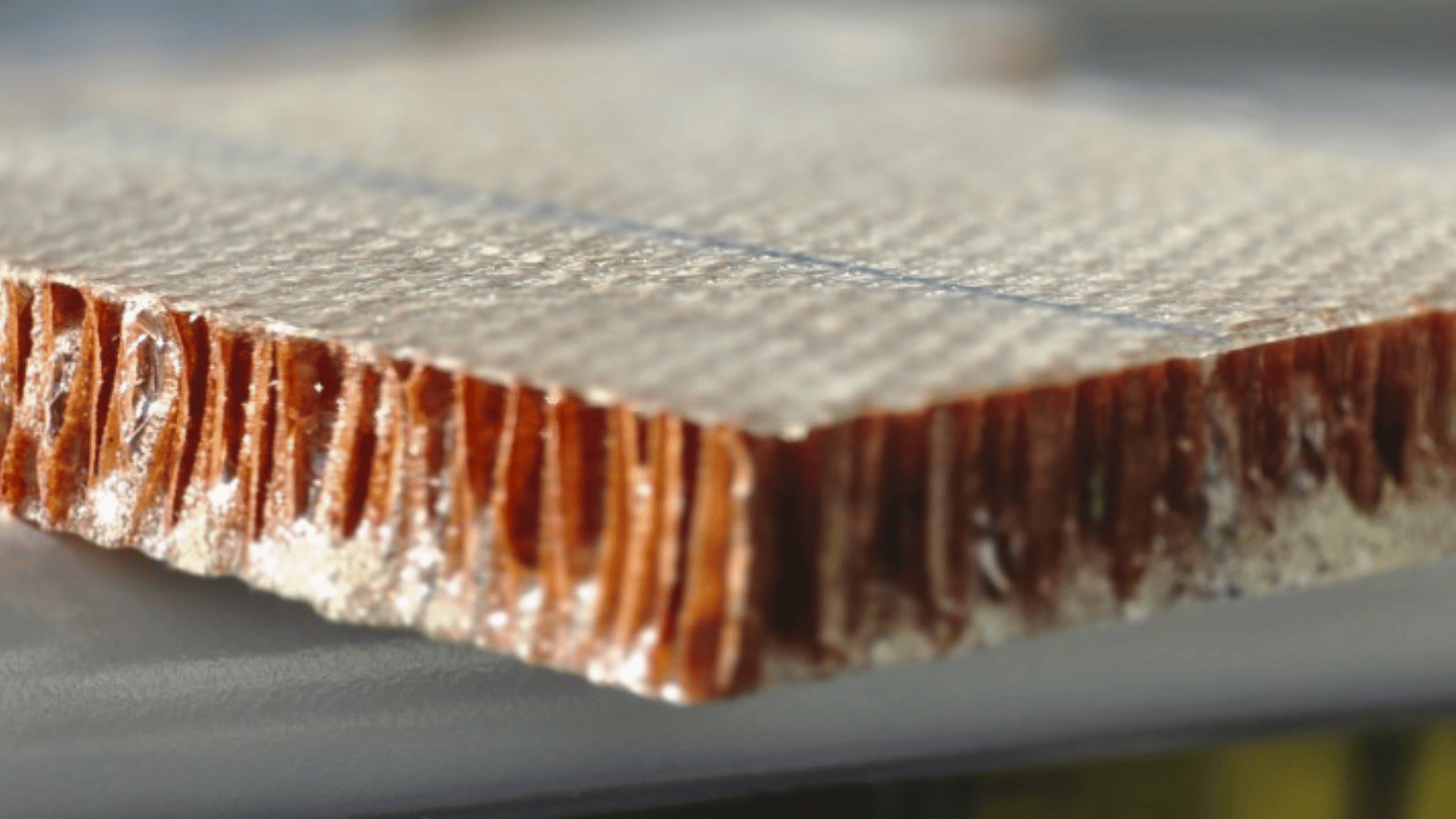
To fix this, researchers made a new phosphorus additive for the epoxy. This material makes the glue safe from fire, but it also lets the material be softened and reshaped later. With the right mix of heat and a solvent, you can break the floor panel back down to save the expensive honeycomb core and carbon fibers.
Gaan says that the new material also holds up well. “Our material complies with fire safety regulations and achieves nearly the same advantageous mechanical properties as conventional epoxy,” he explained. “But for the first time, it allows for complete recycling of the composite material.”
Fiorenzo Lenzi from Elantas added, “For the aerospace industry, it is crucial to combine fire protection, lightweight construction, and recyclability. This epoxy composite system demonstrates that this is now possible for the first time.”
The team wants to bring this into the energy and construction worlds next.
 Read Exclusive Stories
 Bookmark & Save Articles For Later