NASA’s Hubble and James Webb Space Telescopes have together captured the most comprehensive view of Saturn to date. The two observatories together provided a more layered understanding of the planet’s atmosphere by observing it in complementary wavelengths of light.
Saturn (Webb NIRCam and Hubble WFC3/UVIS)
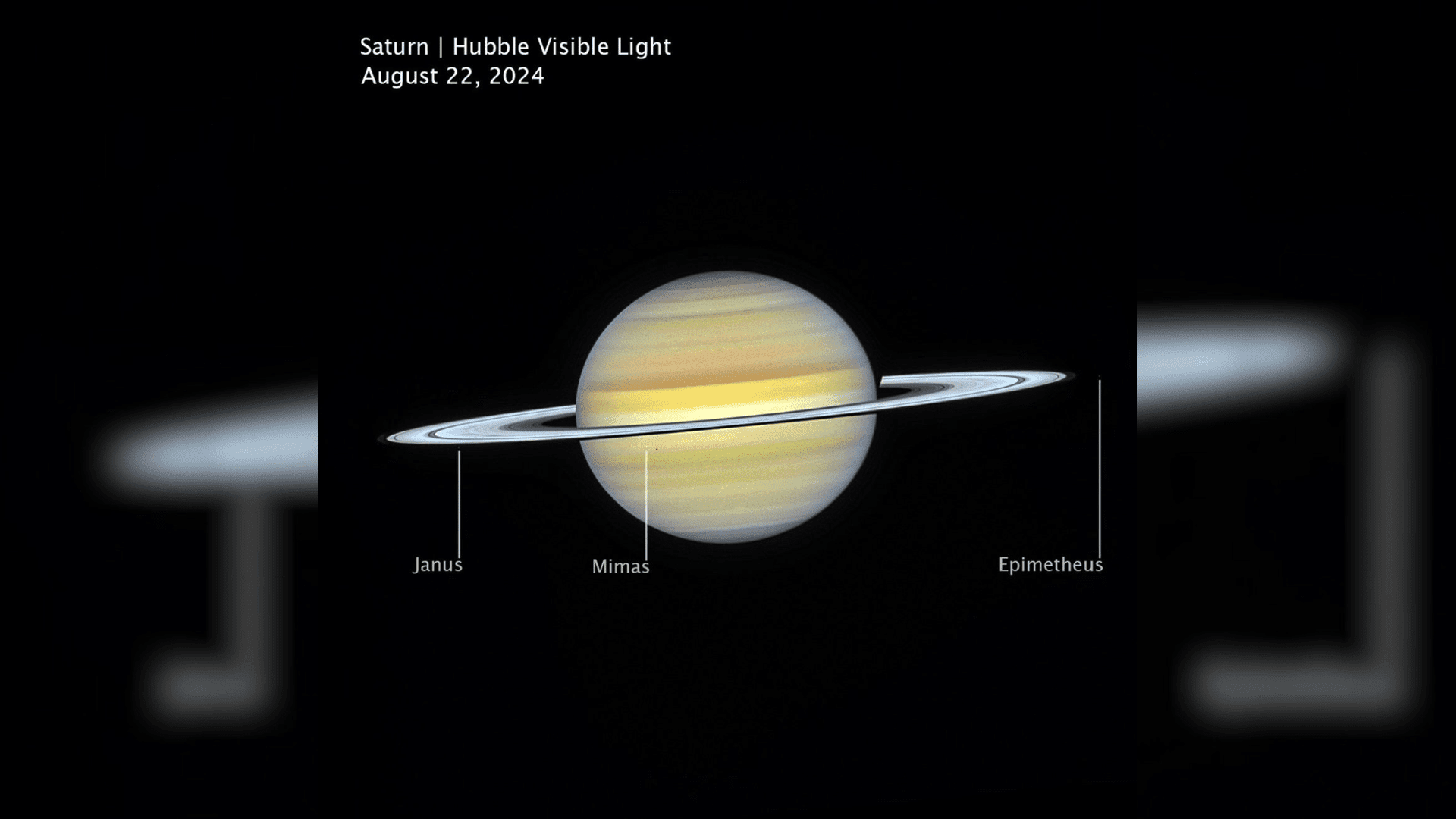
Hubble’s view reveals subtle color variations across the planet, while Webb’s infrared view shows clouds and chemicals at different depths in the atmosphere. Together, the observations can tell us more about how Saturn’s atmosphere works as a three-dimensional system.
The new Webb image shows a jet stream known as the “ribbon wave” moving across the northern mid-latitudes, influenced by atmospheric waves. Below that is a small spot with remnants lingering from the “Great Springtime Storm” of 2010 to 2012.
“All these features are shaped by powerful winds and waves beneath the visible cloud deck, making Saturn a natural laboratory for studying fluid dynamics under extreme conditions,” NASA stated.
Advertisement
Both images also faintly show several of the pointed edges of Saturn’s hexagon-shaped jet stream, located at its north pole. They each show the sunlight face of the rings and, in Webb’s infrared image, the rings are bright because they’re made of water ice, which is highly reflective.
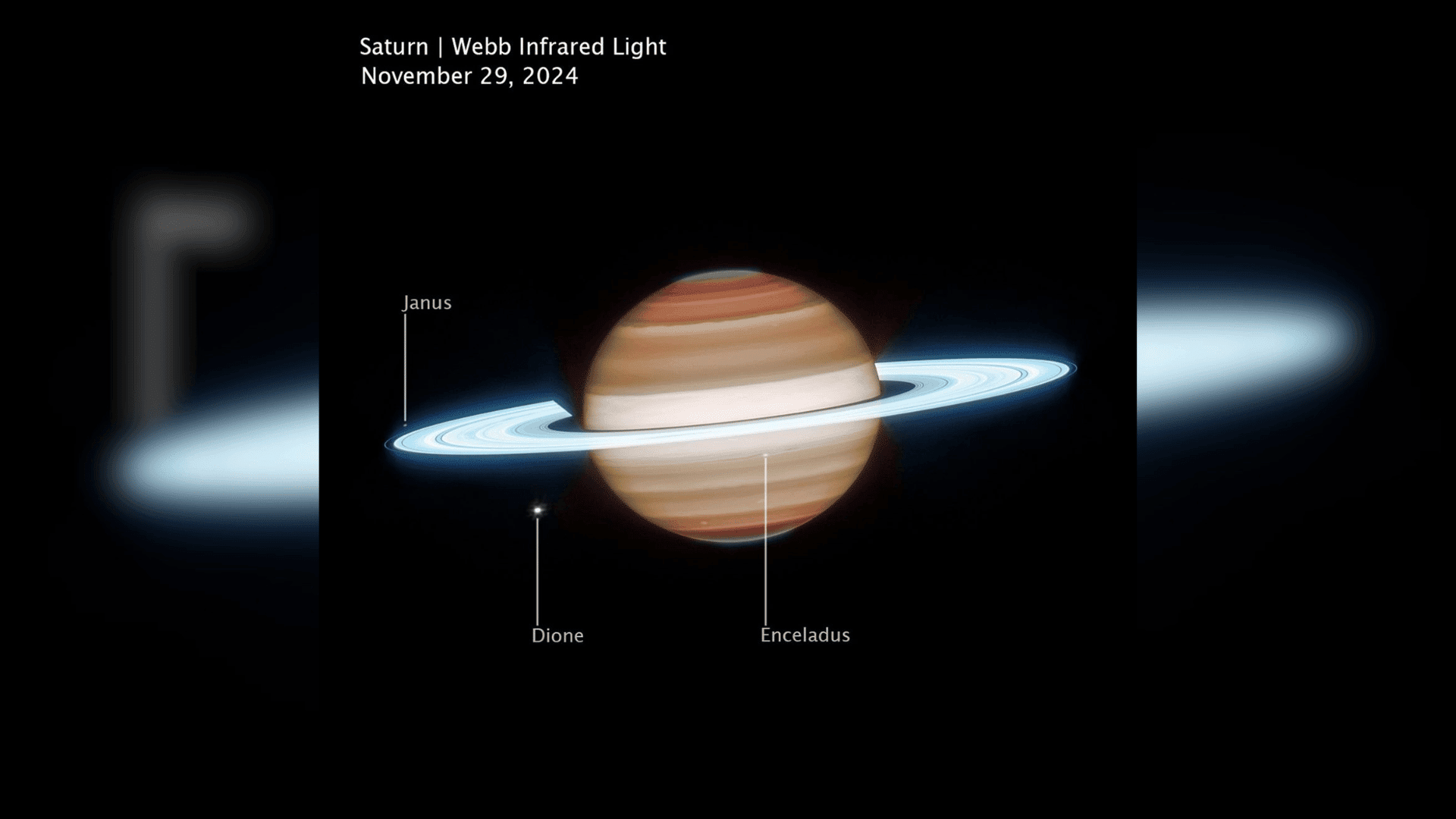
The infrared observations by Webb also show that Saturn’s poles appear grey-green, which indicates light emitting at wavelengths around 4.3 microns. This could be explained by either a layer of high-altitude aerosols in the atmosphere that scatter light or auroral activity.
One difference between the two observations is that, while the F ring appears thinly in the Webb image, it only slightly glows in the Hubble image. Taken 14 weeks apart, the observations show the planet moving from northern summer to its spring equinox.
As the planet transitions into southern spring and southern summer by the 2030s, NASA believes Hubble and Webb will continuously have better views of the hemisphere.