Westinghouse Electric Company completed zero-power high-temperature criticality testing on its eVinci microreactor. Simply put, the company is determining if the small reactor works safely when it’s extremely hot. This testing helps Westinghouse build better models and prepare the design outside the laboratory.
eVinci Microreactor Hits Criticality
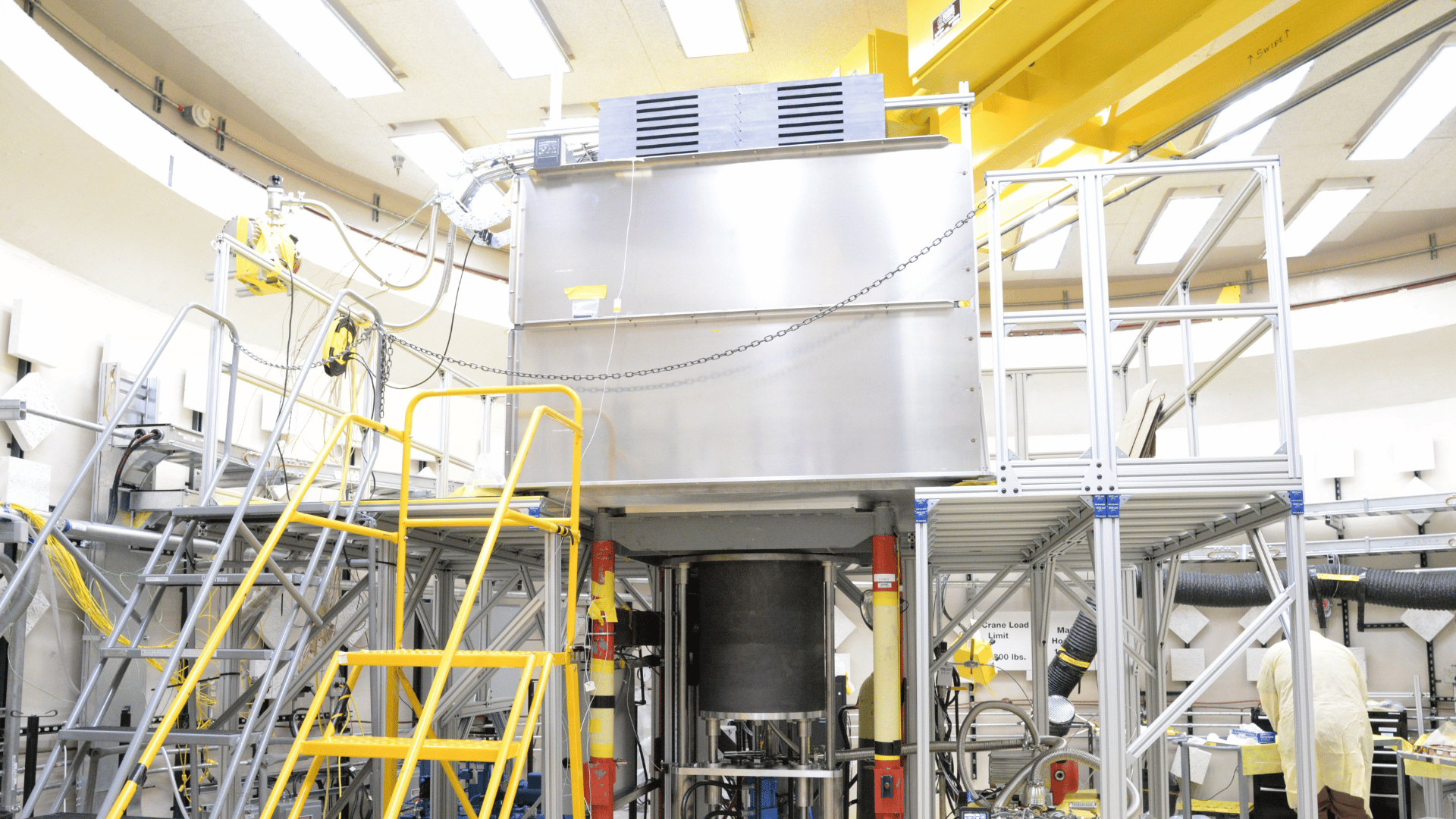
The eVinci test hit criticality, where the reactor sustains its own chain reaction, at 663 degrees Celsius (1225 degrees Fahrenheit). Following this achievement, the team went further and hotter. They managed to take a subcritical reactivity measurement at a peak core temperature of 1,011 degrees Celsius (1851 degrees Fahrenheit). Ultimately, this set a new record for this kind of test at the National Criticality Experiments Research Center in Nevada.
Westinghouse worked with Los Alamos National Laboratory and the Nevada National Security Site to accomplish this. Heating the materials to these levels ensured that the team gained a clear understanding of how the reactor behaves under actual operating conditions.
Advertisement
“For nearly a century, Westinghouse pioneers have not waited for the future of nuclear energy – they have engineered it. This milestone brings that same spirit to the eVinci program,” said Dan Sumner, Westinghouse President and Chief Executive Officer. “Our teams are rapidly building, testing, learning, and improving advanced nuclear technologies, turning uncertainty into validated evidence and strengthening the design for a highly deployable advanced microreactor solution for our customers.”
Nuclear Power for Remote Places
Westinghouse’s eVinci microreactor is a compact system built with advanced heat pipe technology, a graphite core, and TRISO fuel. It is designed to provide power in remote and difficult locations, such as space or defense sites. Its main purpose is to supply electricity 24 hours a day, 7 days a week, for eight solid years before refueling.
“American innovation has always been the driving force behind American energy dominance,” said acting Deputy Assistant Secretary for Nuclear Energy Chimi Zacot. “Westinghouse’s progress on the eVinci microreactor is another great example of that ingenuity at work.”
Westinghouse uses artificial intelligence and digital engineering to test these designs, reducing technical risks and moving the project closer to commercial use.
 Read Exclusive Stories
 Bookmark & Save Articles For Later