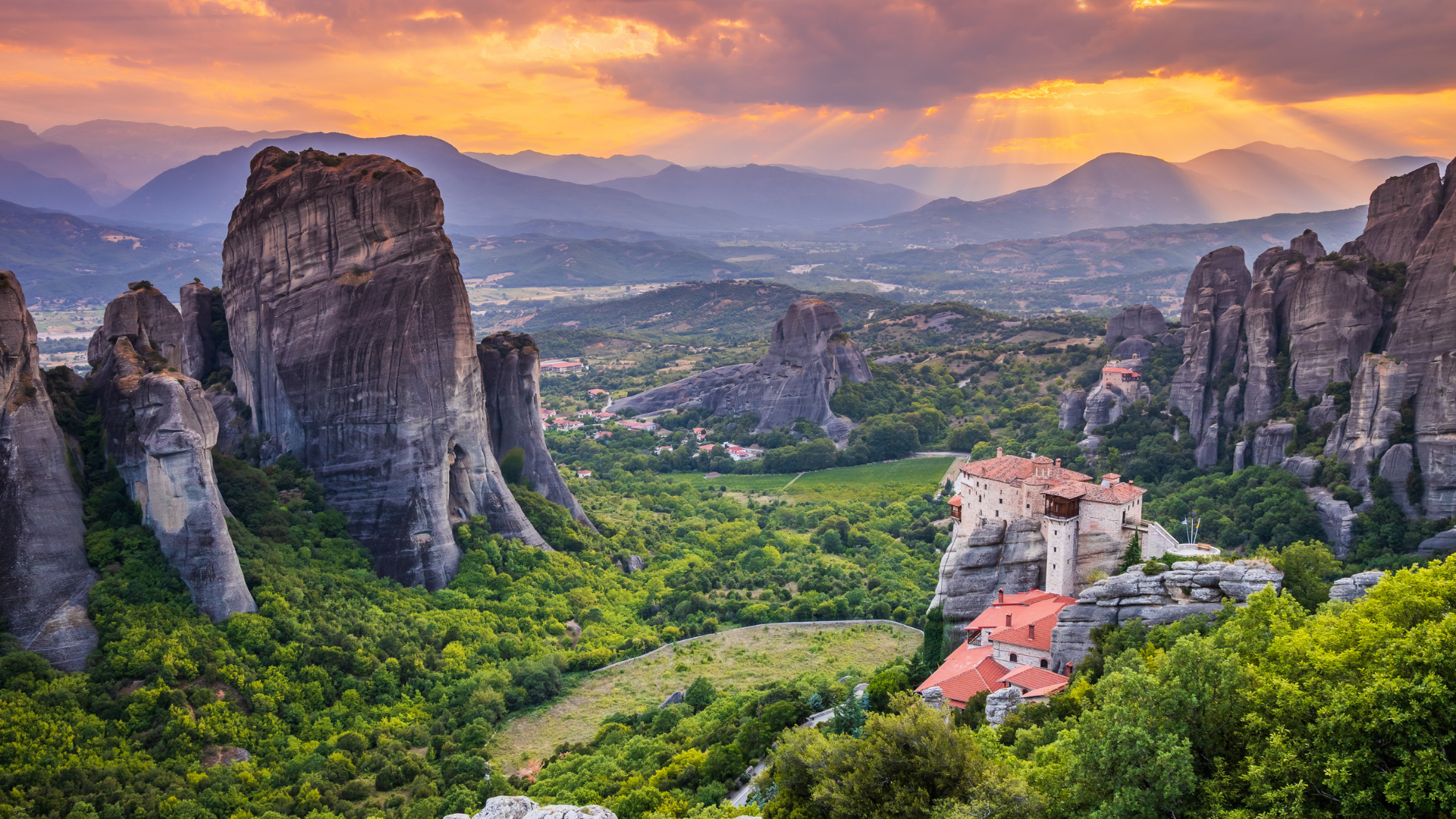
Drive into central Greece, and the flat land suddenly gives way to massive rock pillars rising straight up. This is Meteora. The name literally means “suspended in the air.” Look up, and you see exactly why. Sitting atop these natural stone towers are centuries-old monasteries. It looks like a movie set, but it is totally real.
Formed By Water And Wind
To understand how these rocks got here, look back millions of years. This area used to be a massive sea basin. Rivers dumped sand, mud, and stone into the water for a long time. Eventually, the land pushed upward, and the water drained away.
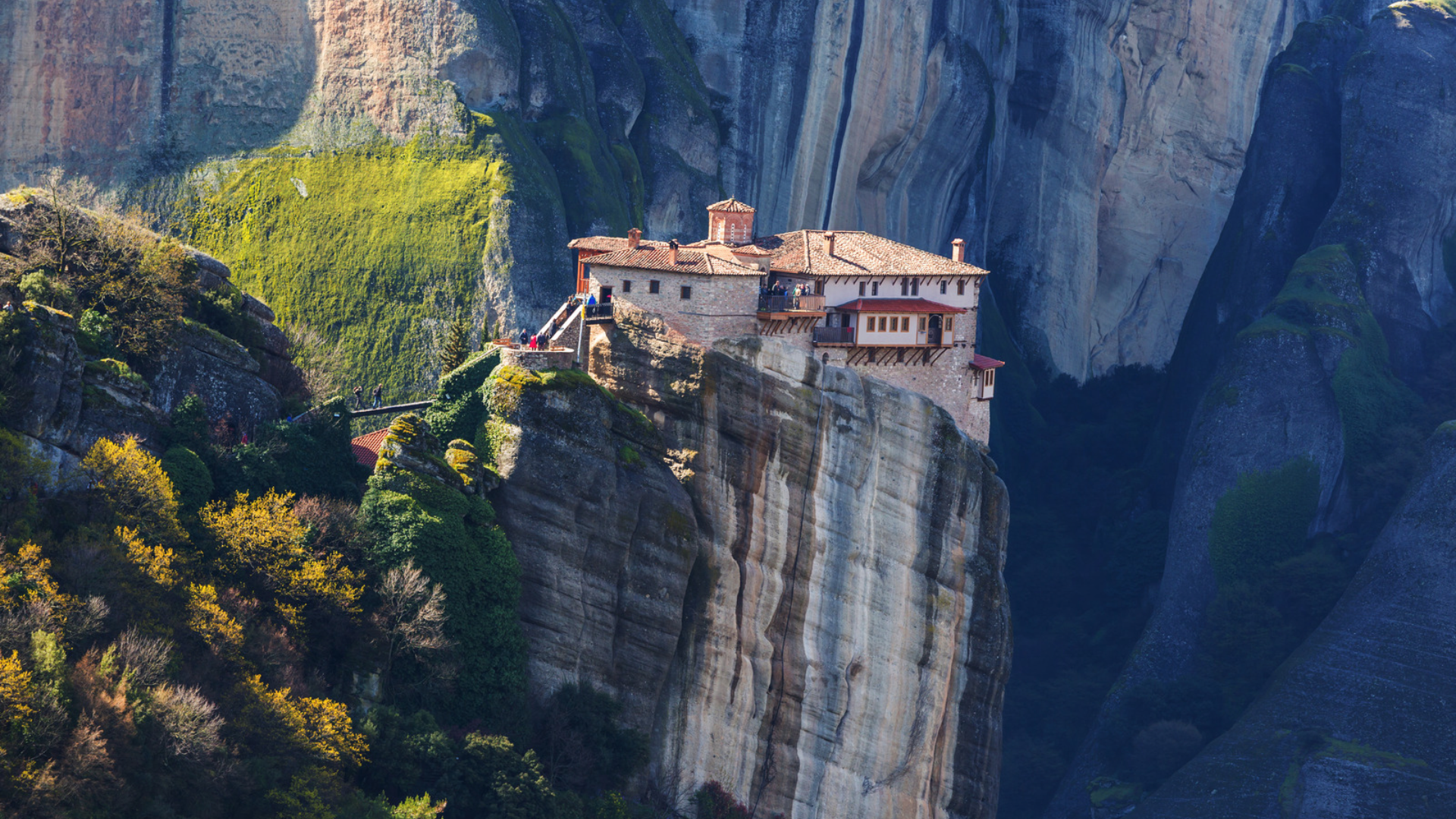
Heavy earthquakes cracked the solid stone into vertical blocks. Then, over millennia, extreme wind and heavy rain carved those blocks into the smooth, rounded pillars you see today. Some of these towers reach almost 1,000 feet high. They completely dominate the valley below.
Building Without Roads
Advertisement
Building on top of these rocks was incredibly hard. Back in the 14th century, monks wanted safety from political conflicts. So they climbed the sheer rock faces to escape the chaos on the ground.
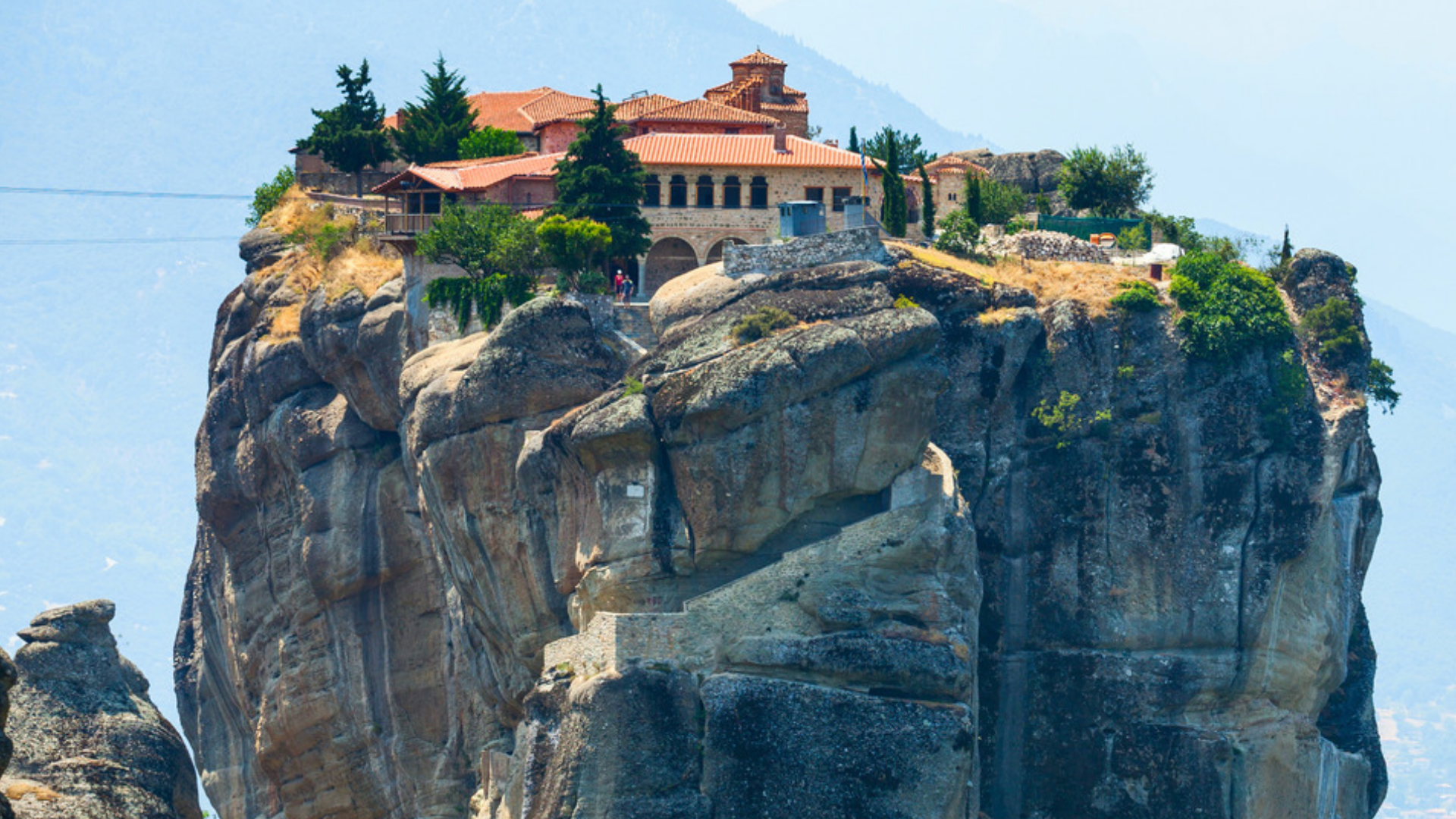
They did not have roads or cranes. They hauled every single piece of wood, stone, and brick up the cliffs in small nets using long ropes. It took decades of physical labor to finish one building. If a monk wanted to leave, he had to climb down wooden folding ladders or be lowered in a basket.
A Living Piece Of History
Out of the original 24 monasteries, only six are still active today. You no longer have to use a rope net to visit them. Workers carved stone steps directly into the rock walls in the 1920s. But standing on the edge still shows you how isolated these people wanted to be. It is a perfect example of humans adapting to extreme landscapes. If you want to see other wild landscapes shaped by geology, check out how Earth is still being created in places like Iceland.
 Read Exclusive Stories
 Bookmark & Save Articles For Later