If you drive across South Dakota, you get used to seeing flat, green prairie in every direction. But eventually, the grass just stops. The ground drops away, and you are staring at a massive maze of jagged cliffs, tall pinnacles, and deep canyons.
This is Badlands National Park. The first thing you notice is the color. The rock walls are covered in perfectly straight, horizontal stripes of red, yellow, tan, and gray. But this landscape is not just sitting there. It is actively falling apart.
A Stack Of Ancient Worlds
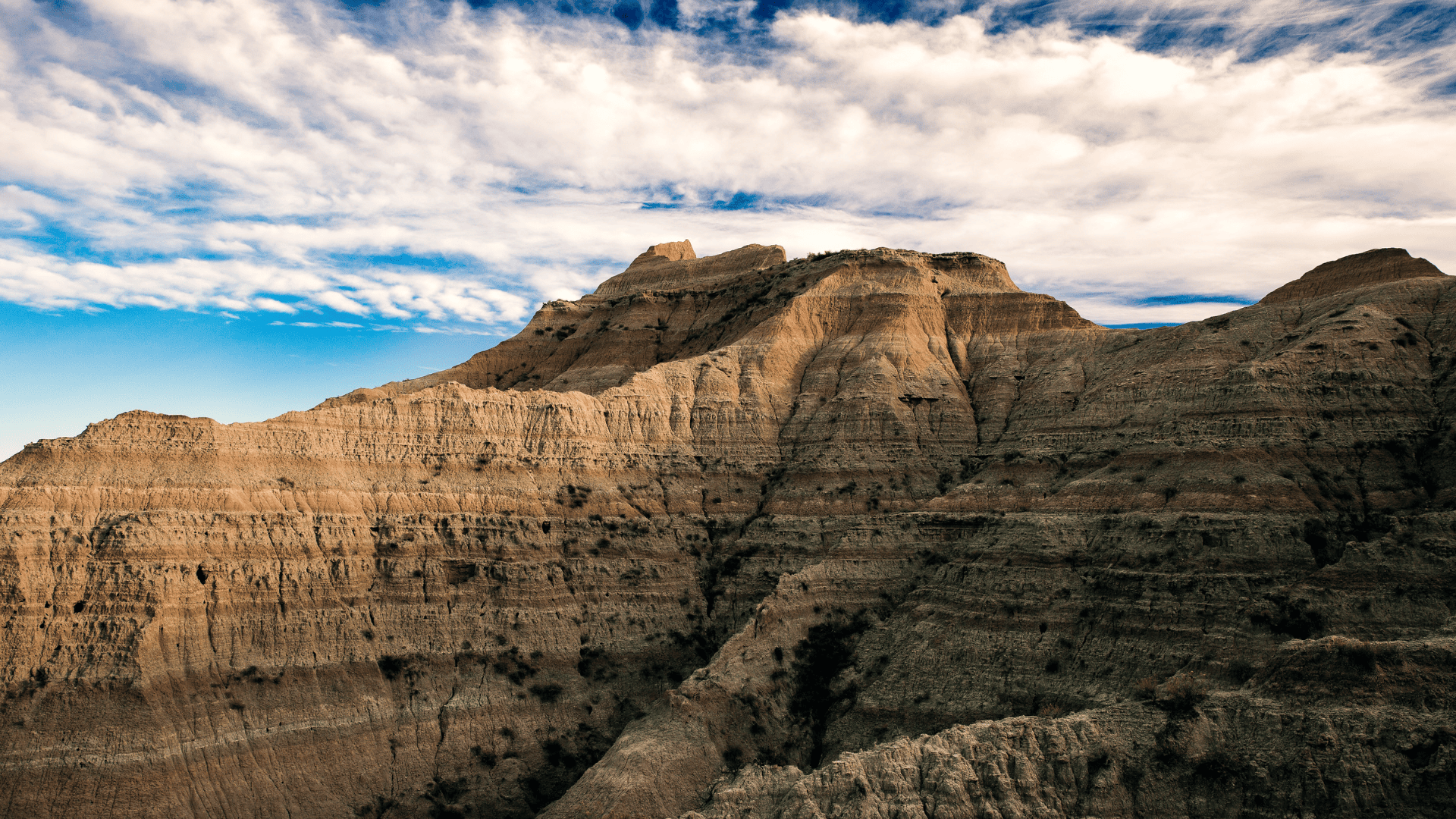
Those colorful stripes tell a very clear story. They are basically a stack of ancient environments piled on top of each other.
About 75 million years ago, this whole area was sitting at the bottom of a shallow sea. Mud and sand settled on the ocean floor and hardened into rock. Later on, the sea dried up. The area turned into a hot, wet jungle, and river floods dumped new layers of dirt on top. After that, it cooled and became an open grassy savanna.
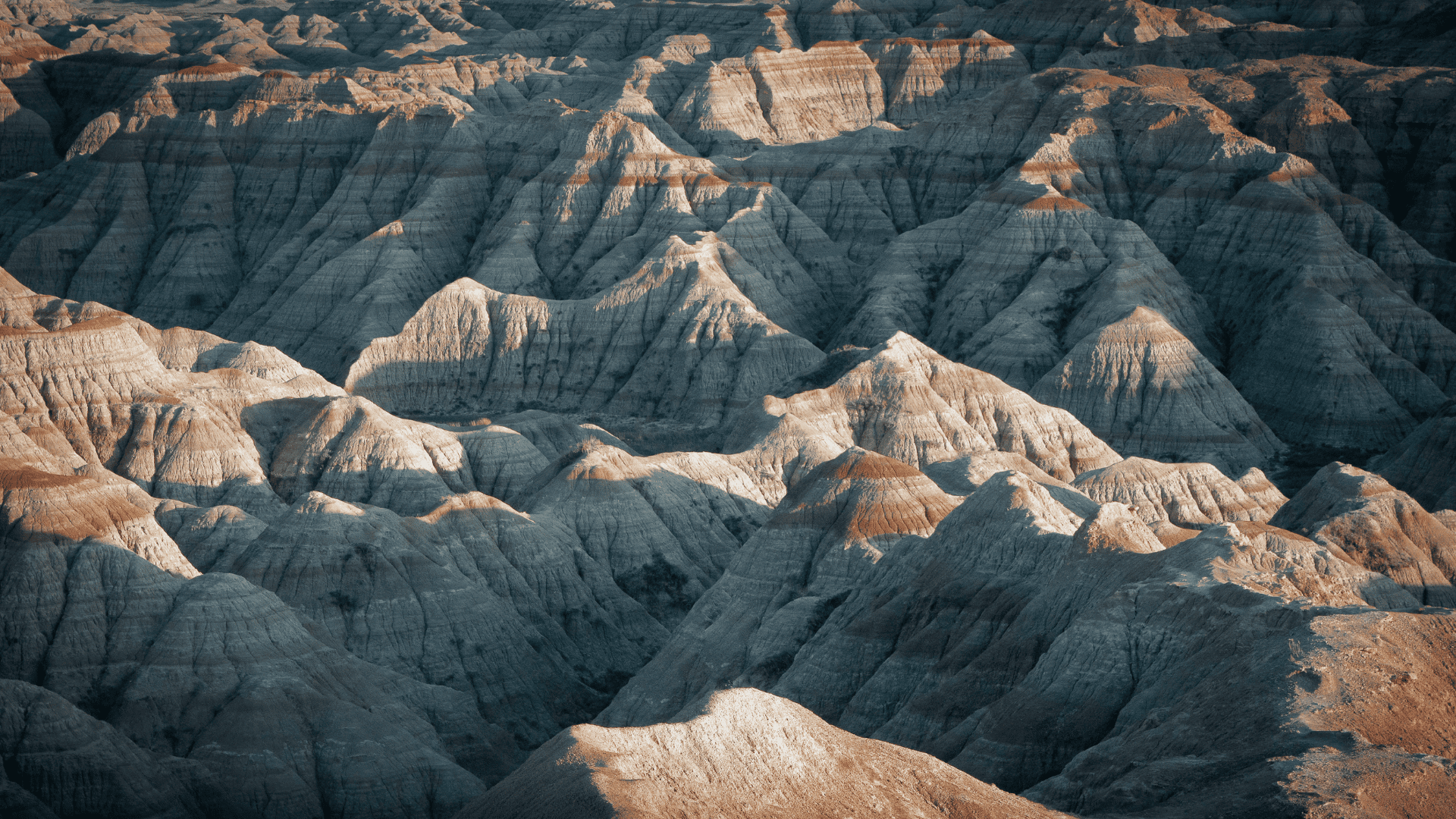
Every time the environment changed, a different type of mud, sand, or volcanic ash piled up. That is why you see the stripes. The red bands are oxidized soils. The gray bands are ancient river mud. You are looking at millions of years of dirt stacked like a giant cake.
Falling Apart Fast
Advertisement
The problem is that this rock is incredibly soft. It is mostly just pressed clay and sand.
When heavy rain hits the Badlands, it does not soak in. The water runs right off the steep hills and washes the soft clay away. It acts like a giant power washer. The water cuts deep grooves into the hillsides, carving the sharp spires and narrow canyons you see right now.
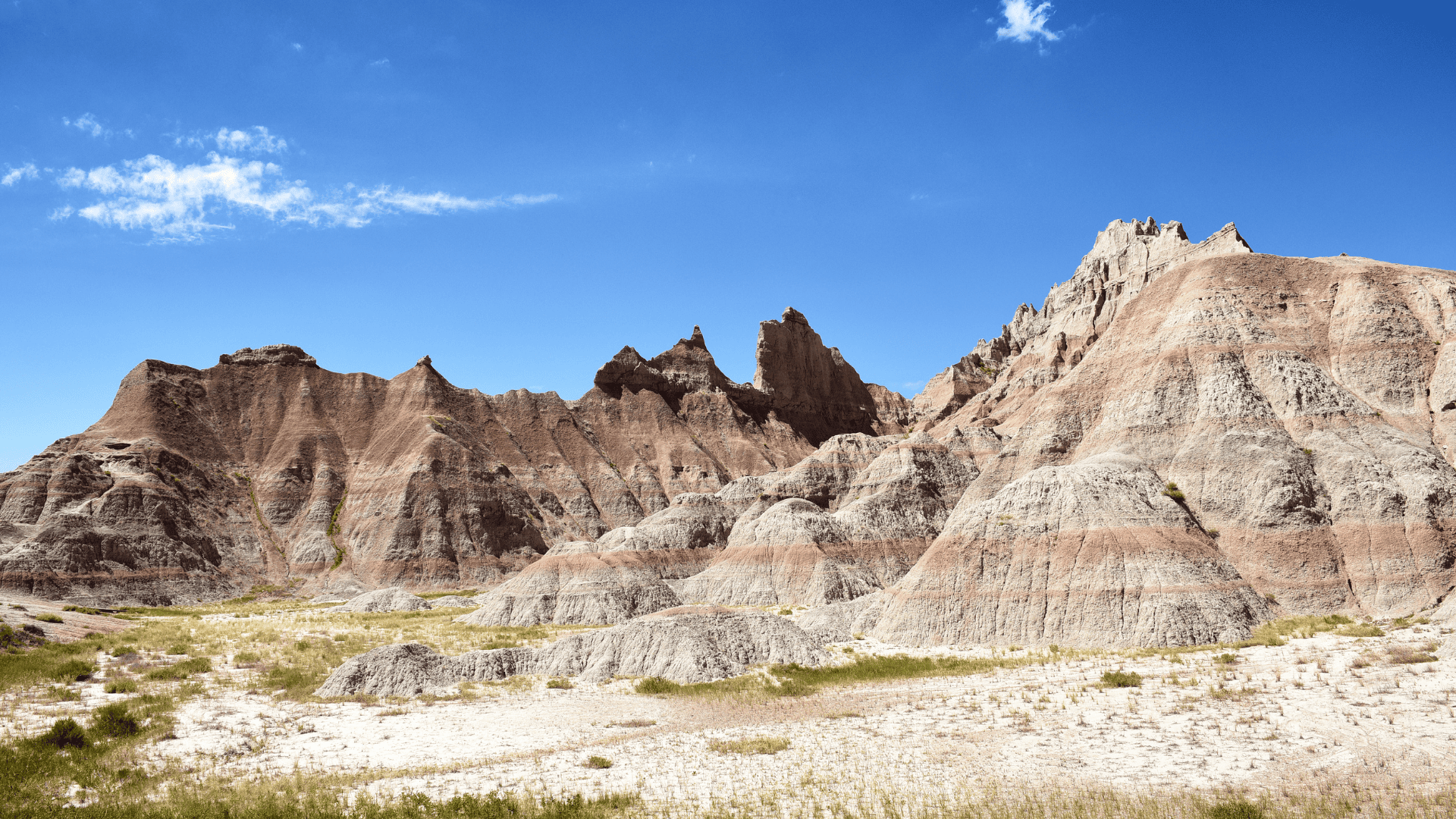
Geologists estimate that the rock here erodes about one inch every single year. That is incredibly fast for a rock formation. In roughly half a million years, the entire Badlands will be completely washed away and flattened out.
Spitting Out Bones
Because the hills are melting away so fast, the ground is constantly spitting out ancient secrets.
The Badlands hold one of the richest fossil beds in the world. As the rain washes the dirt away, the bones of extinct animals get exposed to the open air. Park rangers and researchers constantly find fossilized skulls of ancient rhinos, three-toed horses, and saber-toothed cats just sitting on the ground.
It makes the park a giant, active science lab. Every time a major storm rolls through, the landscape physically changes its shape and gives up a few more pieces of ancient history.
 Read Exclusive Stories
 Bookmark & Save Articles For Later