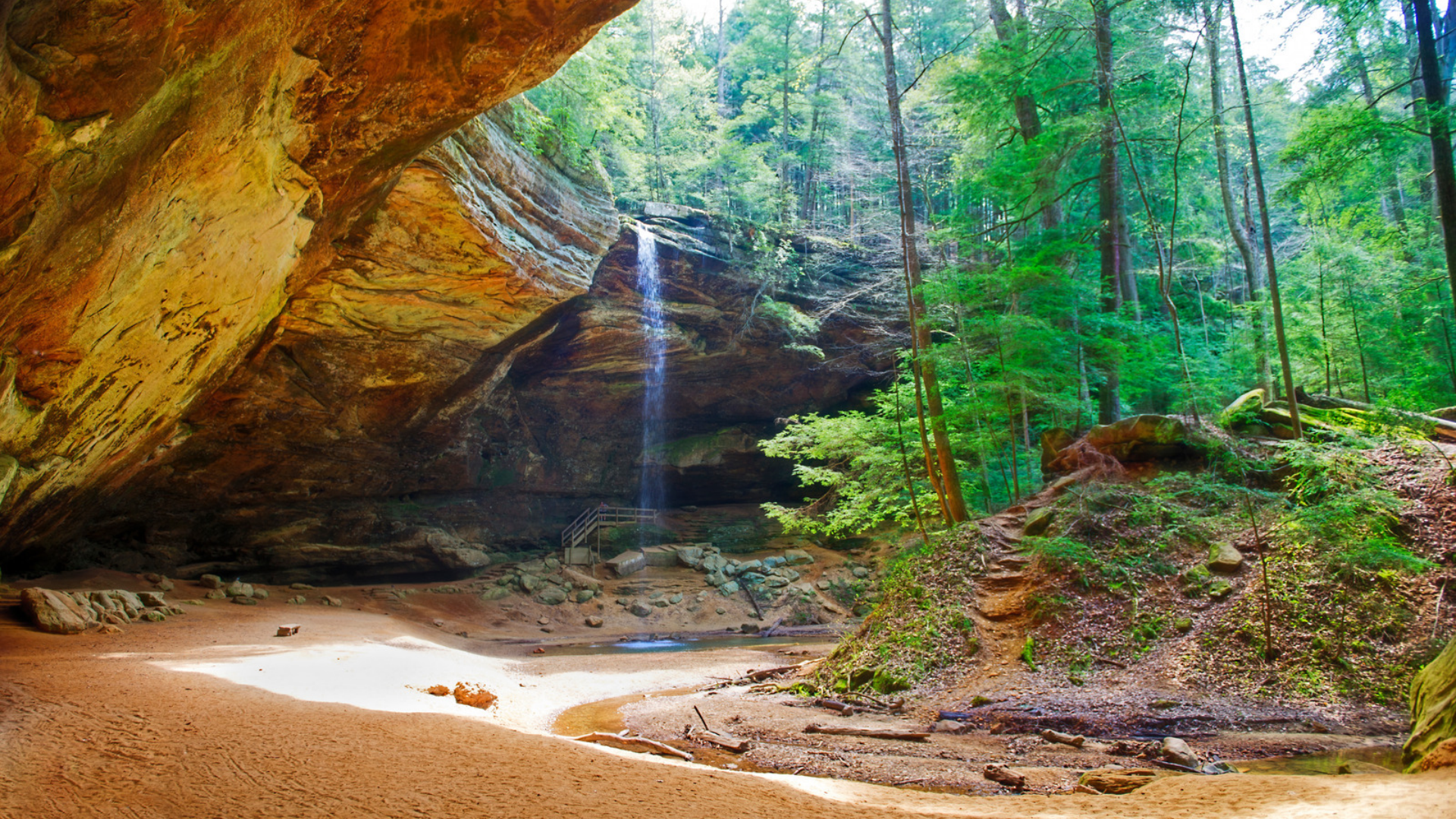
If you travel down to the Patagonia region of southern Chile, you’ll find a massive body of water known as General Carrera Lake. The lake is huge and is known for its incredibly cold temperatures and rough waters.
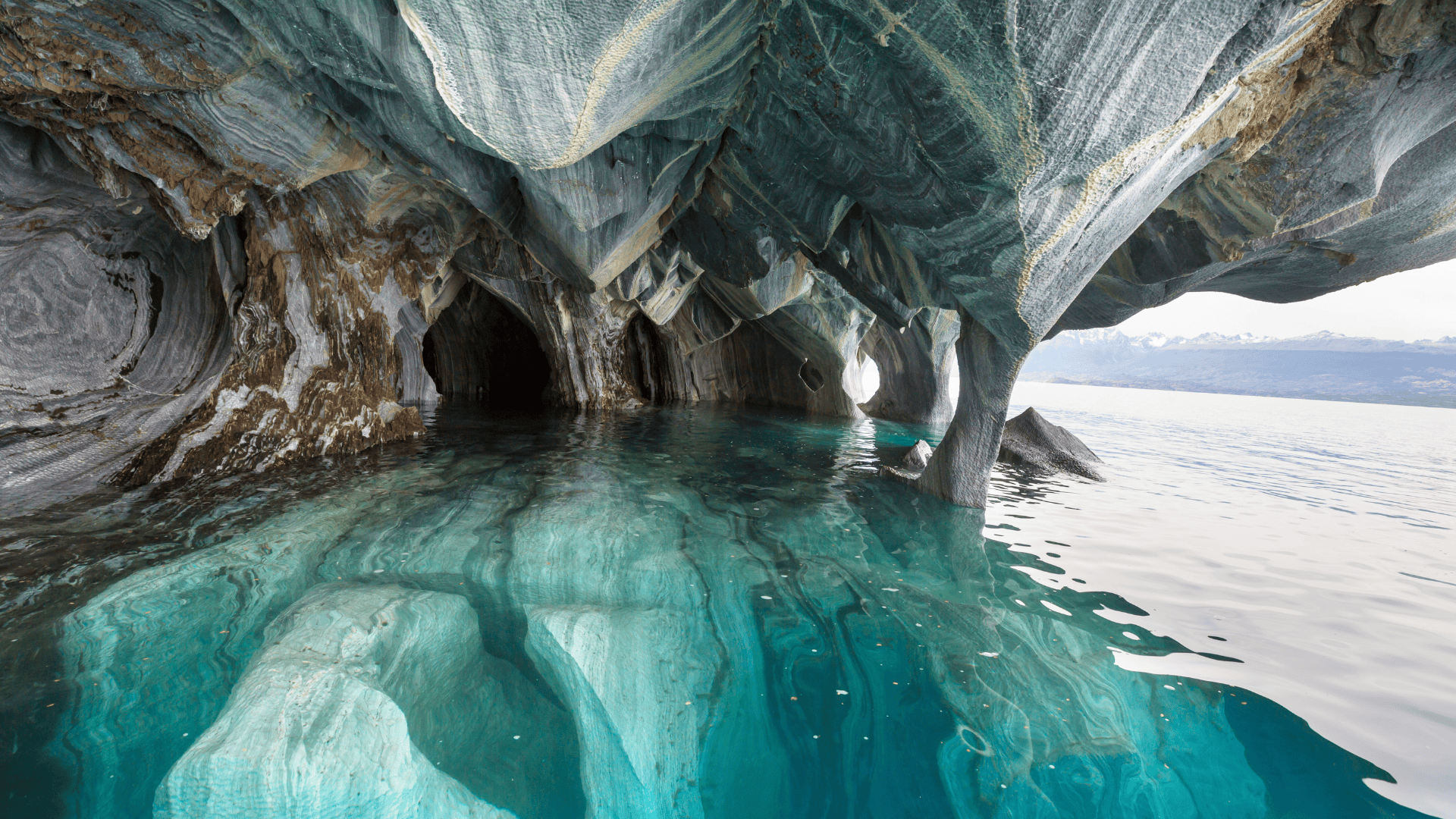
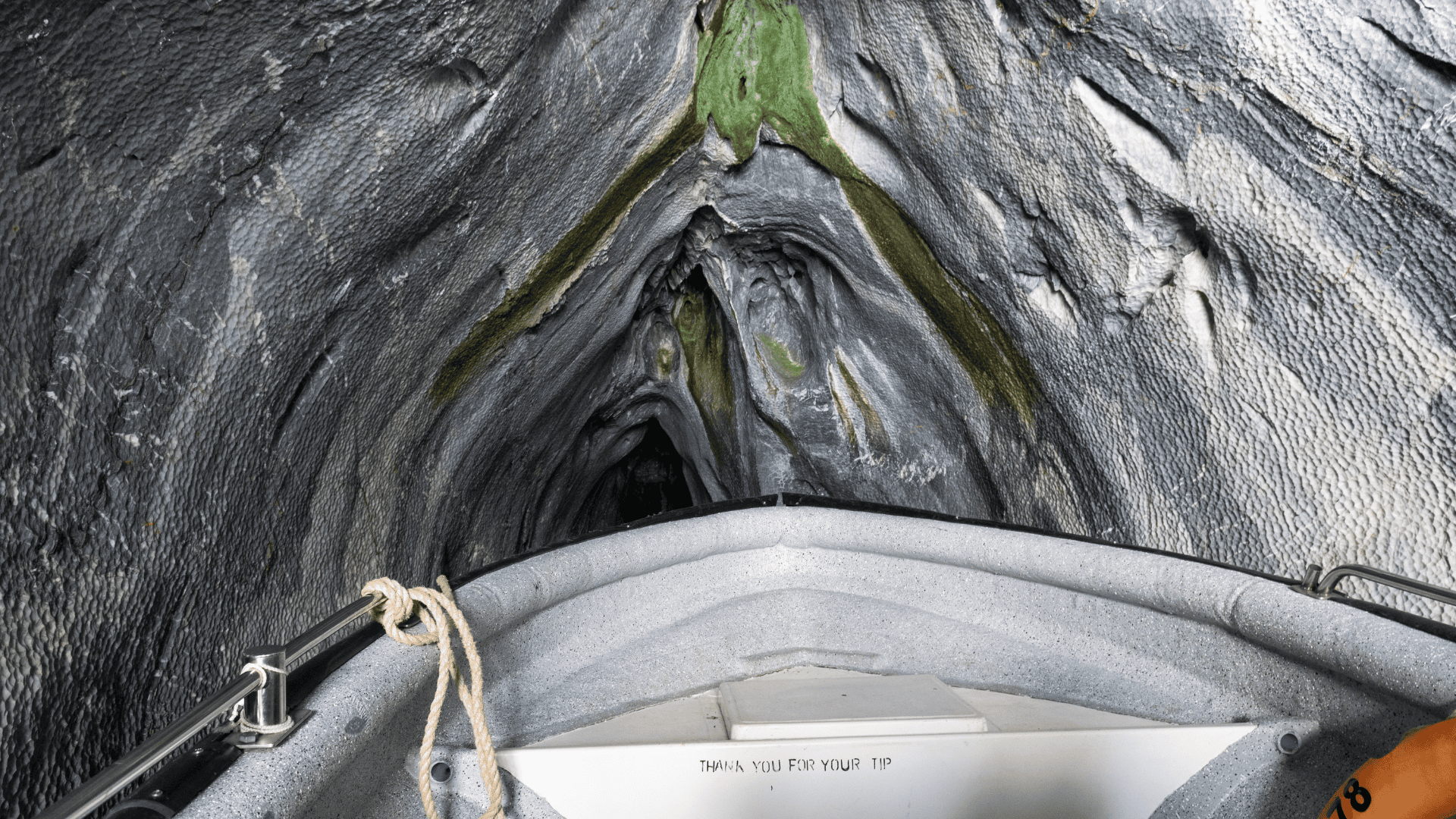
If you take a small boat to the lake, however, you’ll find a series of caves, columns, and tunnels embedded into the shoreline. These are the Marble Caves of Patagonia.
The caves feature walls made of solid marble.
Carved By Cold Waves
Most caves are formed by limestone. The limestone is slowly eroded over millions of years by water, creating caves and caverns.
The Marble Caves formed a bit differently. About 6,000 years ago, the glaciers in the area began to melt, filling Lake General Carrera. The lake water constantly crashed against the solid marble peninsulas on the lake shore.
Marble is much harder than limestone. However, the freezing water and continual crashing against the peninsulas for six millennia wore away at the limestone until it broke down.
The wave action slowly dissolved the limestone in the marble, removing the stone only at the surface level of the marble formations. This left behind arches and pillars that held up the heavy ceilings of the Marble Caves. The caves resemble the interior of a cathedral.
Advertisement
Painted By Glacial Silt
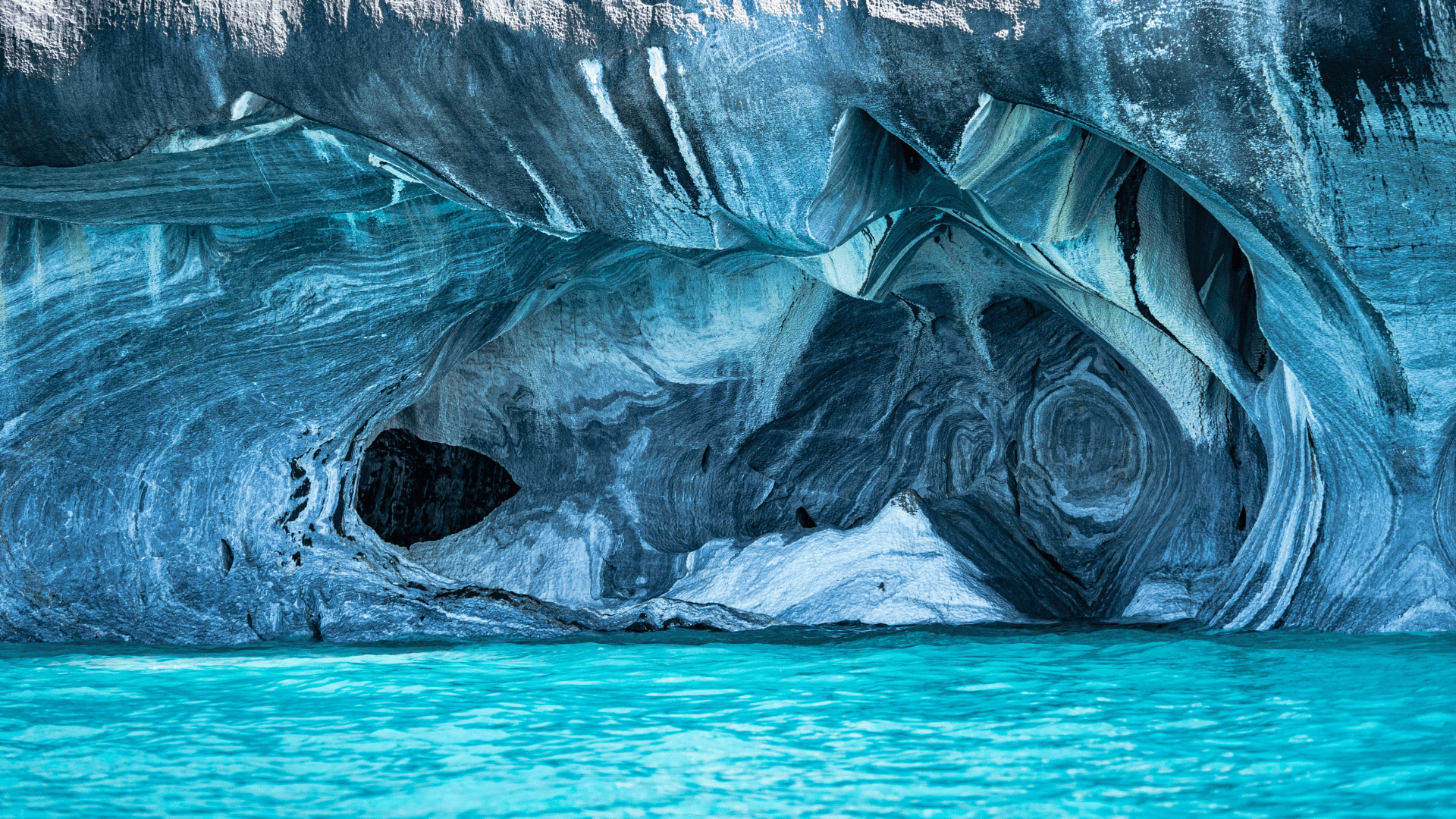
The shape of the caves is impressive, but the color is what makes them famous. The walls look like they are glowing blue. The color of the marble is typically white, gray, or pink. The bright blue color you see in photographs comes from an optical illusion created by the lake.
Glacial flour fills the lake, consisting of fine particles of rock that glaciers have melted and broken down. Because the lake contains this glacial flour, it refracts the sunlight into a bright turquoise blue.
The bright blue lake reflects off the white ceilings of the marble caves.
Depending on the time of the year, the colors change. In the spring, the water level in the lake is lower, and the reflections on the water vary. In the late summer, however, the glaciers melt, and the lake fills up with glacial flour, making the caves reflect a deep blue.
There is no way to walk through these caves. To see these caves from within, however, people must take a kayak or small boat through the arch as the water passes beneath them.
 Read Exclusive Stories
 Bookmark & Save Articles For Later