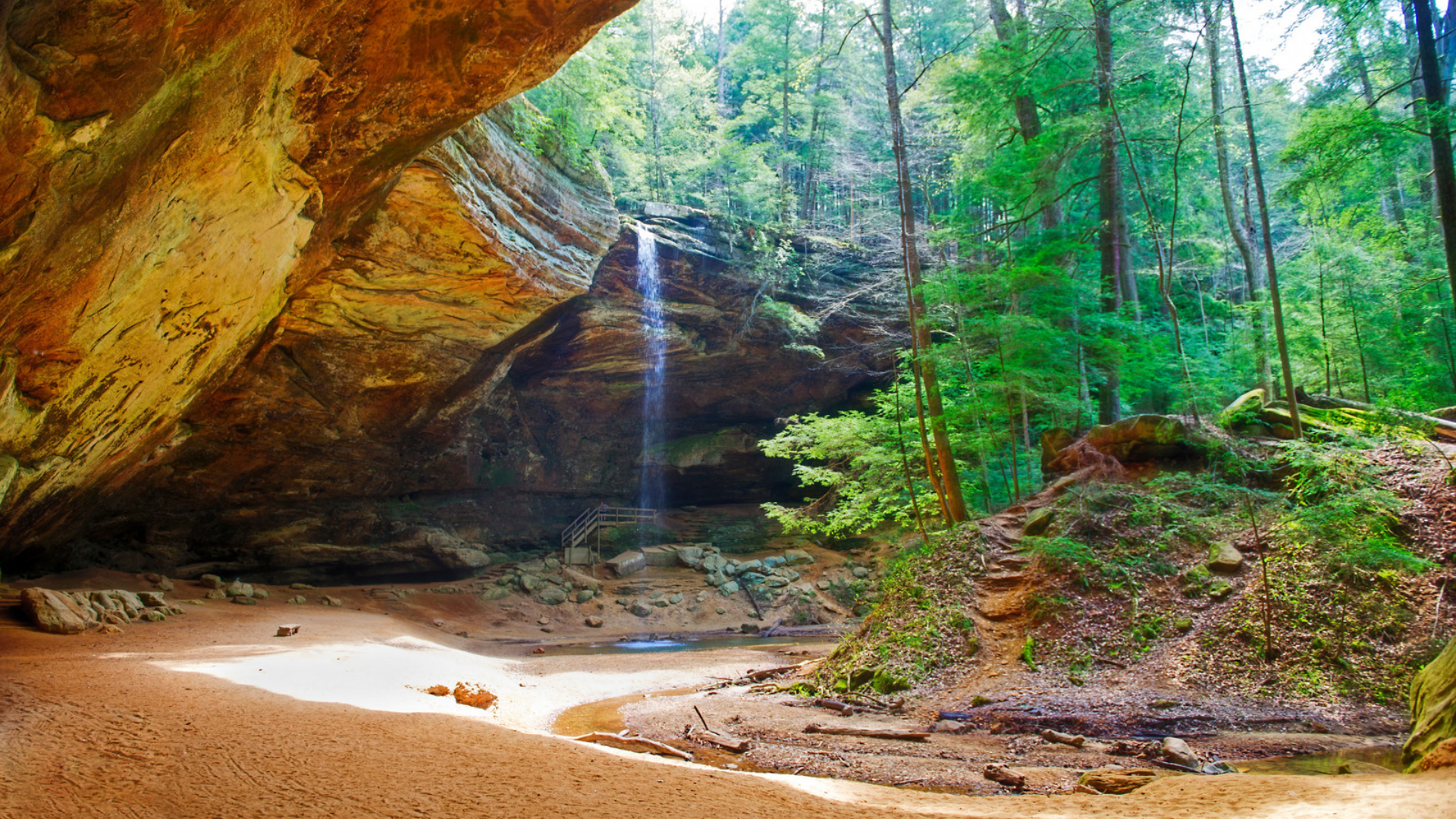
Ohio is mostly known for flat farmland and cities. But head to the southeastern part of the state, and the ground suddenly drops out from under you. This is Hocking Hills State Park. It is a vast network of deep gorges, steep sandstone cliffs, and waterfalls, all completely hidden beneath a thick canopy of trees.
From the road, you just see a normal forest. But once you step onto the trails, you walk right into a sunken world.
Carved By Glacial Melt
To figure out how this happened, you have to look back millions of years. This whole area used to be covered by a shallow sea that left behind thick layers of sandstone.
Fast forward to the last Ice Age. Glaciers never actually reached Hocking Hills, but massive amounts of water melting off the ice just to the north rushed right through this area. That heavy, fast-moving water chewed straight through the soft middle layers of the sandstone. It carved out deep gorges and left the harder top rock hanging over the edge. This constant erosion created huge recess caves.
Massive Recess Caves
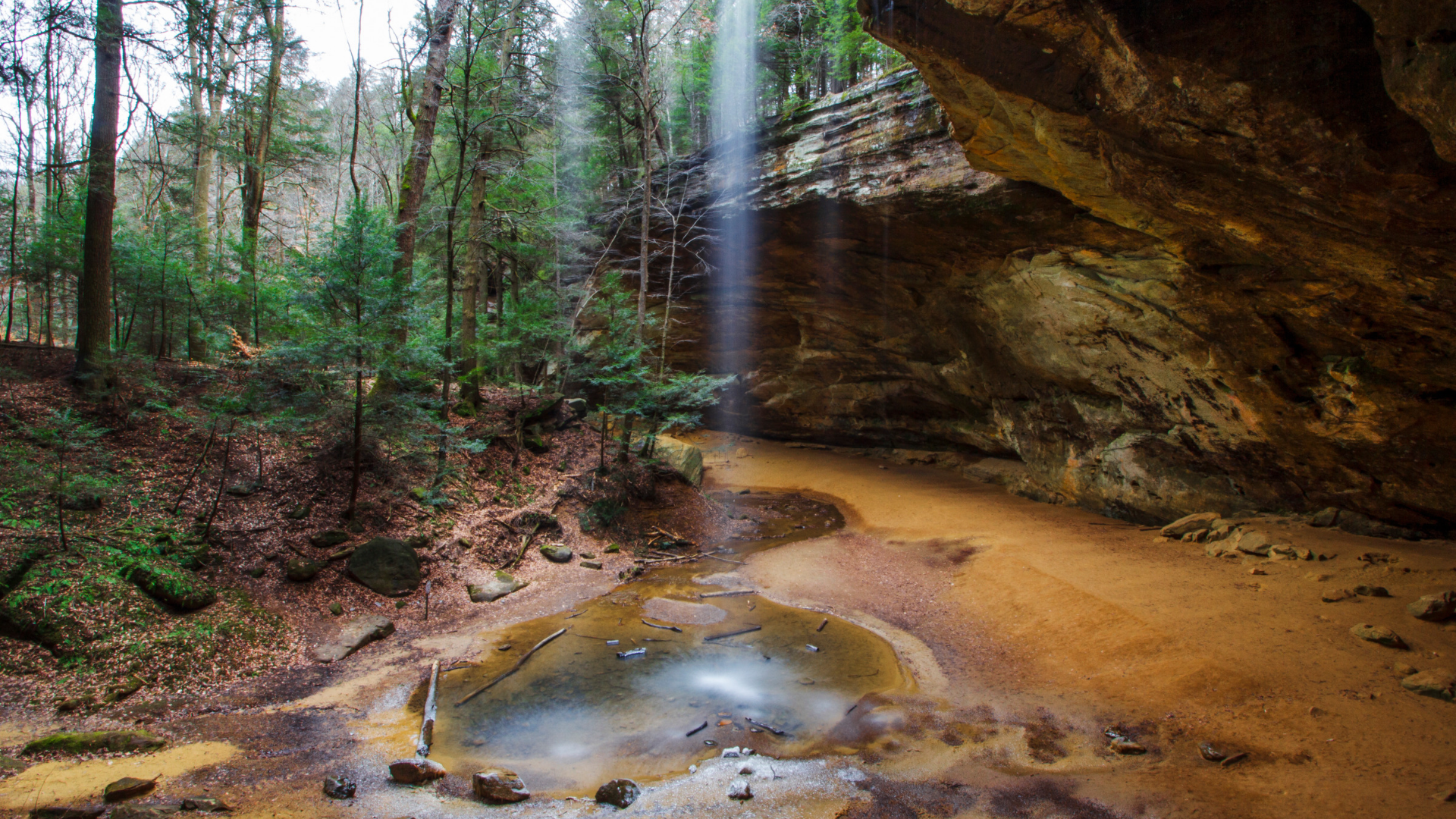
These are not the kind of caves where you crawl through dark, tight tunnels with a flashlight. Recess caves are basically giant, open rock overhangs.
Advertisement
Ash Cave is the biggest one in the park. It spans nearly 700 feet across and curves like a giant stone amphitheater. A small waterfall drops right over the top edge and hits a wide, sandy floor below. The acoustics inside are so good that standing at one end lets you hear someone whispering on the exact opposite side.
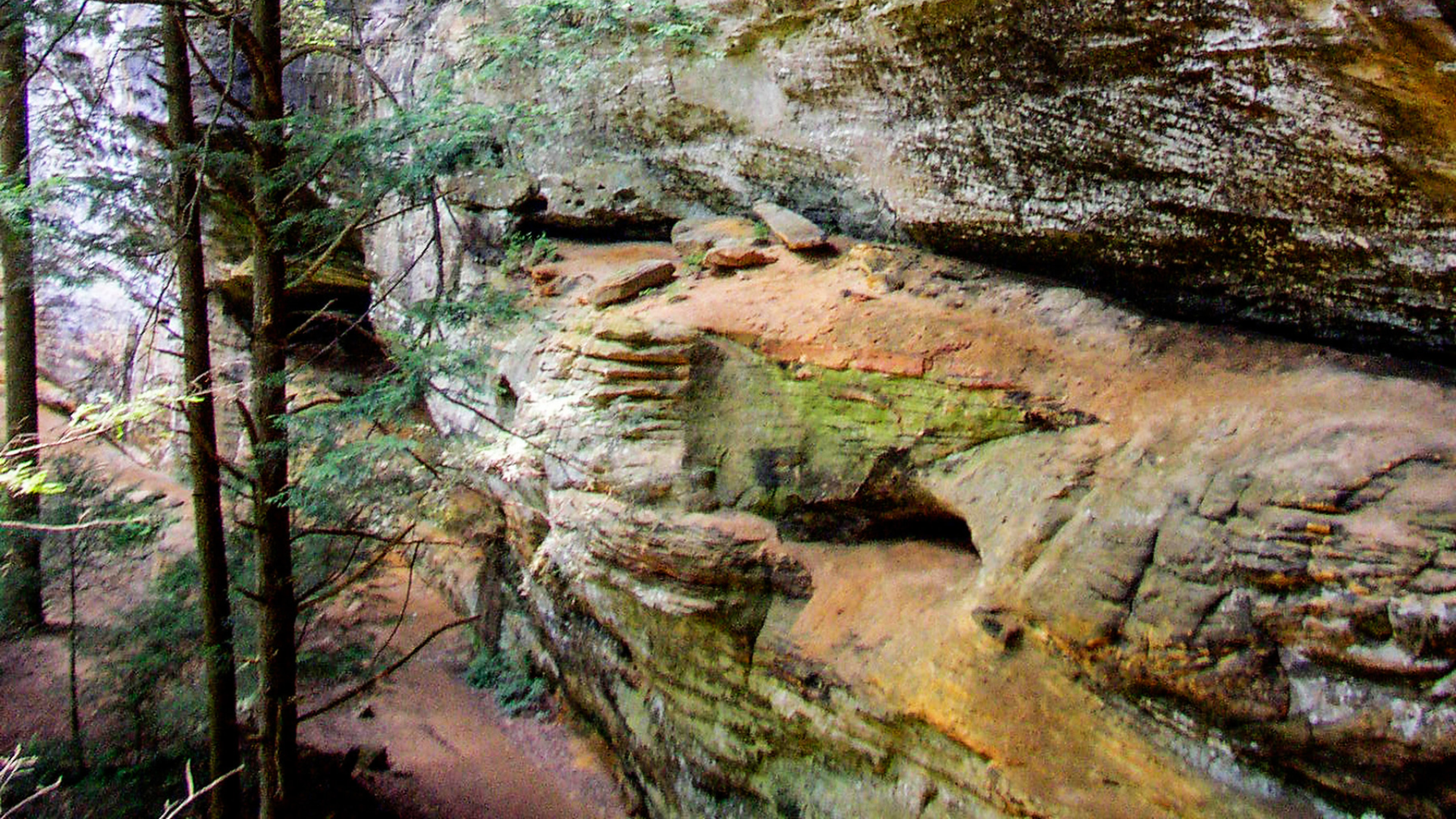
Then you have Old Man’s Cave. This is a deep gorge cut right into the rock. You walk down carved stone steps past swirling pools of water, thick moss, and massive rock formations that look completely out of place in the Midwest.
Changing With The Seasons
The landscape here looks entirely different depending on when you show up. In the spring, heavy rain makes the waterfalls run fast and loud. By autumn, the deep green forest turns into a bright canopy of red and orange leaves.
But winter actually alters the physical space. When the temperature drops, those waterfalls freeze solid. You end up with massive, thick columns of blue ice hanging from the tops of the cliffs all the way down to the gorge floor. It proves that nature is always shifting and rebuilding the landscape. Just like Kentucky’s massive underground cave system, the ground here is never as solid as it looks.
 Read Exclusive Stories
 Bookmark & Save Articles For Later