Chicago is using high-tech methods to look at what is happening on top of its buildings. The city recently used satellite imagery and processing software to map out exactly where its green roofs are hidden. The findings were significant. The data analysis identified “509 vegetated roofs within the City of Chicago,” totaling “5,564,412 square feet of green roof coverage.”
The City Hall Experiment
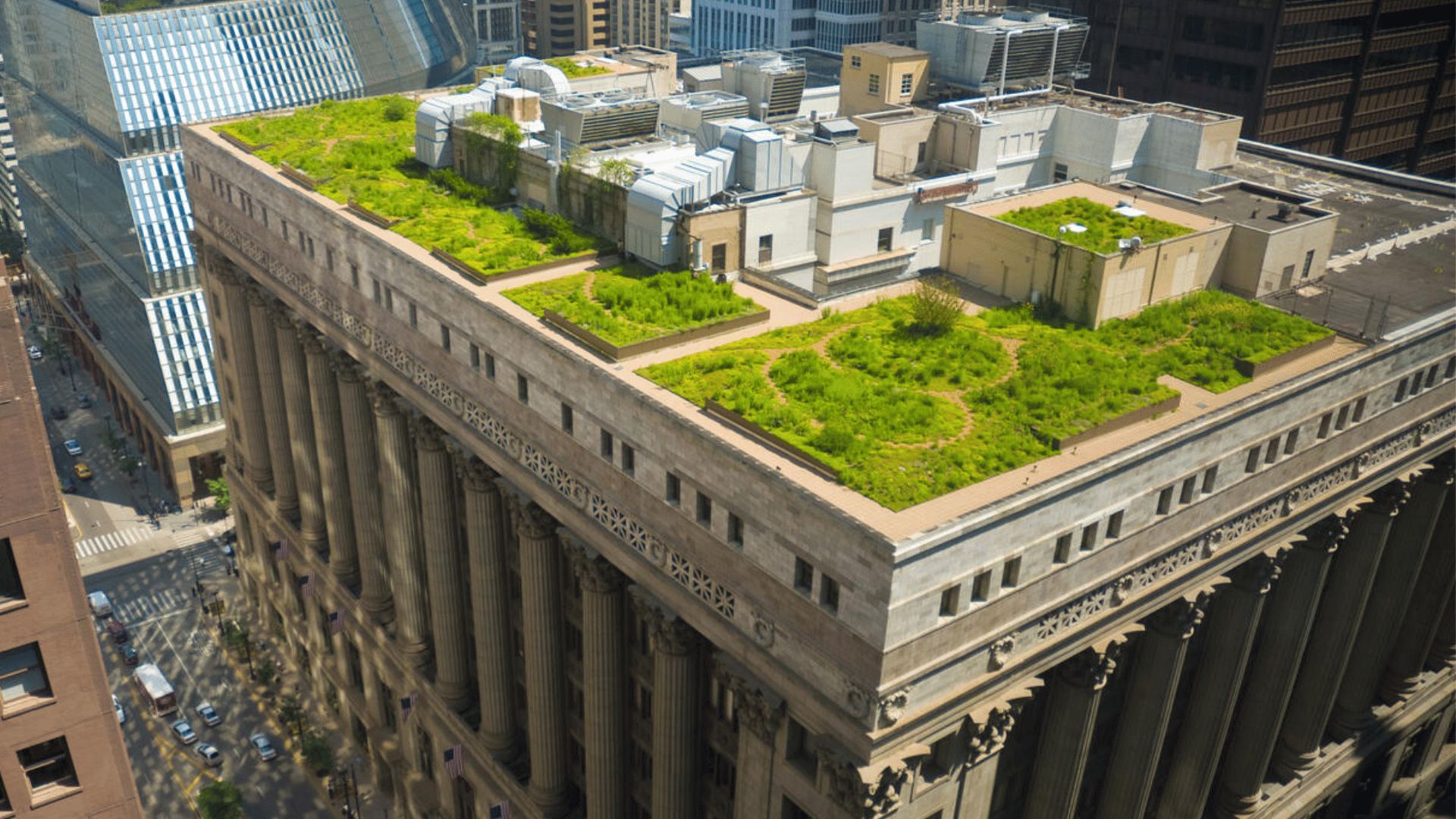
The most prominent example of this tech in action is the green roof on Chicago City Hall. It was installed as part of an EPA study to “reduce the urban heat island effect in the city and improve air quality.” But here is the interesting part: the roof is a split-test. The greenery “only covers the City Hall half of the City Hall-County Building.” This allows for direct “comparative testing of the green roof and traditional roof” right next to each other.
It is a complex setup. The project used a mix of “20,000 herbaceous plants, 112 shrubs, and 2 trees.” Engineers had to be smart about the weight, so the heaviest areas, where the soil is 24 inches deep, were “installed on cantilevered platforms over structural columns.”
Advertisement
They also built it to handle water efficiently. Parts of the roof collect rainwater to store in “two 150-gallon cisterns,” which helps irrigate the plants during droughts. Unfortunately, you cannot go see it yourself. The parapets are too low, so a safety railing would be visible from the street. Currently, “the green roof is only accessible for maintenance.”
Why It Matters
It turns out, green roofs solve several engineering and environmental headaches. First, they help manage water. In cities, “as much as 75% of water is running off into urban areas,” which causes flooding. Plants hold that water naturally. This layer of greenery also protects the roof materials from the sun and weather. The press release notes that this barrier has “proved to double or even triple the life expectancy of your rooftop.”
Beyond just protecting the building, these roofs change how energy is used. They act as a thermal shield. This reduces roof temperatures in the summer and locks heat inside during the winter. This lowers the need for air conditioning, which cuts down on carbon emissions. Finally, they bring a bit of nature back to the concrete jungle.
While they do not replace ground environments, they support wildlife. A survey in Switzerland found “an incredible 172 separate species” on just 11 green rooftops. Chicago’s analysis shows that these roofs are doing a lot of hard work for the city, even if we rarely get to see them.