The battery world has been chasing a solid-state battery cell that works outside of a laboratory. Most of the news in this space is about future promises, but ION Storage Systems recently hit a milestone that moves the needle into the present.
The Maryland-based company announced that its “Cornerstone” cell has officially passed customer qualification. Essentially, this means a customer tested the batteries, and they did what they were supposed to do. ION is the first US solid-state battery company to reach this stage, which is a big deal for anyone anxiously waiting for the next generation of power storage.
A New Way to Build
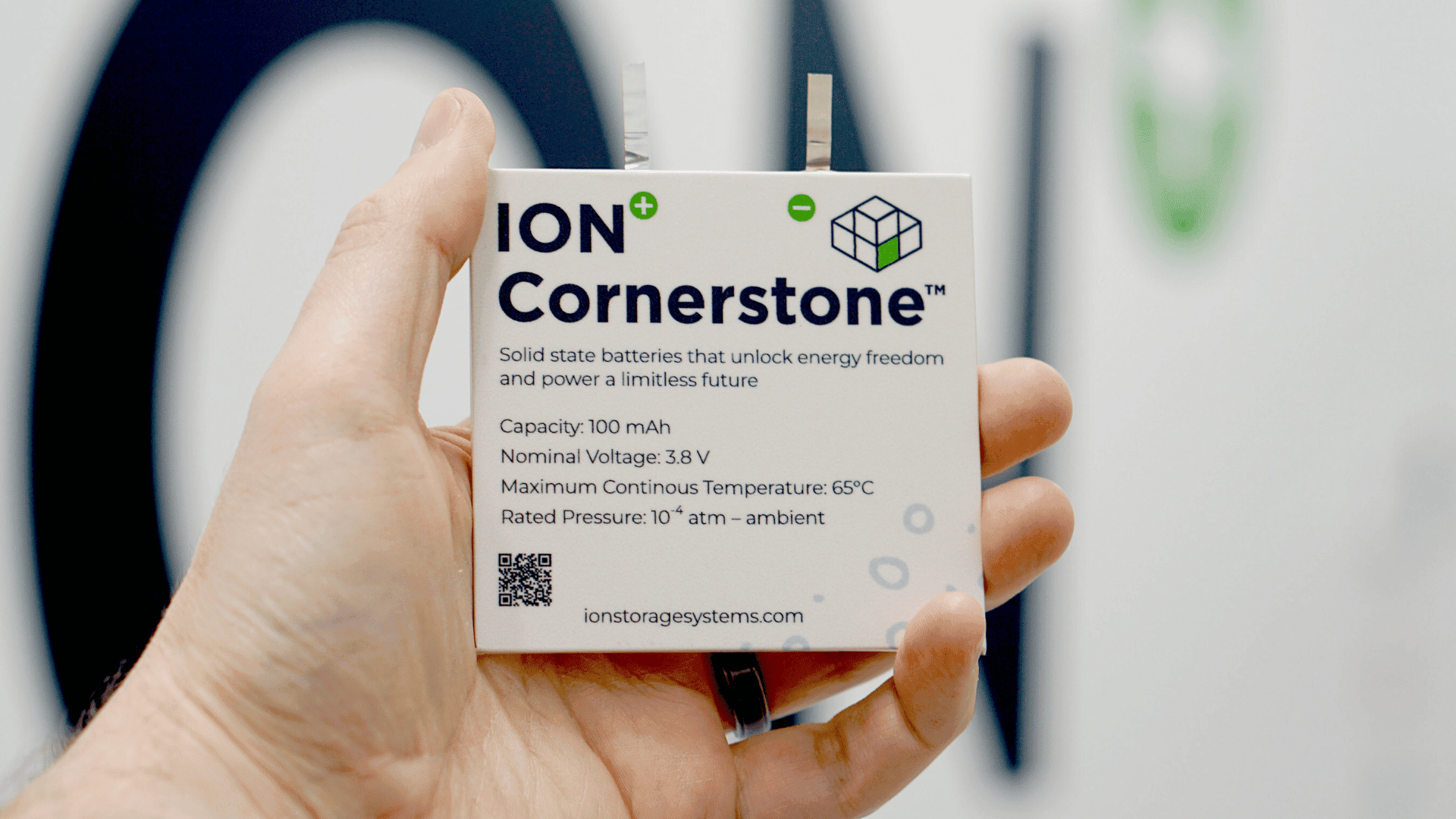
Most companies trying to fix batteries focus immediately on electric vehicles. ION is taking a more grounded path and starting with smaller, high-value electronics where their tech can provide a benefit right now.
“Our strategy of commercializing in applications where our technology delivers immediate value, versus pursuing EVs first, is paying off,” said Jorge Diaz Schneider, ION’s CEO. “We are following the successful footsteps of lithium-battery technology: starting in new, innovative, high-value devices and growing to larger applications in the future.”
Advertisement
The tech itself is an “anodeless” design. This setup is usually tricky to get right, but it allows for better performance and stability at high temperatures.
Mass Producing Solid-State Batteries
Additionally, ION has already sent samples to companies in the automotive and consumer electronics sectors. Now, they are prepping their Beltsville facility for a production run starting later in 2026.
“Bringing a solid-state, anodeless battery out of the lab and into the real world is a company-defining moment for ION,” said Dr. Greg Hitz, the company’s CTO. “We are validating the ‘ION way’ by delivering a 100% solution for our customer and enabling an application with otherwise unmet requirements.”
The company is already installing new furnaces to keep up with the work. While they are starting small, they are already planning for much larger production sites to handle future demand.