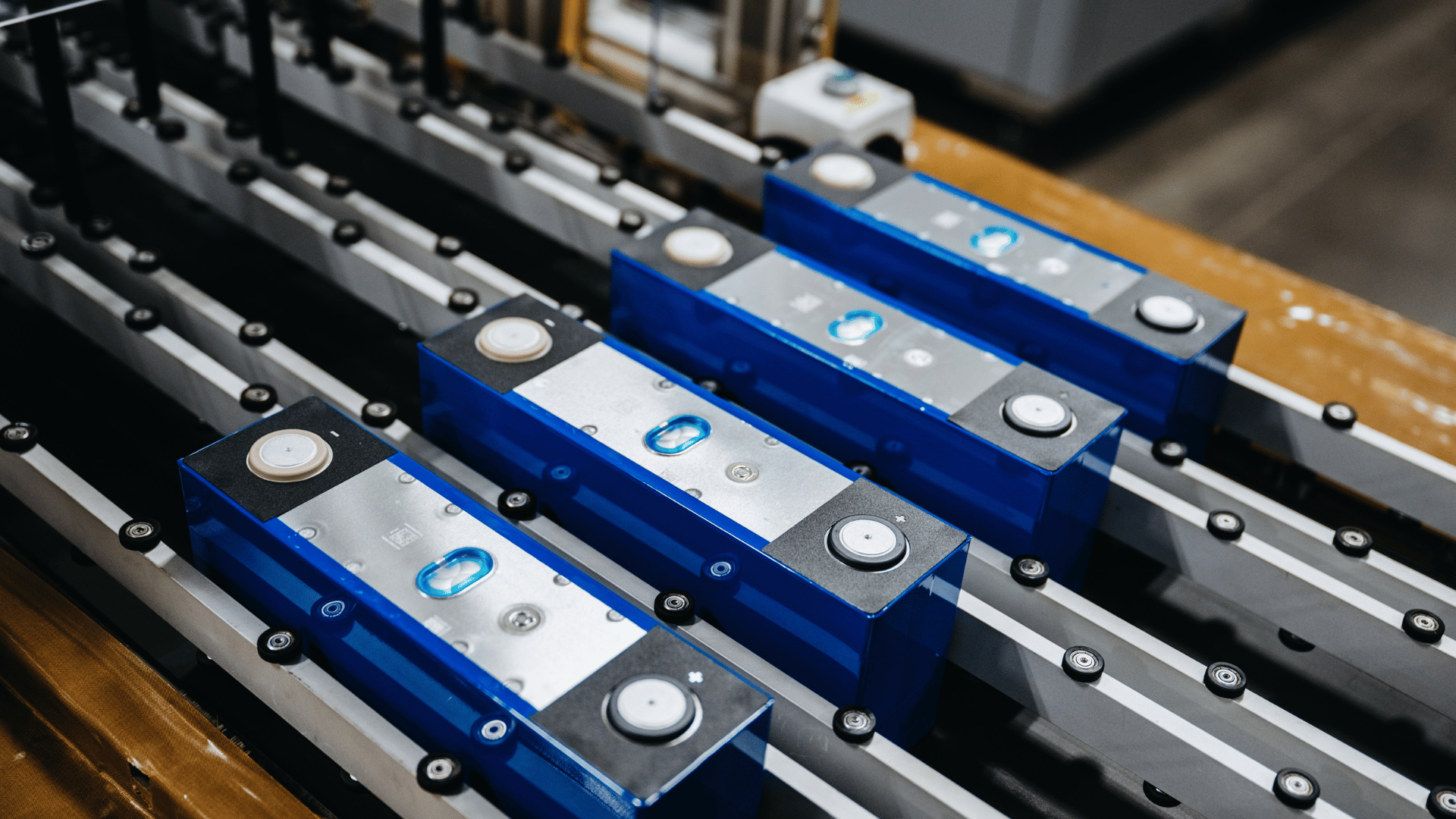
Ford officially rolled out its first lithium iron phosphate (LFP) prismatic battery cells at BlueOval Battery Park Michigan. This is the first time that the major automaker has developed any battery. The cells are now headed to the Louisville Assembly Plant to power Ford Fathom prototypes, the company’s new electric pickup truck. With this shipment, Ford becomes the first automaker to deliver LFP batteries in the U.S. for mainstream consumer vehicles.
The new Michigan facility was designed, built, and launched right on schedule. Ford owns and operates the plant, which builds the in-house skills needed to make electric vehicles (EVs) more affordable.
Efficient Battery Production
The push for these new batteries started when Alan Clarke, vice president of Advanced Development Projects, joined the team behind the Universal Electric Vehicle Platform. He challenged the group to find an efficient LFP prismatic battery to cut EV costs. That search led them to CATL, a battery manufacturer whose tech already powers 30 million vehicles worldwide.
Ford focused on smart design to limit the weight and expense that batteries add to electric vehicles. For example, LFP batteries don’t use nickel or cobalt, which lowers the prices. Additionally, the company claims that the batteries hold up over years of charging. This durability supports the AC bidirectional power feature, which sends electricity from the vehicle to a properly equipped home.
Ford also used rectangular, or prismatic, cells that fit directly into the Fathom’s chassis, which reduces the need for extra parts. They even combined electrical and sensing connections into a flexible circuit board. The team stated, “Our rule: The best part is no part, and the second-best part is one that serves multiple purposes.”
Speed, Quality, and What Comes Next
Building cells at high speed without sacrificing quality is a challenge, but the Michigan plant is off to a fast start. Its assembly lines can produce 40 cells every minute, making it one of the fastest LFP prismatic battery lines in the U.S. To maintain high quality at that pace, workers use AI-powered image recognition to catch defects on the fly. The goal is to make faulty cells so rare that they are tracked per billion rather than per million.
Next, Ford plans to have its battery pack plant in Marshall running in 2027 ahead of launch.
Advertisement
 Read Exclusive Stories
 Bookmark & Save Articles For Later