Roughly one in five Americans will deal with major depression at some point. For most, therapy or a few different prescriptions eventually do the trick. But for about a third of those people, nothing seems to work. These patients have what doctors call treatment-resistant depression, and for them, the standard toolkit of medicine and talk therapy just isn’t enough.
Now, a new study from Washington University School of Medicine in St. Louis suggests that a small, implanted device could change things. The device works by stimulating the vagus nerve, and the results show it might provide long-term relief for people who have struggled for decades.
Vagus Nerve Stimulation For Depression
The people in this study, known as the RECOVER trial, have been through a lot. On average, the participants had been depressed for 29 years and had already tried 13 different treatments that failed. This included intense options like electroconvulsive therapy.
“We believe the sample in this trial represents the sickest treatment-resistant depressed patient sample ever studied in a clinical trial,” said Dr. Charles Conway, the lead author and a professor of psychiatry at WashU Medicine. “There is a dire need to find effective treatments for these patients, who often have no other options.”
“With this kind of chronic, disabling illness, even a partial response to treatment is life-altering, and with vagus nerve stimulation we’re seeing that benefit is lasting,” Dr. Conway added.
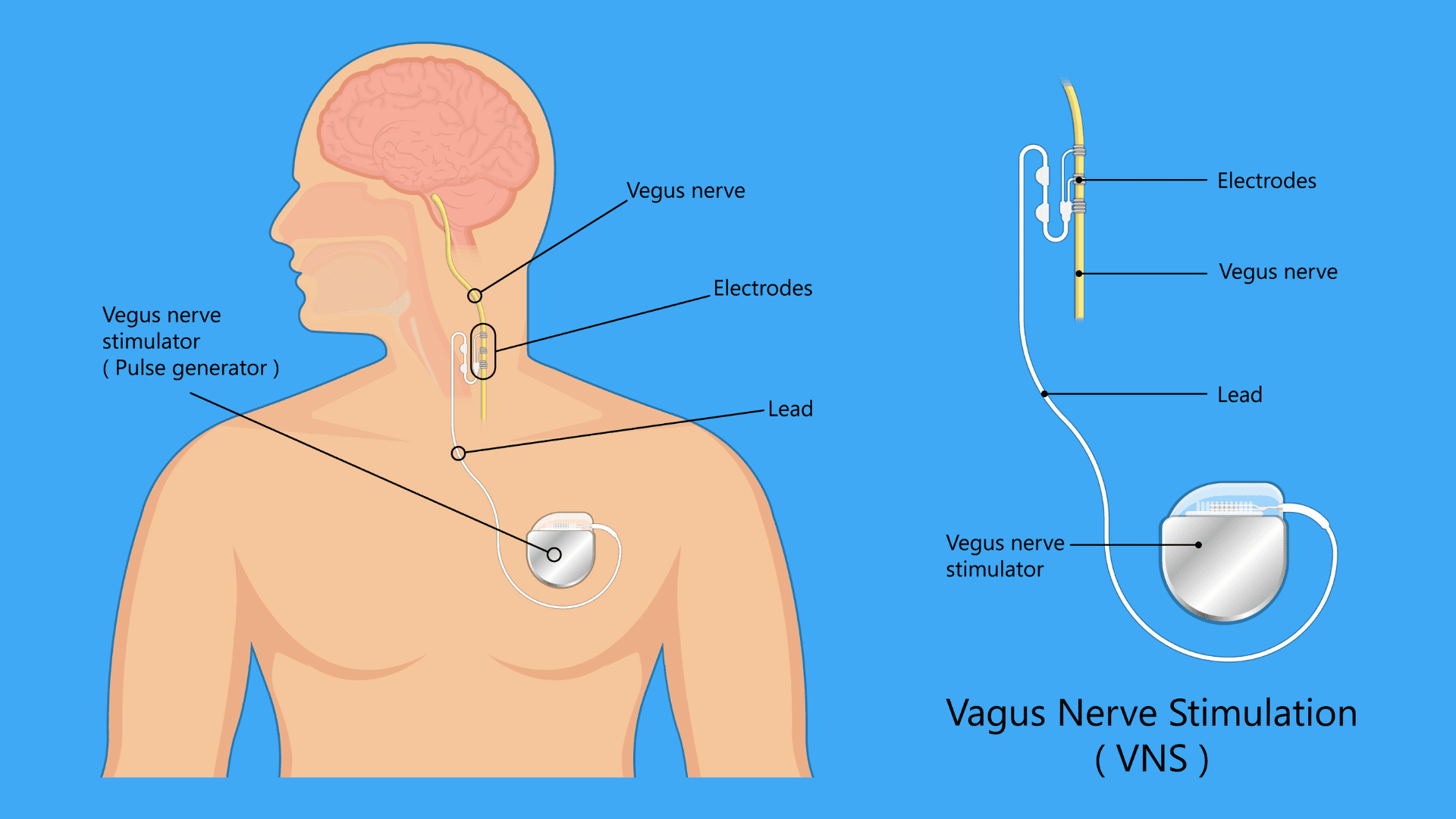
The treatment involves a small device tucked under the skin in the chest. It sends light electrical pulses to the vagus nerve, which acts like a highway between the brain and the body’s internal organs.
Advertisement
Promising Results
The big news here is that the participants stayed better. In many depression studies, people might improve for a few months and then slide back. But in this trial, about 92% of the people who saw big improvements at the one-year mark were still doing well a year later.
Even more surprising was that about 20% of the participants were in total remission after two years. That means their symptoms improved so much that they could go back to living a normal daily life.
“We were shocked that one in five patients was effectively without depressive symptoms at the end of two years,” Conway said. “Seeing results like that for this complicated illness makes me optimistic about the future of this treatment.”
“These results are highly atypical, as most studies of markedly treatment-resistant depression have very poor sustainability of benefit, certainly not at two years. We’re seeing people getting better and staying better,” Dr. Conway concluded.
Right now, this surgery is expensive and hard to get. The researchers hope these new numbers will convince Medicare and private insurance companies to cover the procedure, making it a real option for the thousands of people who are still waiting for something to work.