While Salmonella is getting better at resisting traditional cleaners and antibiotics, researchers might have found a solution in wastewater.
In a new study published in Applied and Environmental Microbiology, a team from Gansu Agricultural University introduced “Phage W5,” a naturally occurring virus that specifically hunts and kills Salmonella.
A Better Way to Kill Salmonella
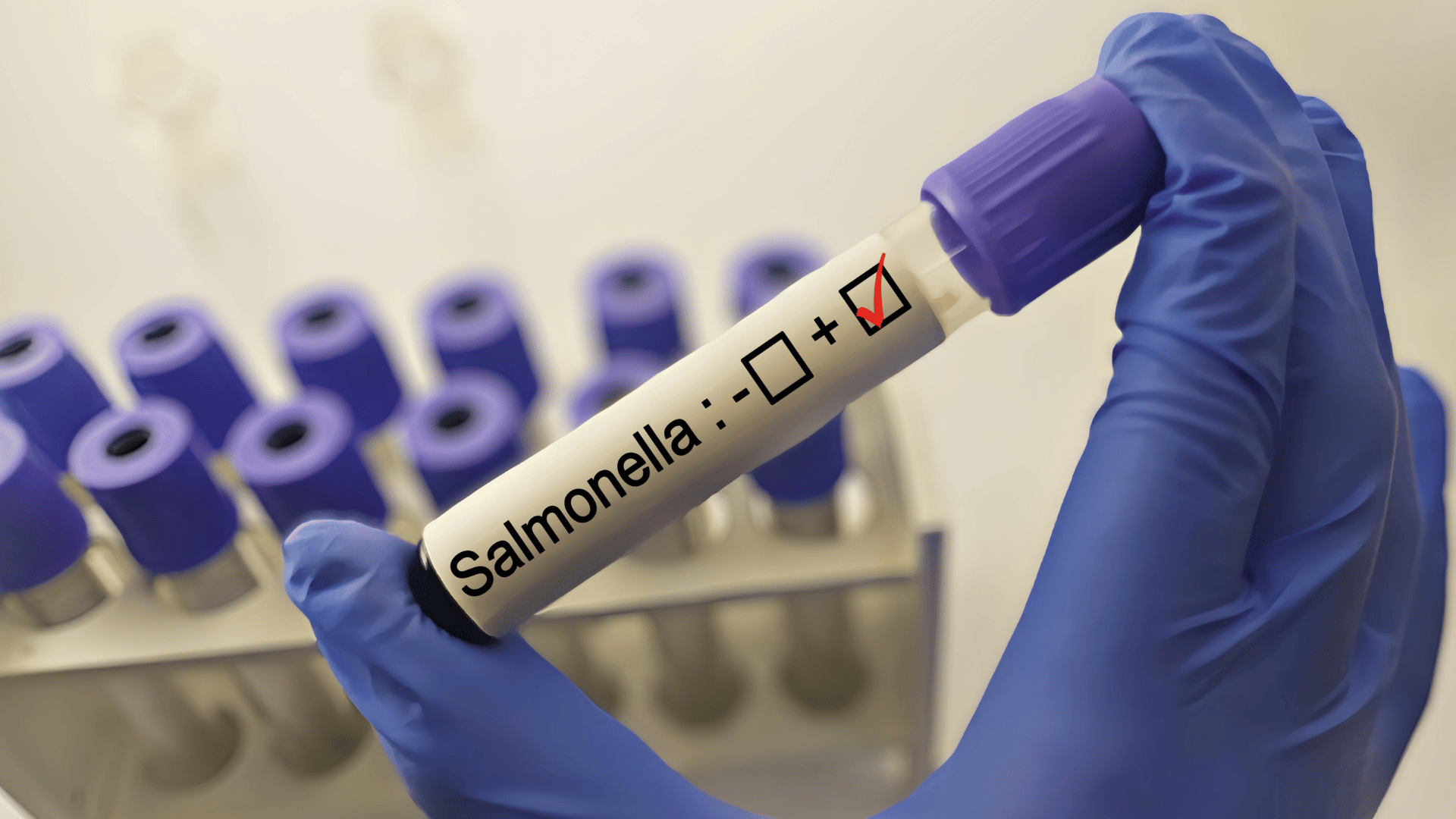
Most of us know Salmonella causes food poisoning, but the real problem for food producers is something called a biofilm. This is a stubborn, slimy layer that the bacteria build on meat, eggs, or factory equipment that traditional disinfectants often can’t scrub away. To make matters worse, using too many antibiotics has created “superbugs” that don’t die like they used to.
Bacteriophages (or just “phages”) are viruses that only attack bacteria instead of humans, plants, or animals. After testing several candidates found in sewage, the researchers realized W5 was the most effective at breaking down those tough biofilms on milk, meat, and eggs.
Advertisement
“We discovered a safe and highly effective natural virus (bacteriophage W5) that functions like a precision-guided missile, capable of eliminating harmful Salmonella on various foods and packaging materials, showing great potential as a novel guardian for food safety,” said Huitian Gou, a professor at Gansu Agricultural University. “The research demonstrates that W5 can efficiently lyse planktonic bacteria and eradicate biofilms with high specificity.”
Gou added, “Genomic analysis further confirms its safety profile, as it lacks virulence and antibiotic resistance genes.”
Working at Every Step of Food Production
Because W5 is a natural biological entity, it doesn’t leave behind harsh chemical residues on your food or in the soil. This fits right in with shoppers wanting fewer chemicals and more sustainable farming.
Researchers think it could work at almost every step of food production.
“We firmly believe that phage W5 holds immense potential for seamless integration across the entire from farm to fork supply chain. It can be incorporated into multiple critical stages—for instance, as a feed additive in livestock farming, a surface disinfectant in meat processing plants, or even a preservative spray for fresh produce at the consumption end,” Gou said. “We eagerly look forward to collaborating with industry partners to translate this effective green solution from the laboratory to the market, working together to safeguard food safety.”