Poland is moving ahead with its plans to build its very first nuclear power plant. Recently, the company in charge of the project, Polskie Elektrownie Jądrowe (PEJ), handed over a permit application to the country’s National Atomic Energy Agency. The hefty application and its attachments cover over 40,000 pages.
The goal is to build three reactor units at the Lubiatowo-Kopalino site. More than 200 experts in nuclear safety and radiation protection spent months pulling this together to prove the design is safe and the location is right.
“This is one of the most important days for the implementation of the project for the first Polish nuclear power plant,” said Marek Woszczyk, President of the Management Board of PEJ. “This is the first and, so far, only such application in the history of modern Poland, since 1989.”
“I would like to thank everyone involved in preparing this extensive document, which, as announced, we submitted at the end of the first quarter of this year,” Woszczyk added. “The enormous work undertaken by the employees of PEJ and the scale of the application itself, which, together with its attachments, runs to over 40,000 pages, demonstrates the scale and complexity of our project.”
Poland’s Nuclear Sector
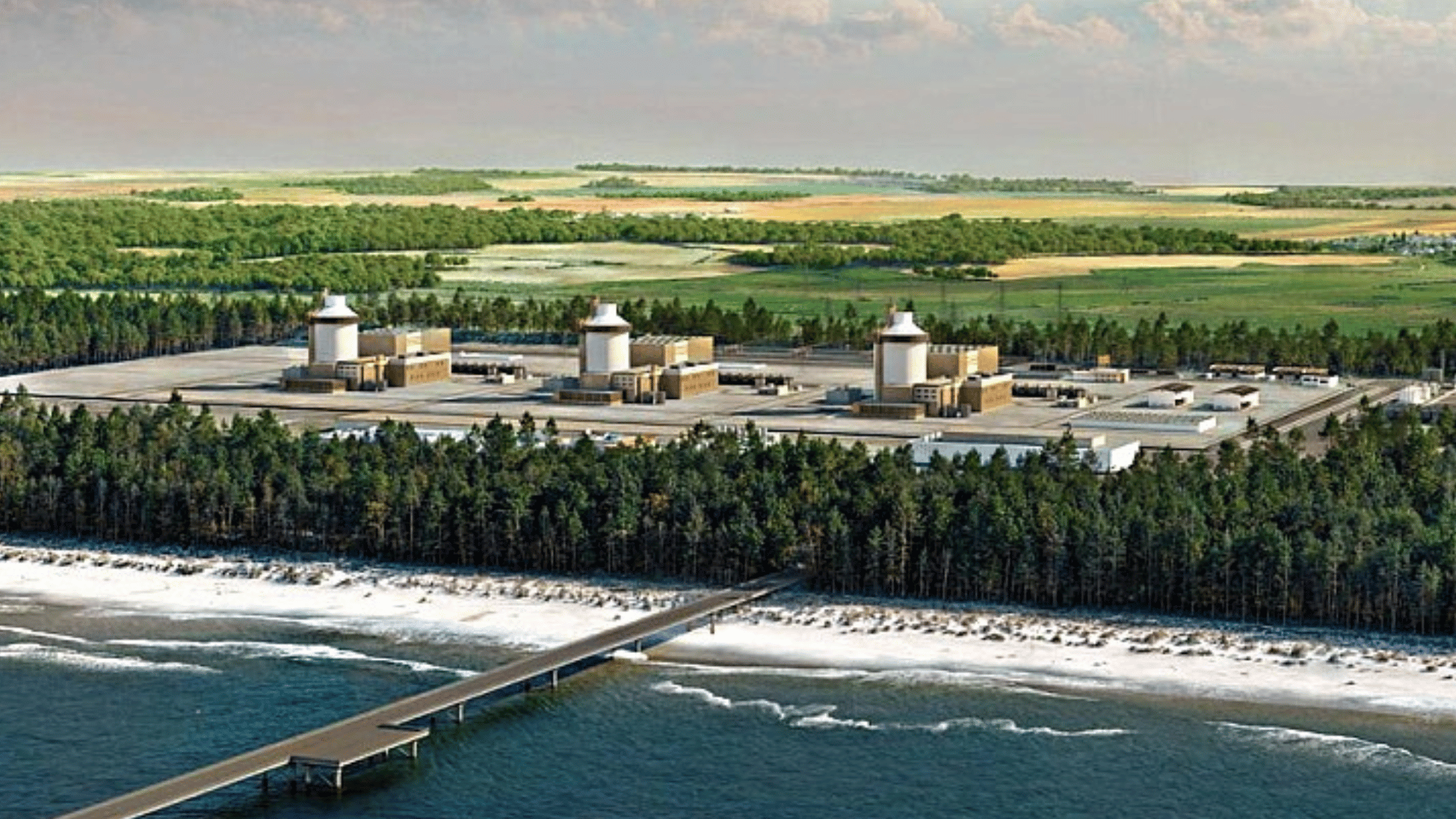
Now that the papers are in, the regulators have up to 24 months to review everything. They’ll look at the technical designs, environmental impacts, and how the plant will be managed. They want to make sure every safety requirement is met before any construction starts.
The government sees this as a way to keep electricity costs down for people living in Poland while helping the country’s industry grow. Minister Wojciech Wrochna, the government’s lead for strategic energy infrastructure, noted the importance of the move.
“Submitting an application for a construction permit for the first nuclear power plant in Poland is a signal that we are determined to pursue an investment that will guarantee stable energy prices for Polish families for decades and drive modern industry,” Wrochna said.
If everything goes according to plan, the crew will start pouring concrete for the first unit in late 2028. Since each reactor takes about seven years to build, we can expect the first one to start running commercially in 2036, with the others following shortly after in 2037 and 2038.