Two paintings in museums in the US and Italy that were once attributed to 15th-century Flemish artist Jan van Eyck are being called into question after a new AI analysis.
Van Eyck Paintings Reexamined
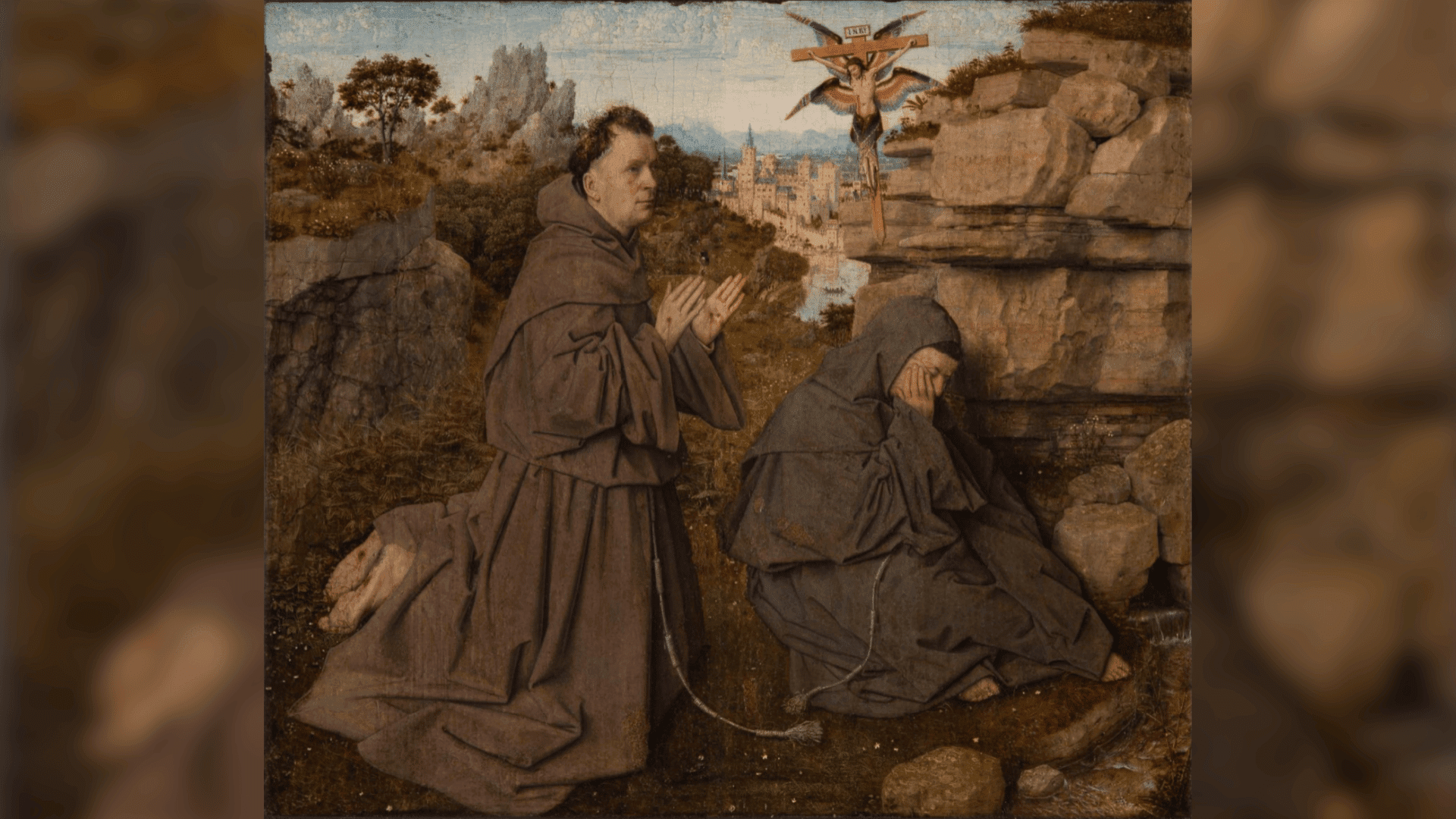
Saint Francis of Assisi Receiving the Stigmata is the name of the two near-identical, unsigned paintings hanging in the Philadelphia Museum of Art and the Royal Museums of Turin. The works are among a small number of surviving works by the artist, who is famous for his naturalistic and religious themes.
Recent scientific tests involving artificial intelligence conducted by Art Recognition, a Swiss company that collaborates on research with Tilburg University in the Netherlands, were unable to detect any of Van Eyck’s brushstrokes. The tests showed that the Philadelphia picture was “91% negative” and that the Turin version was “86% negative”. In contrast, an analysis of another Van Eyck, The Arnolfini Portrait, showed that it was 89% likely to be authentic.
Advertisement
One of the leading Van Eyck scholars and the director of the Suermondt-Ludwig-Museum in Aachen, Till-Holger Borchert, stated that the findings support theories that the paintings were studio paintings, meaning that they were created in Van Eyck’s workshop but not necessarily by him.
What appears to have surprised experts most is that both paintings received negative results, as the assumption was that one painting would be confirmed as a Van Eyck while the other would emerge as a copy. This may suggest that there’s a lost original that was more fully completed by Van Eyck’s hand than these two paintings.

“[Van Eyck] didn’t invent oil painting, but he perfected it so thoroughly that everyone else seemed to be working in his shadow for centuries,” stated Dr. Noah Charney, an art historian who discussed the initial Philadelphia painting’s findings on his podcast. “His surfaces shimmer with light in detail so fine you need a magnifying glass to take it all in. Every stone, hair, reflection, and a glint seems to be rendered with a kind of supernatural clarity.
“That ability to make the everyday luminous is why many consider him not only a great painter, but one of the great observers of reality in all of western art. And yet for all his fame, Van Eyck’s surviving oeuvre is small: fewer than 20 paintings are universally accepted as by his own hand.”