Every Thanksgiving, many home cooks look at the small plastic clamp holding their turkey’s legs together and wonder if it should come off before roasting. The simple answer is that you can leave it on in the oven.
That small piece is called a hock lock, or trussing clamp. Most are made from heat-resistant, food-grade nylon, but sometimes you’ll see a metal one. Federal food safety guidelines and polymer rules require these clamps to withstand normal oven roasting without melting or releasing unsafe chemicals into your food.
How the Plastic Works
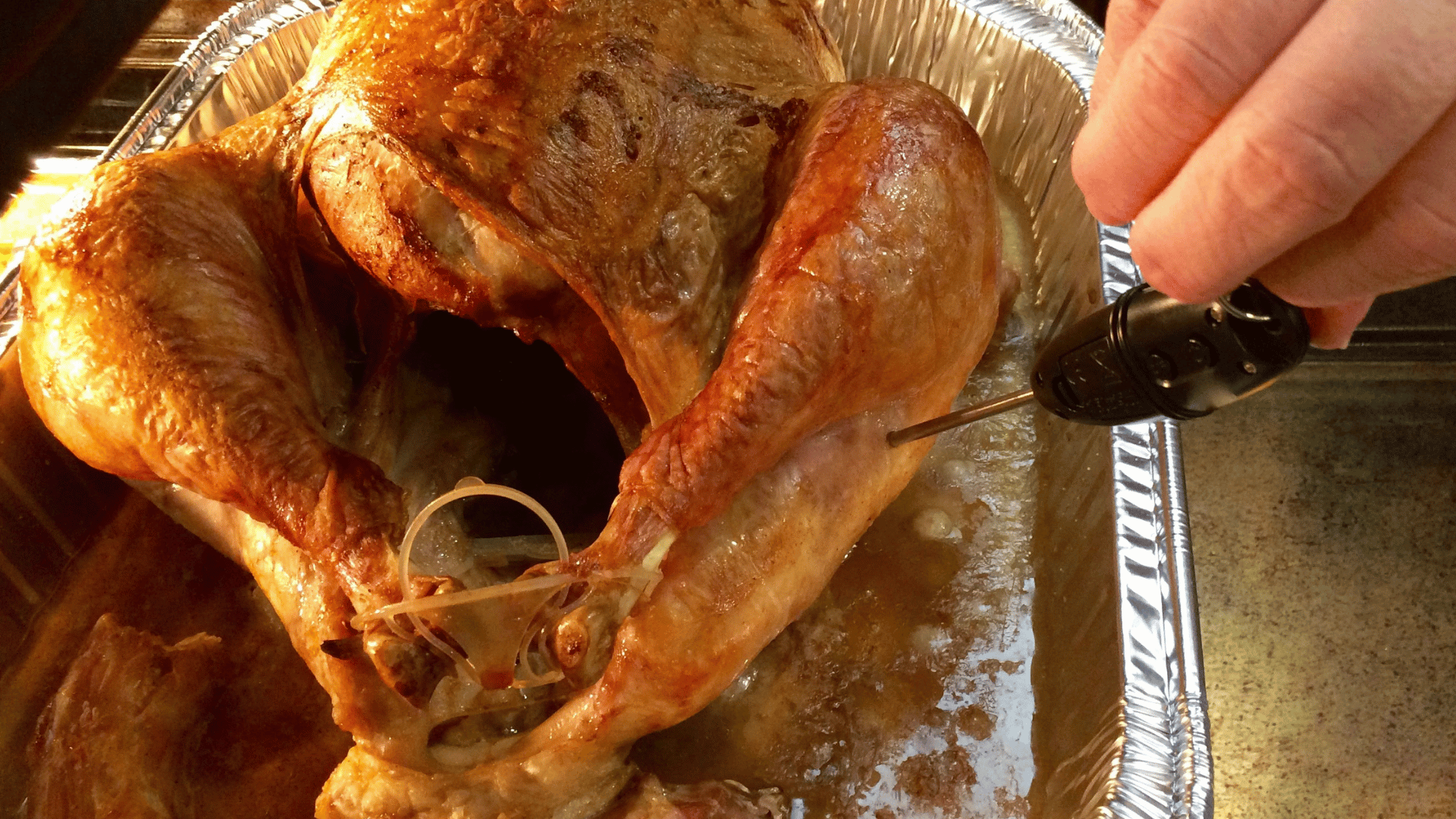
Common household plastics, such as polyethylene or polypropylene, would melt in a hot oven. Hock locks, however, are made differently using high-temperature nylon resins, like Nylon 6,6, to make them.
Advertisement
Nylon 6,6 has strong polymer chains that need a lot of heat to break down. According to the U.S. Food and Drug Administration (FDA), standard food-grade Nylon 6,6 melts between 475°F and 495°F. Some types, like Nylon 66T, can handle up to 518°F.
Most turkeys roast at 325°F to 350°F. Even if you begin with high heat, ovens rarely go above 450°F. This keeps the clamp well below its melting point. Also, the moisture and fat on the turkey’s skin keep the area near the clamp close to 212°F, which is the boiling point of water, for most of the cooking time.
What Federal Safety Rules Say
The U.S. Department of Agriculture (USDA) Food Safety and Inspection Service clearly states in its poultry guidance that hock locks are safe to leave on while roasting. The FDA also tests these high-heat nylon resins with water, ethanol, ethyl acetate, and benzene to make sure nothing unsafe gets into your food when heated.
It is important that you don’t confuse the clamp with other packaging. Pop-up timers use the same oven-safe nylon and can stay in. However, plastic giblet bags and foam absorbent pads inside the cavity are not heat-resistant. Take those out before roasting. If standard plastic packaging accidentally melts onto your turkey, the USDA advises throwing the meat away to avoid chemical migration.
 Read Exclusive Stories
 Bookmark & Save Articles For Later