Researchers have developed an experimental drug called OMO-103 that does more than attack tumors; it helps the body’s own immune system detect and destroy cancer cells.
The drug targets MYC, a protein that malfunctions in cancer and causes cells to grow out of control. For decades, scientists struggled to find a way to block MYC.
OMO-103 is now being tested in clinical trials. Laura Soucek, a professor at the Vall d’Hebron Institute of Oncology in Barcelona, Spain, and Chief Scientific Officer of Peptomyc S.L., presented these findings at the 38th EORTC-NCI-AACR Symposium.
“In this study we’re looking at non-small cell lung cancer, which accounts for approximately 85% of lung cancers. Treatment for this type of cancer has changed substantially with the introduction of several new types of drugs,” Soucek said. “However, resistance remains a major problem: for many patients, their cancer does not respond to these treatments from the outset, and many cancers that initially respond eventually develop resistance.”
Soucek added, “Our interest was in MYC, a protein that is well known for its ability to drive tumor cell proliferation, but it also helps tumors escape the immune system. We wanted to understand how the immune system behaves in and around a tumor when MYC is inhibited with a drug and whether it could help us to treat this type of cancer more effectively.”
The Immune System Attacks the Cancer Cells
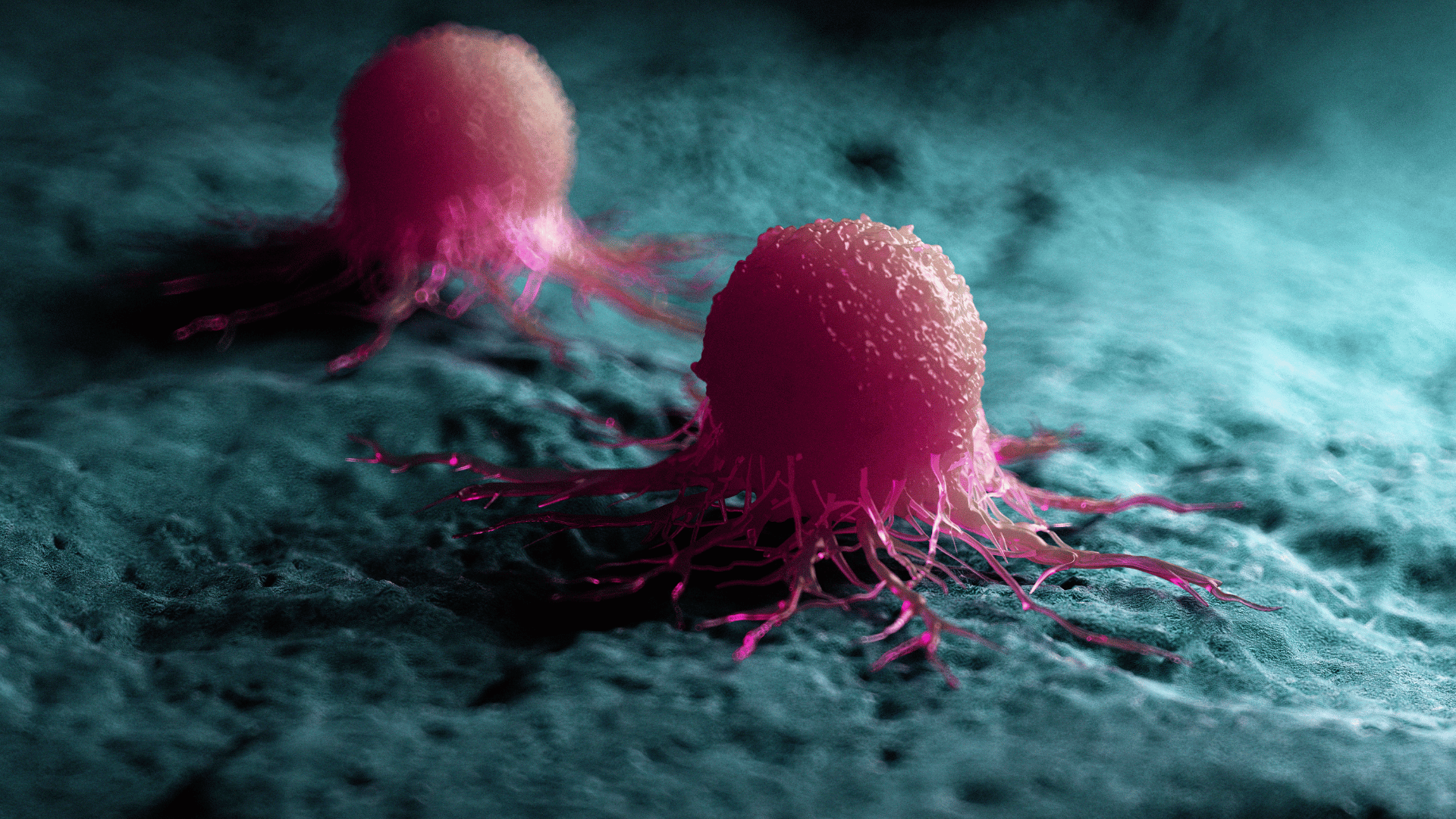
When scientists tested OMO-103 on patient tumor samples in the lab, white blood cells called T cells moved into the tumor tissue and started fighting the cancer.
“When we experimentally removed T cells, OMO-103 still inhibited tumor growth, confirming its direct effect on cancer cells, but its efficacy was reduced by roughly half. This tells us that the immune response makes an important contribution to the full therapeutic effect of MYC inhibition,” Soucek explained.
In early clinical trials with pancreatic, bowel, and lung cancer patients, those who benefited from the drug showed active immune processes called interferon and the TNF-superfamily. However, Soucek noted that because the sample size is small, these results are still exploratory.
In mouse studies, pairing OMO-103 with immune-boosting drugs pushed response rates up to 89% and even 100%, completely clearing tumors in two of seven mice.
“These are preclinical results and should not be interpreted as expected response rates in patients, but they provide strong proof of concept for testing these combinations further,” Soucek said.
 Read Exclusive Stories
 Bookmark & Save Articles For Later