Plastic. It’s everywhere, even in your water. Detecting “forever plastics” is extremely tedious and requires obtaining a sample, shipping it to a specialized lab, and waiting for expensive tests to be run. This long, drawn-out process makes it difficult to detect contamination quickly.
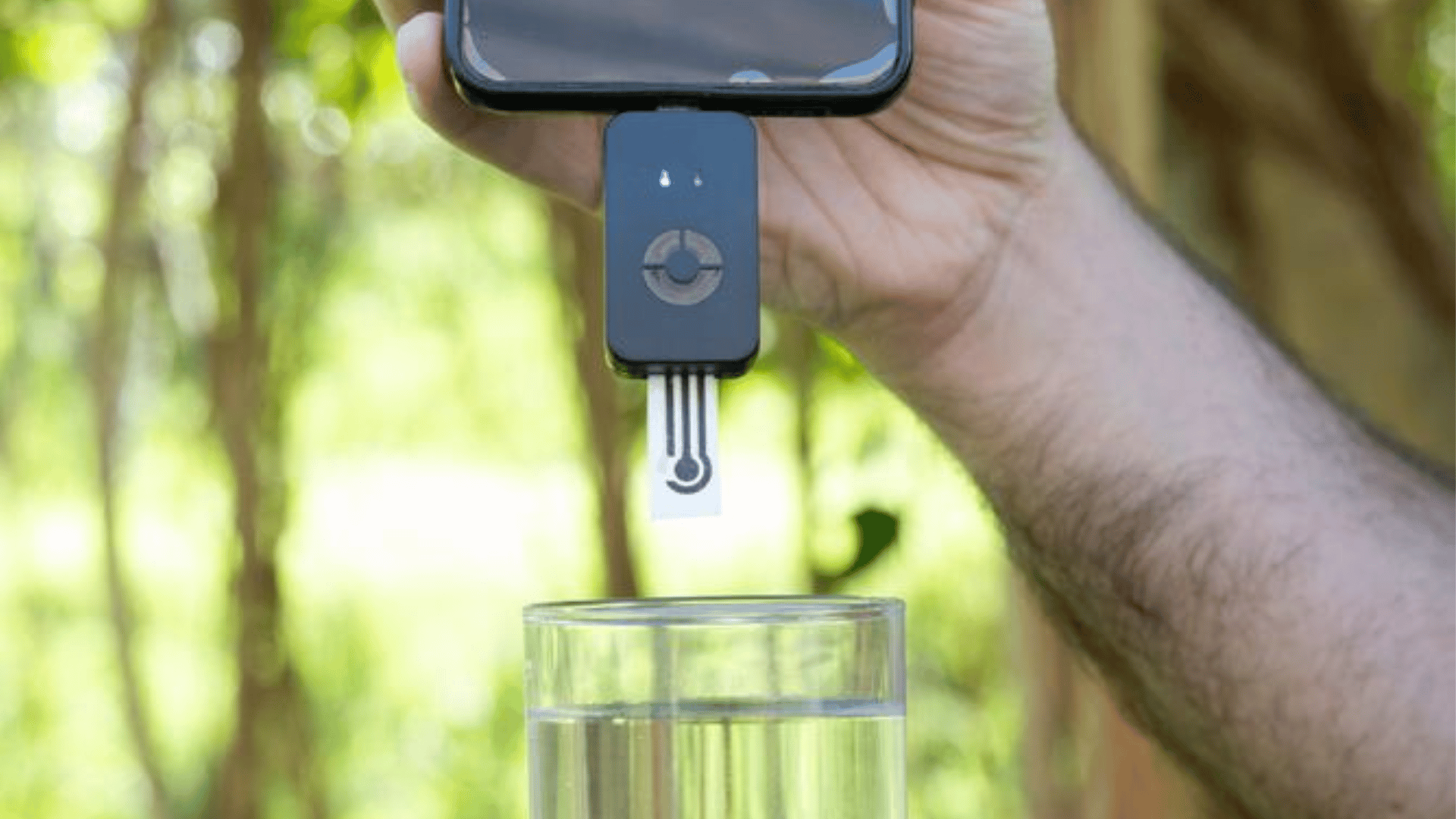
New research out of the Okinawa Institute of Science and Technology (OIST) suggests a quicker way to detect “forever chemicals” on the go. Researchers have built a portable device that detects the chemicals on the spot.
“Our goal is to develop a sensitive, low-cost technology that can eventually be used outside specialized laboratories,” said Dr. Mark Sullivan. “We have demonstrated that it works for PFOA and PFOS, and the same platform could potentially be adapted to detect other PFAS compounds.”
The new device was detailed in the journal Biosensors and Bioelectronics.
Catching Forever Chemicals in Water
Per- and polyfluoroalkyl substances (PFAS) are difficult to break down. They accumulate in water, soil, and living organisms. Part of the challenge is that the chemical family includes over 10,000 variants.
Advertisement
To detect them, the team built custom materials called molecularly imprinted polymers, or MIPs. The researchers form these materials around a specific PFAS molecule to create a custom pocket, then wash the molecule away. The remaining material acts like a lock shaped for a specific key, earning MIPs the nickname “synthetic antibodies.”
When PFAS molecules bind to a sensor coated with these MIPs, the sensor registers a shift in electrical current. A larger change in current means a higher concentration of chemicals in the water sample. Because the system requires no extra chemical reagents, it keeps testing simple and low-cost.
Simple Design Built for Commercialization
The design is compact and easy to produce. For their prototype, the team screen-printed 100 disposable electrodes onto repurposed fabric in just a few hours. After adding the MIP coating, they connected the electrodes to small, off-the-shelf devices that plug right into a laptop or smartphone.
“It shows that it’s possible to make a detection system that empowers local agencies or even families to make an informed decision about whether and how to address potential PFAS contamination — such as alerting municipal authorities to contamination at specific sites, or whether to invest in a water filter,” said Dr. Perrine Lasserre. “Whatever we can achieve with this system is going to be beneficial.”
While the device needs further development and field testing, it offers a practical path to making environmental testing far more accessible.
“Accurate and accessible detection is an important step toward addressing PFAS contamination,” Professor Amy Shen added. “Our study demonstrates how synthetic molecular recognition can be combined with low-cost electrochemical devices to detect extremely small concentrations of these persistent chemicals. While further development and field validation are needed, we see considerable potential for making environmental monitoring more accessible and widely available.”
 Read Exclusive Stories
 Bookmark & Save Articles For Later