Your genetics act like “fingerprints” that shape how you look, like your eye color and height. They also change how your body reacts to certain diseases and drugs. Essentially, they are the recipe or blueprint that makes us who we are.
Today, NASA scientists are using tiny devices to test these reactions before giving treatments to patients.
These devices are called organ-chips, the size of a USB drive that hold cell cultures and act as “small avatars for human organs.” The mini-organs can mimic the functions of lungs, hearts, pancreases, and livers, or link up to act like whole human systems.
NASA states they have several names, such as organ-on-a-chip, tissue chips, tissue-on-a-chip, microphysiological systems (MPS), and 3D tissue chips. The devices last about 30 days. NASA and other researchers are working to extend that lifetime to study diseases over longer periods.
From Human Donors to Deep Space
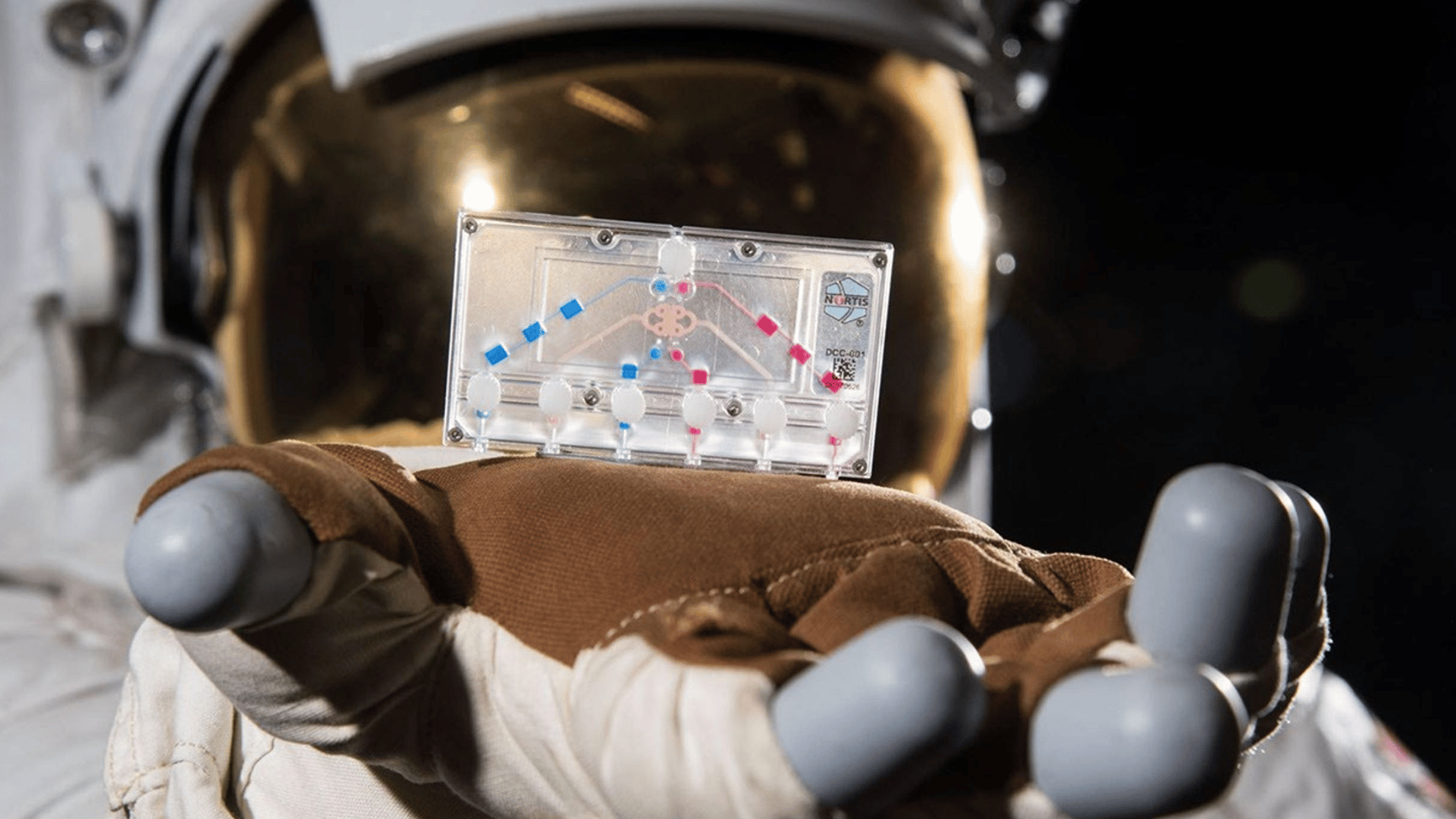
To build them, scientists collect adult human cells from donors through blood draws, skin cells, or saved cultures. They convert those cells into induced pluripotent stem cells (iPSCs) that can grow into almost any cell in the body. Researchers then grow these cells inside the chip to build miniature organ models.
Because these chips use human cells, they give scientists an accurate way to test treatments. On Earth, oncologists use them to test cancer drugs on a patient’s specific cells, which helps doctors tailor treatments to individuals, speed up screening, and lower side effects.
NASA uses the same tech to protect astronauts. Sending these chips past Earth’s protective Van Allen Belts enables teams to study radiation and microgravity exposure without putting humans in danger.
On long missions to the Moon or Mars, astronauts will have limited medical tools. NASA hopes to use these personalized chips to determine each crew member’s needs in advance and pack the right supplies.
Advertisement
 Read Exclusive Stories
 Bookmark & Save Articles For Later