There is a shift happening in the freight world. Instead of trucking, Parallel Systems wants to use the nearly 100,000 miles of unused rail tracks in the U.S. for shorter trips. Doing this addresses the cost of trucking and the strict rules that the industry faces.
The company recently received $100 million in a Series C funding round for its battery-electric, autonomous freight trains called Panther vehicles. The funding round was led by the independent global investment platform Atlantic Vantage Point (AVP).
Autonomous Rail Addressing Supply Chains
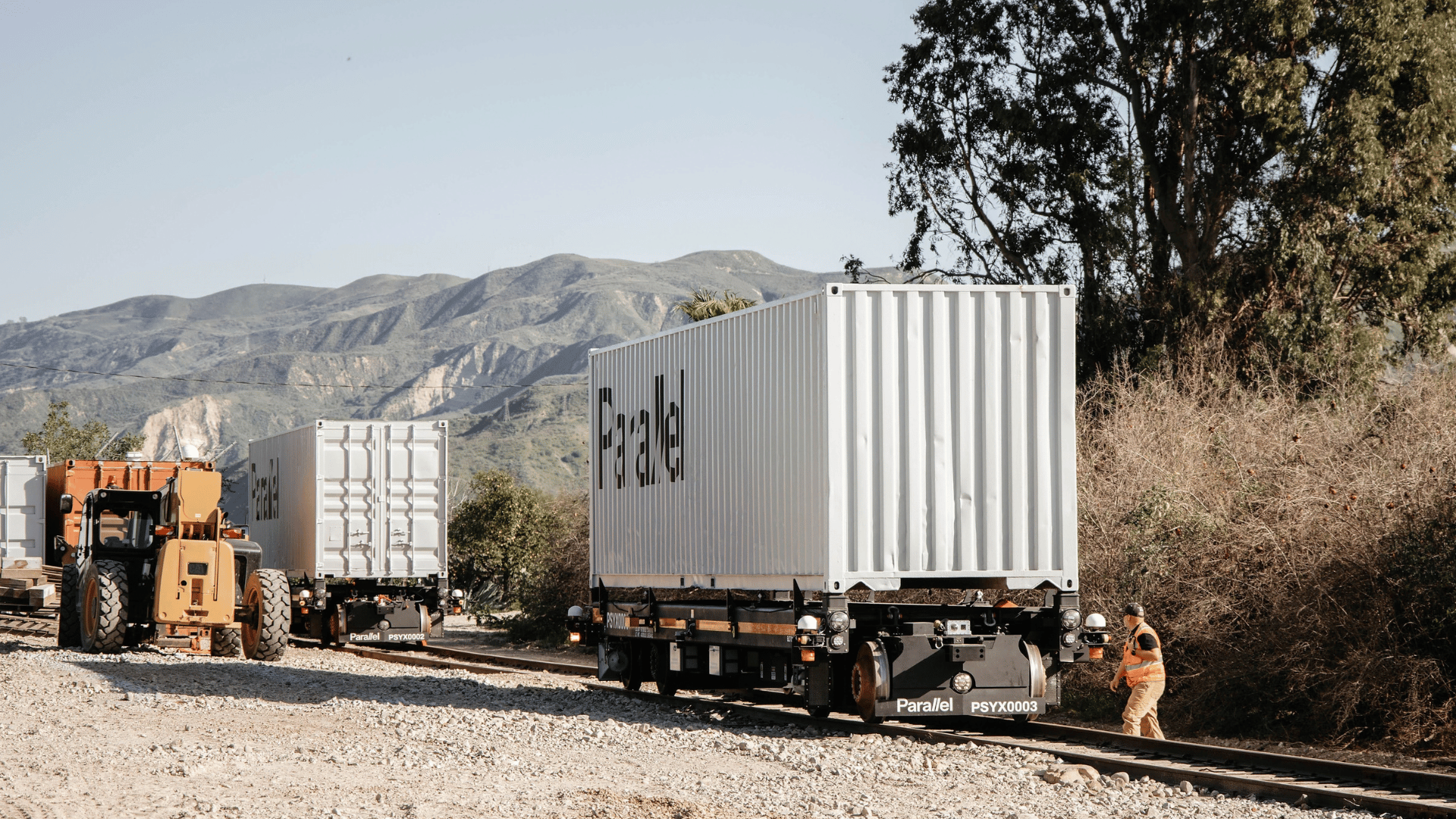
The surface freight market is worth $1 trillion, and trucks do most of the heavy lifting. However, as roads get busier than ever, the United States rail network is underutilized, especially for routes under 500 miles. According to Parallel Systems, shorter trips make up 60% of the market.
Parallel’s technology lets railroads handle these shorter routes and still make money. According to the company, it gives shippers the flexibility of a truck with the cost and environmental benefits of a train.
Advertisement
Matt Soule, Founder and CEO of Parallel Systems, explained, “Closing our Series C round is a major inflection point for Parallel and the short-haul logistics industry, and is the strongest market signal to date that autonomous freight rail is ready for its moment.”
He added, “With the FRA-approved pilot proving our platform in real-world corridors, this capital will directly fund the production scale-up of our Panther vehicles and accelerate our entry into international markets hungry for lower cost, more resilient supply chains.”
Live Deployments for Commercial Use
Since the Series B funding round in 2025, Parallel has moved from a prototype to live deployments. A pilot program is running in Georgia with a short-line operator, Genesee & Wyoming, under the Federal Railroad Administration’s supervision. Major railroads have already signed contracts to use the system.
Arun Gupta, Parallel’s Executive Chairman, said, “Matt and the entire Parallel team have built a proven, viable and scalable autonomous freight rail platform that has generated significant commercial interest among the major rail companies in the U.S. and globally,” he said.
He added, “We are now past the question of ‘if’ and fully onto ‘how soon.'”
 Read Exclusive Stories
 Bookmark & Save Articles For Later