Walk into the workshop at SLOU Studio, and you won’t hear factory machines clattering. You hear the crisp slice of a utility knife cutting heavy hide. You hear a mallet striking a steel punch.
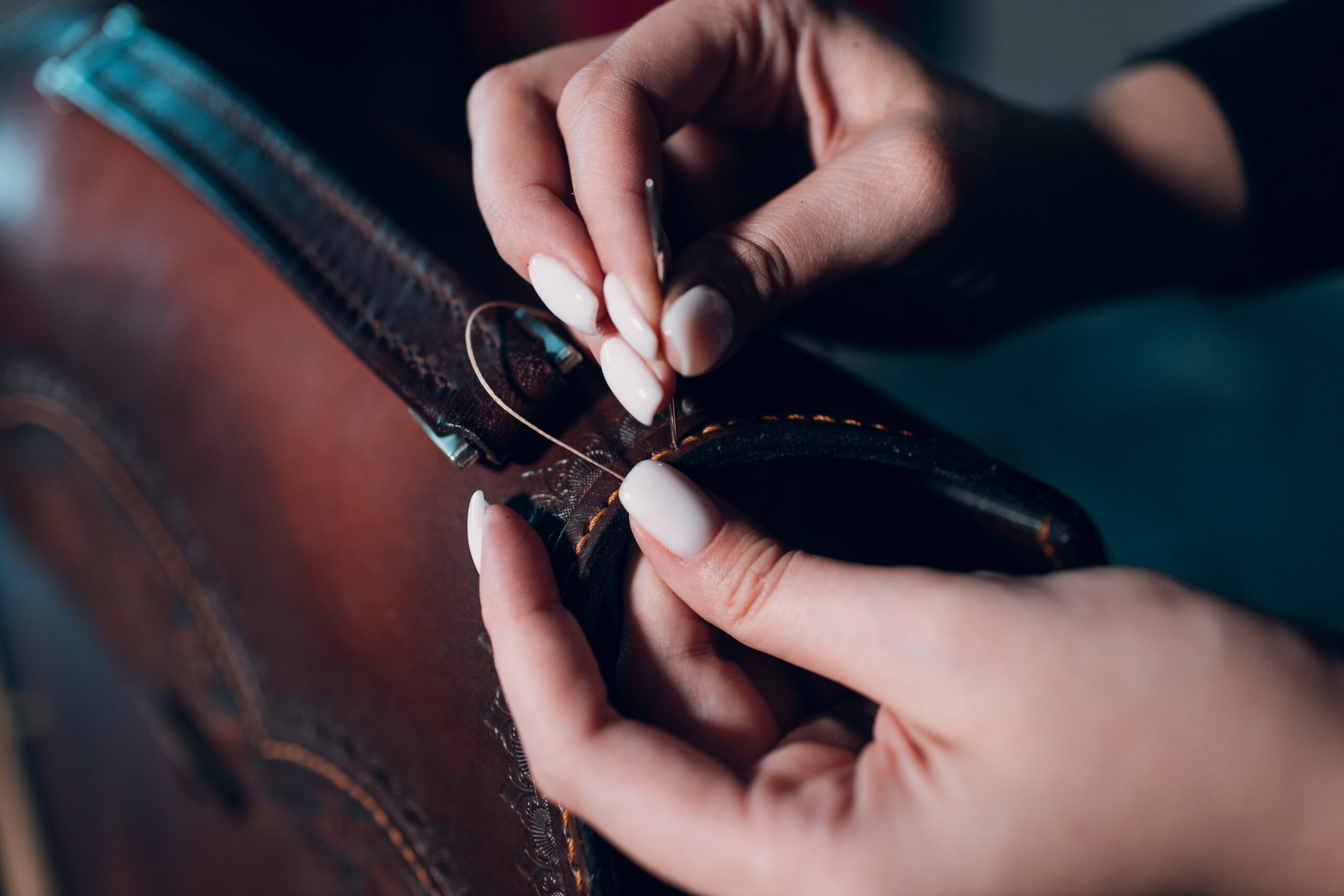
The artist behind SLOU Studio crafts leather bags and small everyday goods entirely by hand. Her work falls under traditional leathercraft—a slow art form that rejects mass manufacturing in favor of durability and simple, functional design.
Starting with the Right Materials
Every bag begins with vegetable-tanned leather. Tanneries use natural plant tannins, such as those from tree bark, to cure hides instead of harsh synthetic chemicals. This process leaves the natural grain intact. The material feels stiff at first, but it softens over time and develops a unique patina as you use it.
The artist picks each hide carefully, checking for thickness and natural marks. This ensures the finished tote or shoulder bag holds its shape for years without collapsing.
The Tools of the Trade
You won’t find sewing machines on her workbench. Instead, her main tools are hand-operated and built to last:
Advertisement
- Utility knives and skiving blades: These slice thin patterns and bevel rough edges so seams lay flat.
- Pricking irons and wooden mallets: She punches evenly spaced stitching holes along every seam by hand.
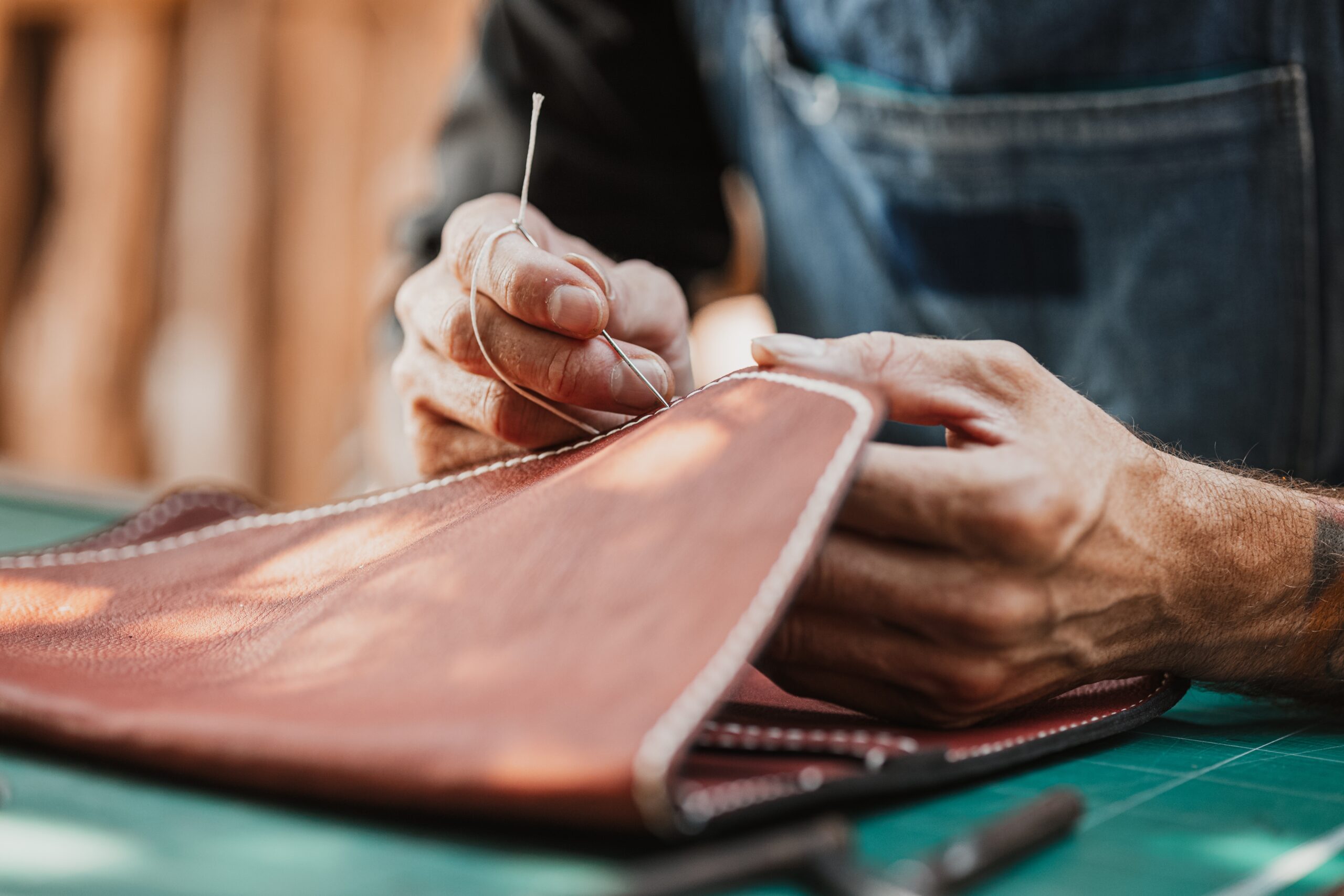
- Waxed linen thread and harness needles: She uses two needles at once to sew every seam.
- Wood burnishers and edge bevelers: These smooth out raw edges so they don’t fray over time.
Step-by-Step Construction
Making a single bag takes days of step-by-step assembly. First, the SLOU Studio artist traces cardboard patterns directly onto the hide and cuts each panel by hand. Next, she thins out the edges of the leather panels—a process called skiving—so overlapping seams do not get bulky.
Then comes the most important stage: saddle stitching. She clamps the leather panels into a wooden vice called a stitching pony. She passes two needles back and forth through every single hole using heavy waxed thread.
If a thread breaks in a machine-made bag, the whole seam unravels. A hand-sewn saddle stitch locks each node individually. Even if one loop snaps, the rest of the seam stays firm.
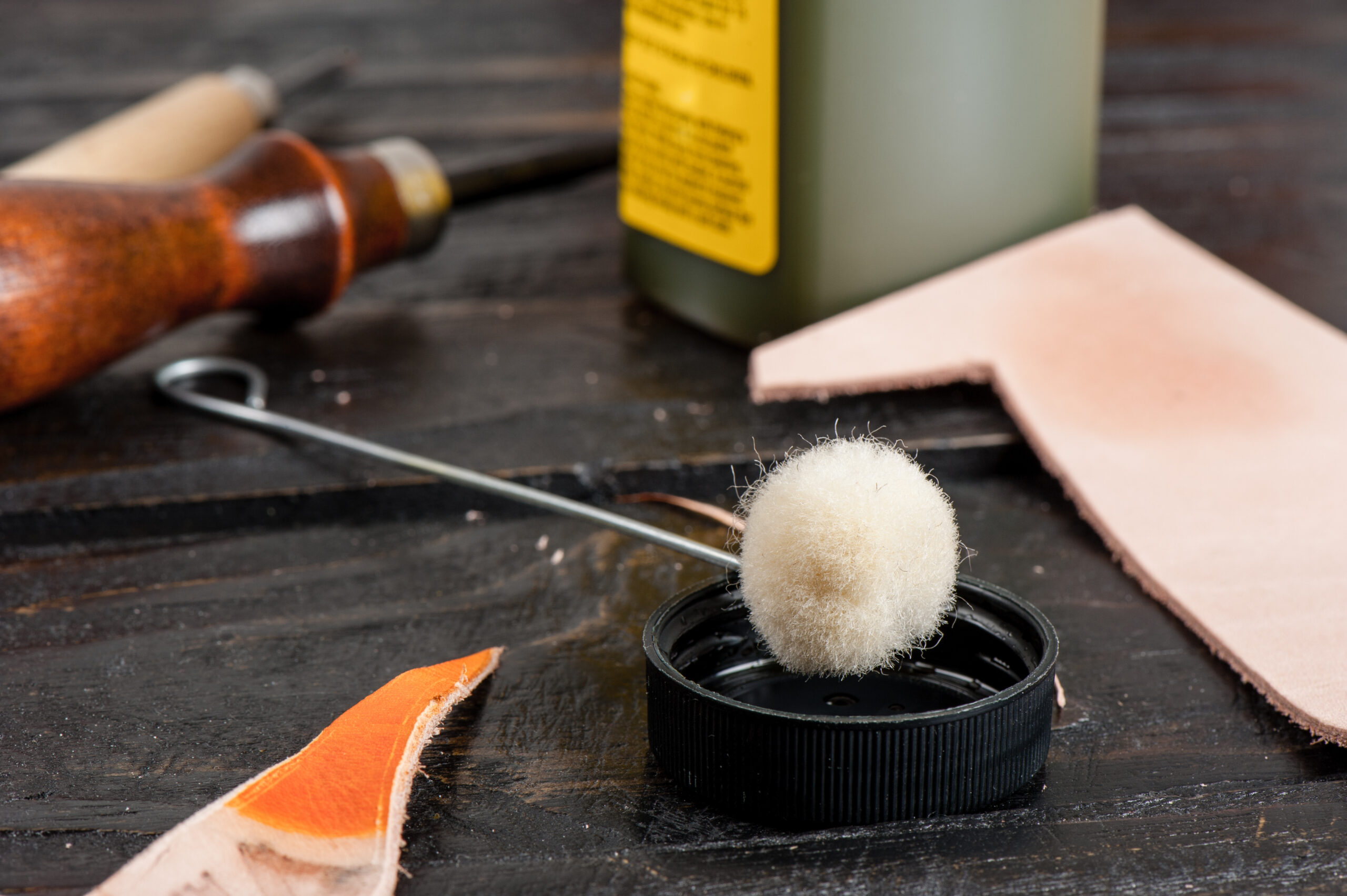
Finally, she finishes the raw edges. She sands them smooth, applies edge paint, and burnishes the borders with beeswax using a hardwood wheel until they shine.
Why Handcrafted Goods Matter
Fast fashion relies on thin plastic coatings and cheaply glued seams that crack after a single season. Independent makers like SLOU Studio offer an alternative built on patience, repairability, and sustainable materials. Every stitch serves a purpose, creating a piece meant to last a lifetime.
 Read Exclusive Stories
 Bookmark & Save Articles For Later