A 50-pound drone has a 110-pound payload capacity. A newly developed drone from Texas A&M University can handle more than twice its own weight, a challenging feat.
Led by aerospace engineering professor Dr. Moble Benedict, five graduate students from the Advanced Vertical Flight Laboratory built the drone. On Aug. 9, they took it to the first-ever DARPA Lift Challenge at the National Museum of the U.S. Air Force in Dayton, Ohio. Out of 480 initial concept papers and 87 teams actually competing on the field, they were one of only six U.S. teams to finish the four-nautical-mile course.
Their drone carried 110 pounds of barbell weights across the distance in just 12 minutes. Most drones on the market right now can only manage a one-to-one payload-to-weight ratio.
A Lighter Drone
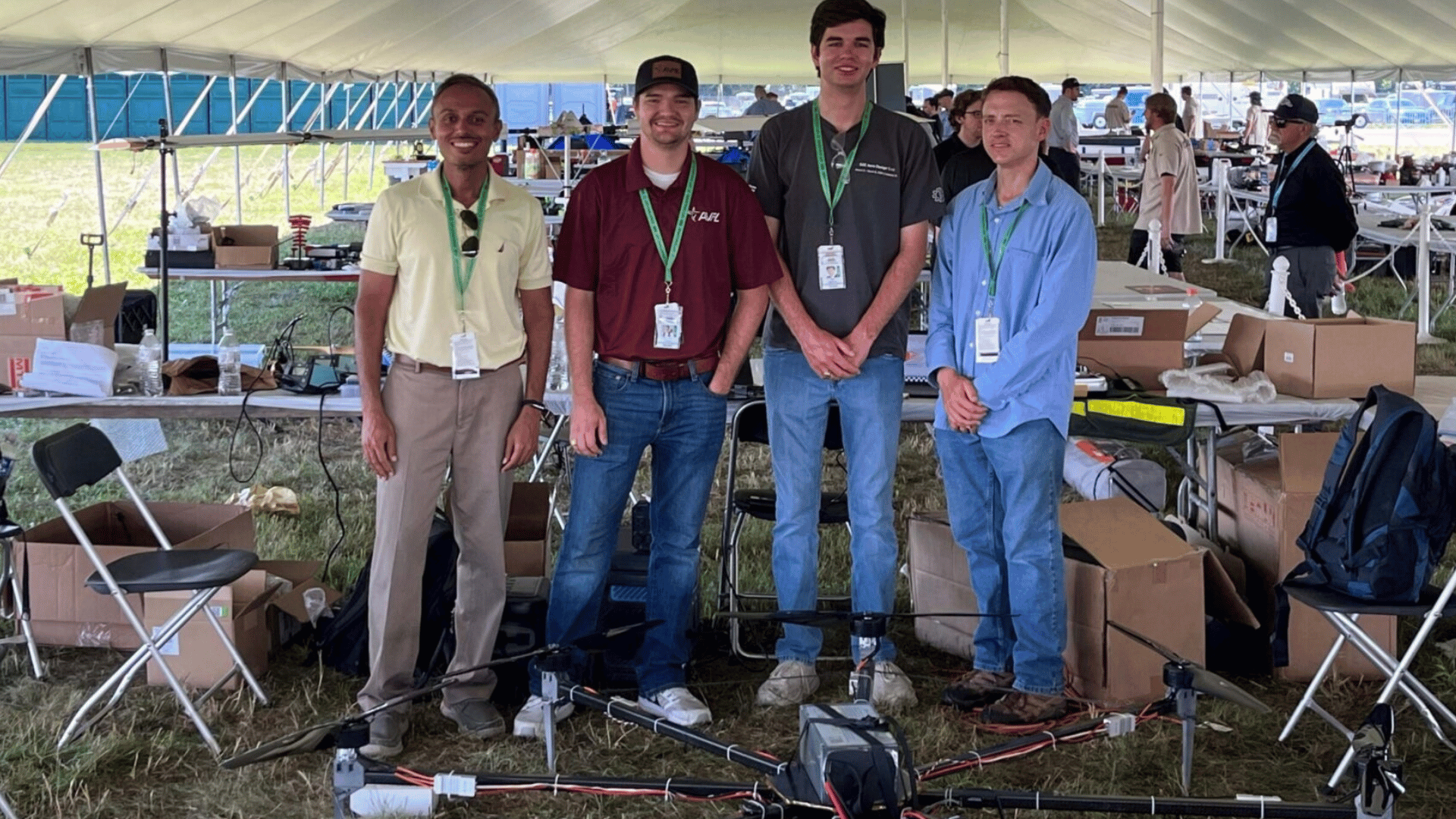
The team spent eight months working on the design and running virtual simulations before arriving at the final product. In fact, they built the final model in just a few weeks. Instead of using nuts and bolts, which add a lot of heavy metal to the aircraft, they bonded the carbon fiber frame together.
Advertisement
This choice alone gave them a frame that weighs six pounds. Even at that low weight, they structurally tested the frame to support a payload of up to 180 pounds. The final design relies on a central battery and eight arms to hold the motors and propellers.
The Battery’s Added Weight
Using a battery meant the team had to deal with constant weight. A gas-powered drone gets lighter as it burns fuel, but a battery doesn’t do that. In this drone, the battery made up over half of the total weight.
“A battery weighs the same at the beginning of the flight as it does at the end,” team member Cayden Brown said. “We had to account for the same weight across the journey, a charged battery weighs the same as a dead battery.”
It only cost the team $10,000 of materials to build the drone, and with that lower price tag, it could eventually reach more people worldwide.
“We’re very proud of this product,” Benedict said. “It’s still a prototype at this point, but it has the potential to be used for many realistic missions, especially for disaster relief efforts and surveillance.”
 Read Exclusive Stories
 Bookmark & Save Articles For Later